A collaboration with Melissa Goldstein and Cathy Gasser (Ono)
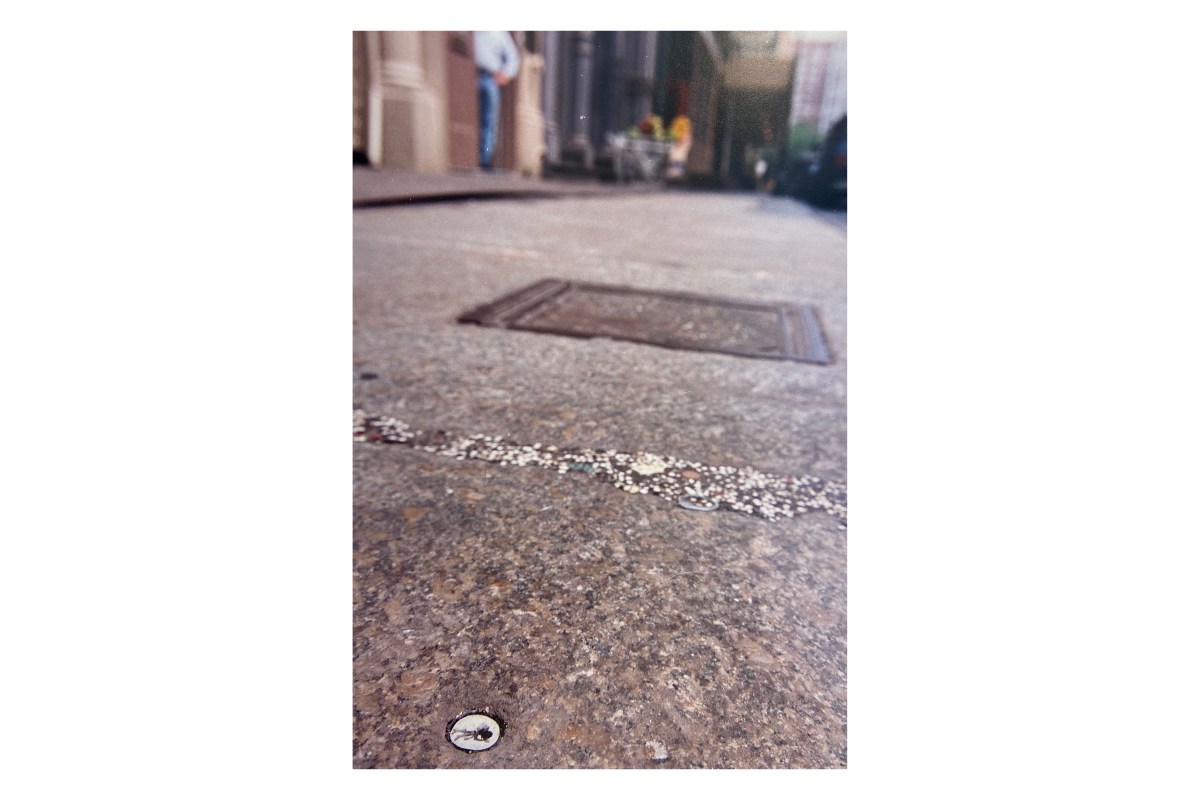
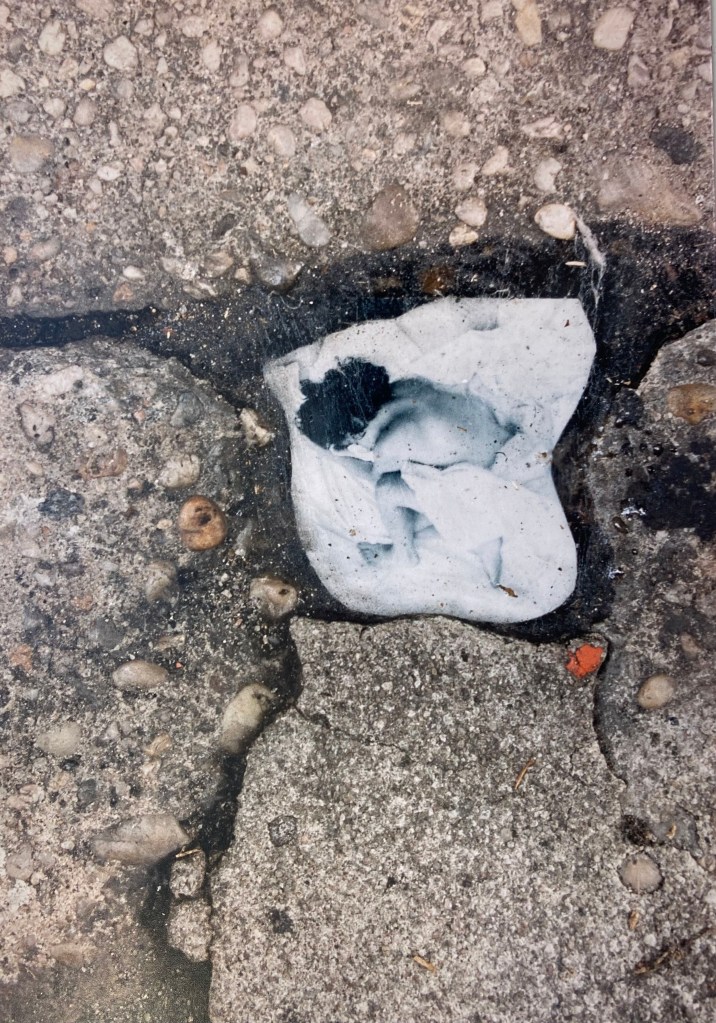
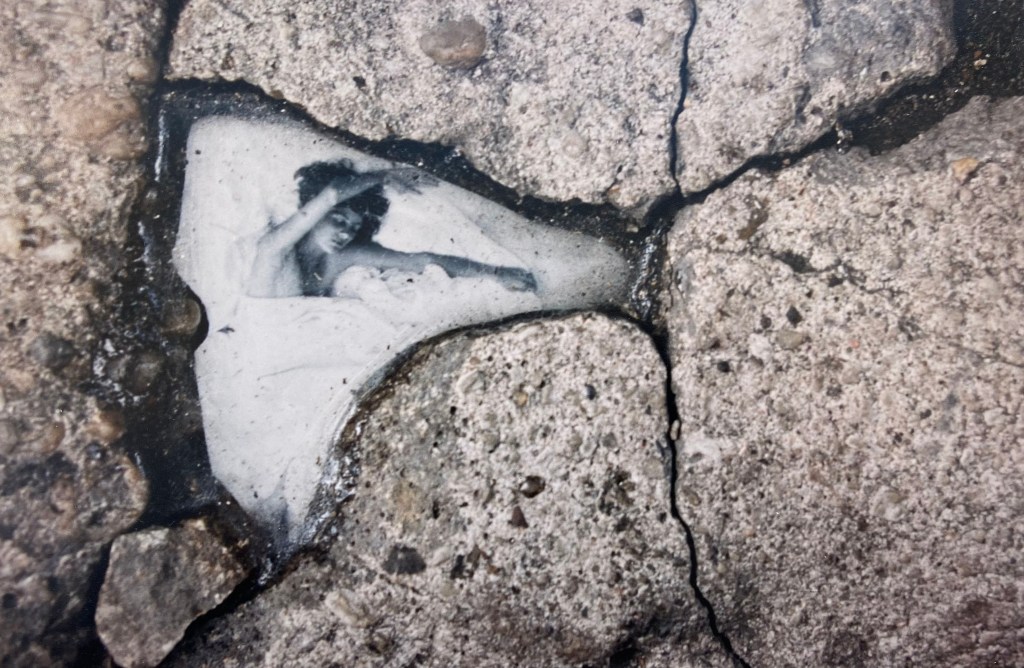
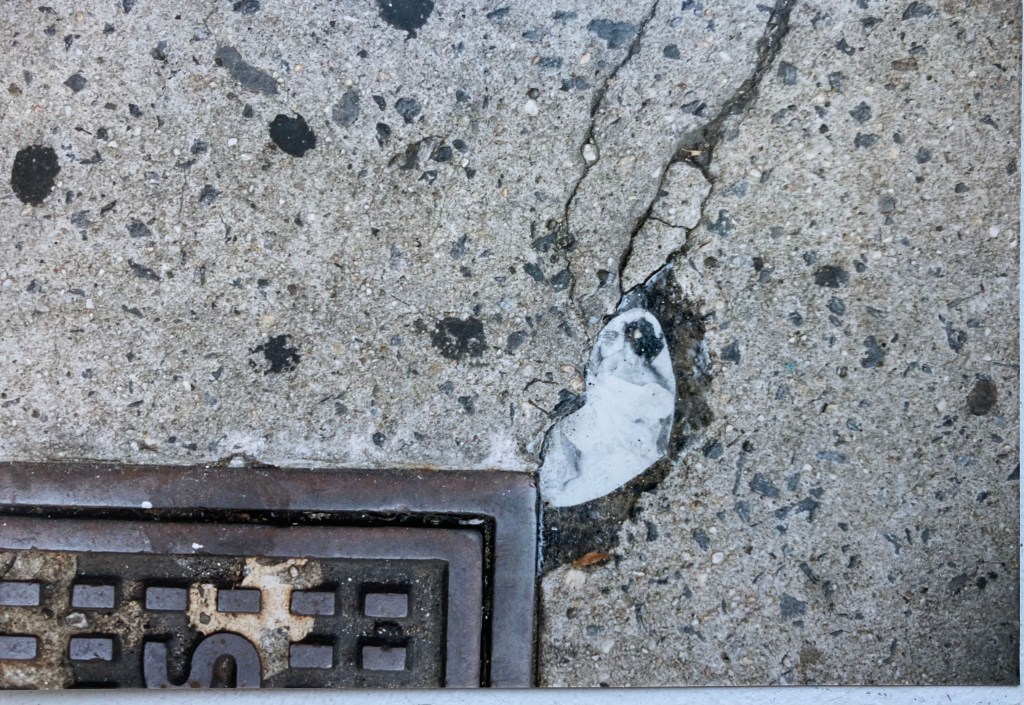
Sidewalks in the Soho area of New York City, New York, 1995
Photographs, polyester resin
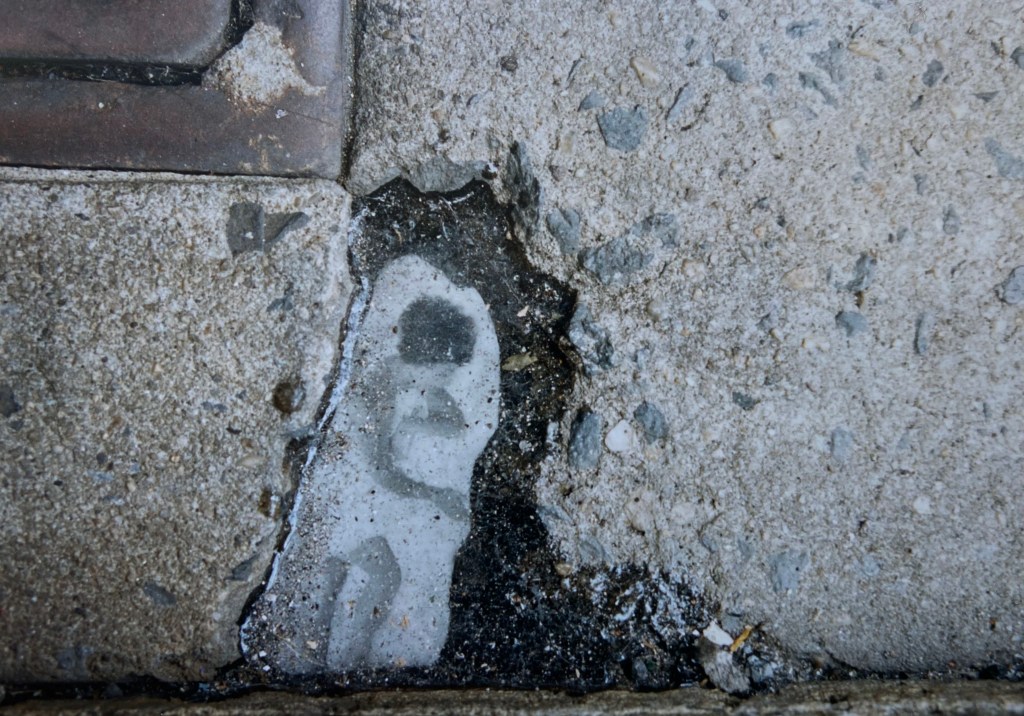
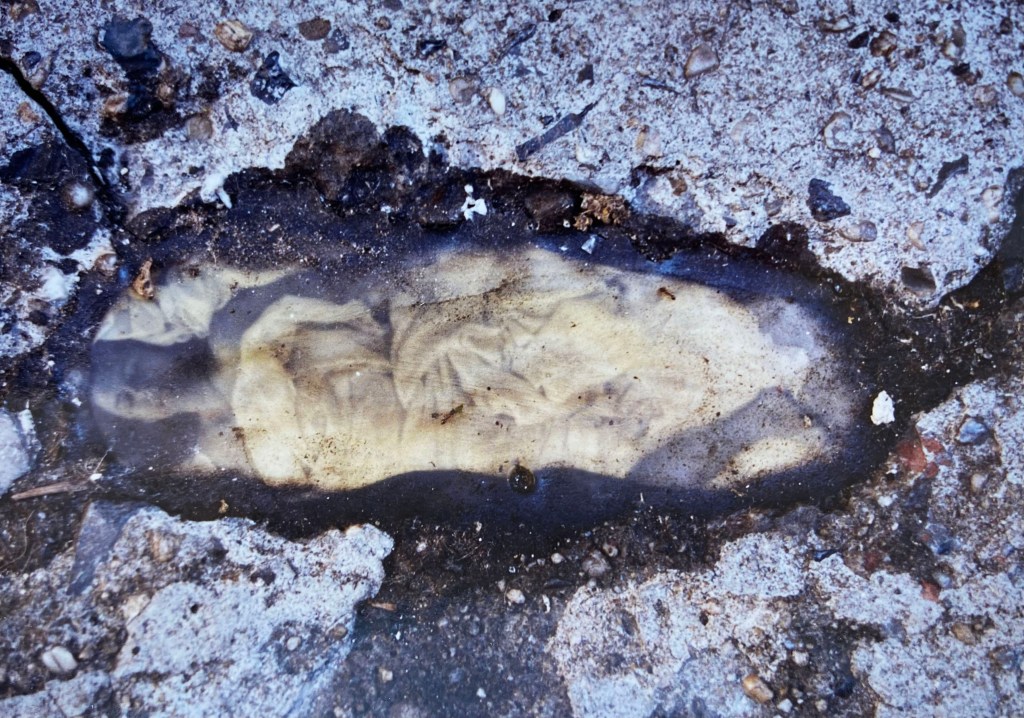
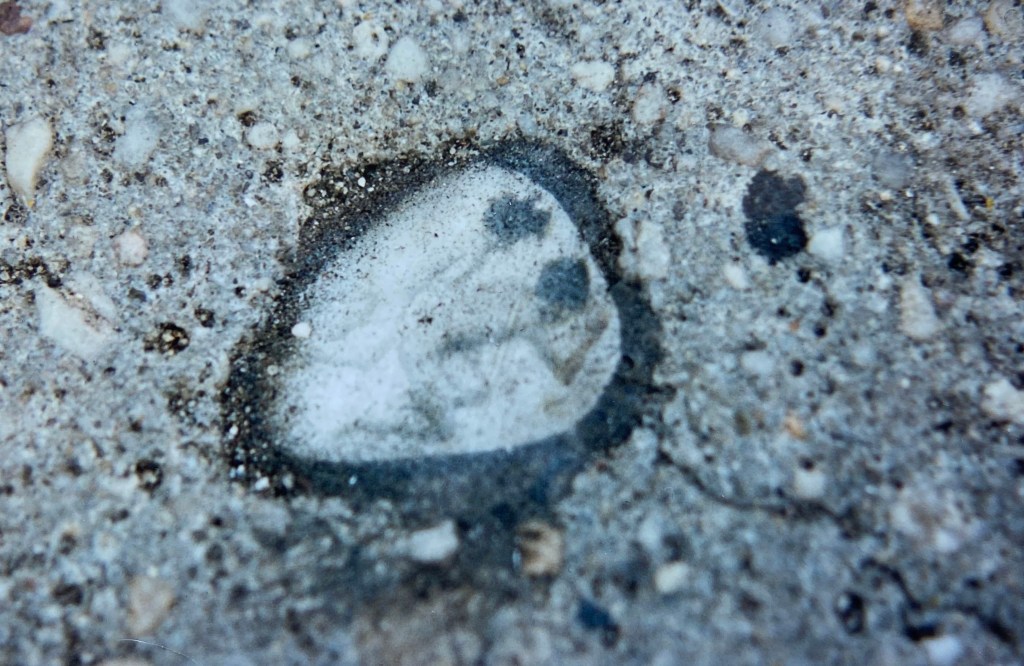
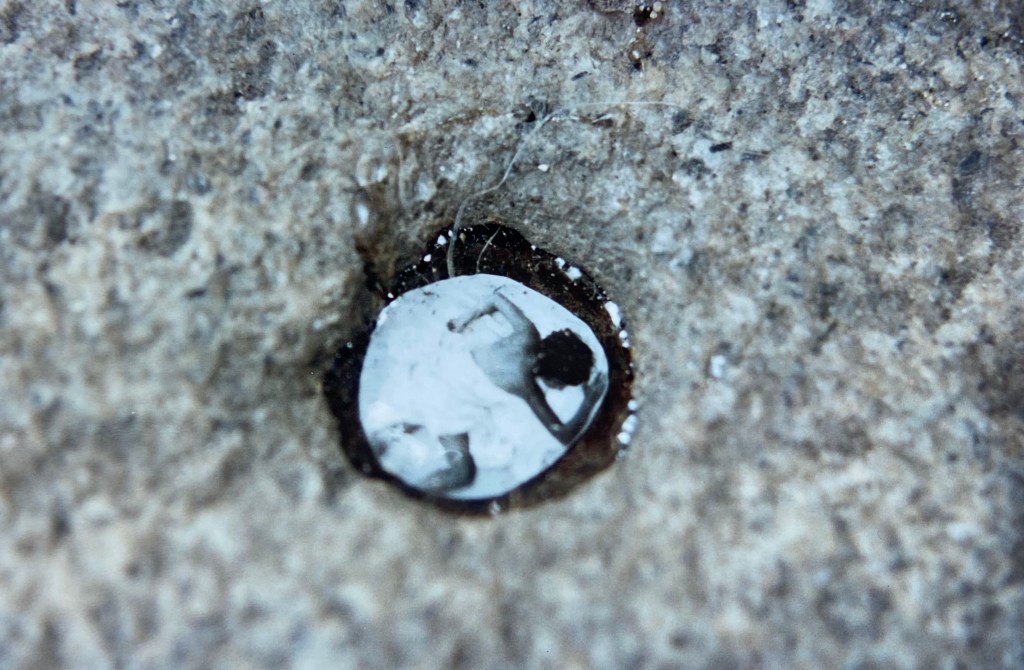
Over two summers in New York City, we embedded hundreds of small photographs into cracks and holes in the cement sidewalks of Soho. By photographing ourselves in peaceful recumbent positions wrapped in white sheets, we recorded on film the intimate act of sleeping, then exposed those images to the harsh realities of well-trodden New York sidewalks. We worked either late at night or very early in the morning to avoid heavy foot traffic. After finding an appropriate hole, we chose a photograph, cut it to fit, and laid it in the hole. We mixed the two-part resin and poured it into the hole over the photograph. In some cases we hovered over the hole to protect the image until the resin set up.
Within days, the one-inch diameter images disappeared into the inevitable grim. The next year we returned to embed larger images and many survived to be seen for a year or more. We liked the idea of making art in unusal places that could be discovered by chance. We noticed we had a “follower” when we saw that some resin-embedded photos appeared to have been dug up and taken away.
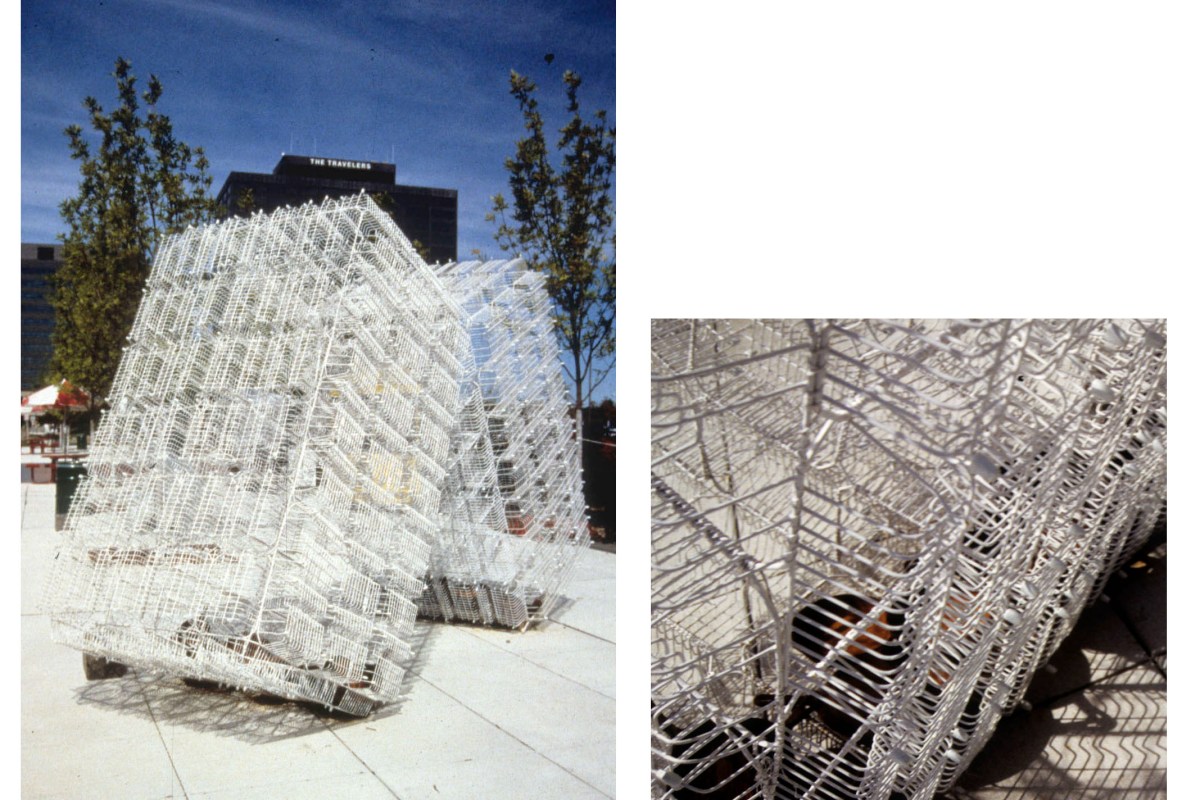
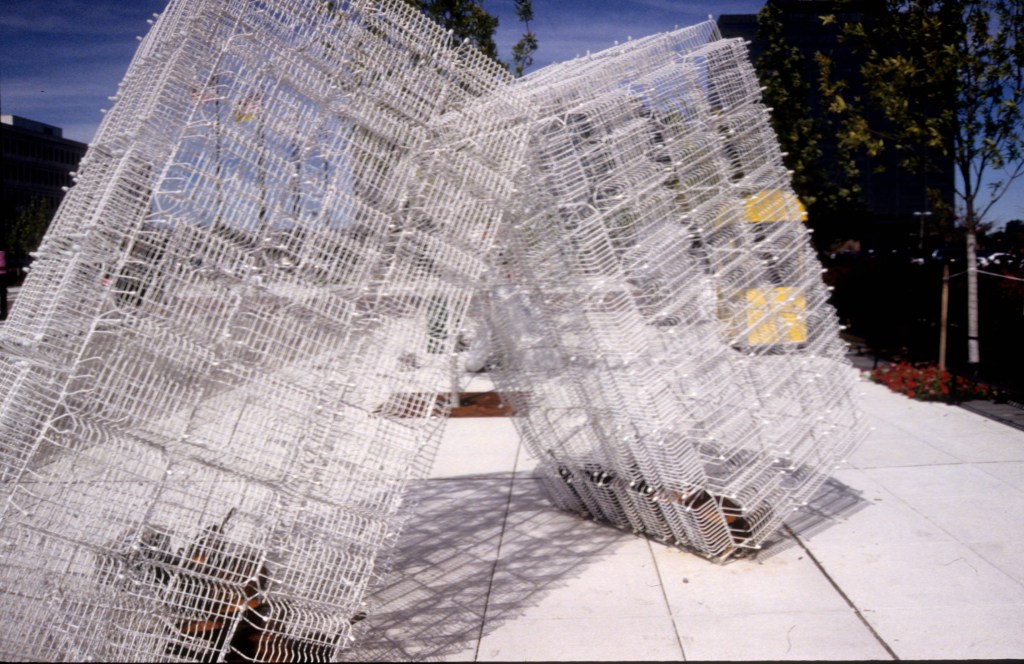
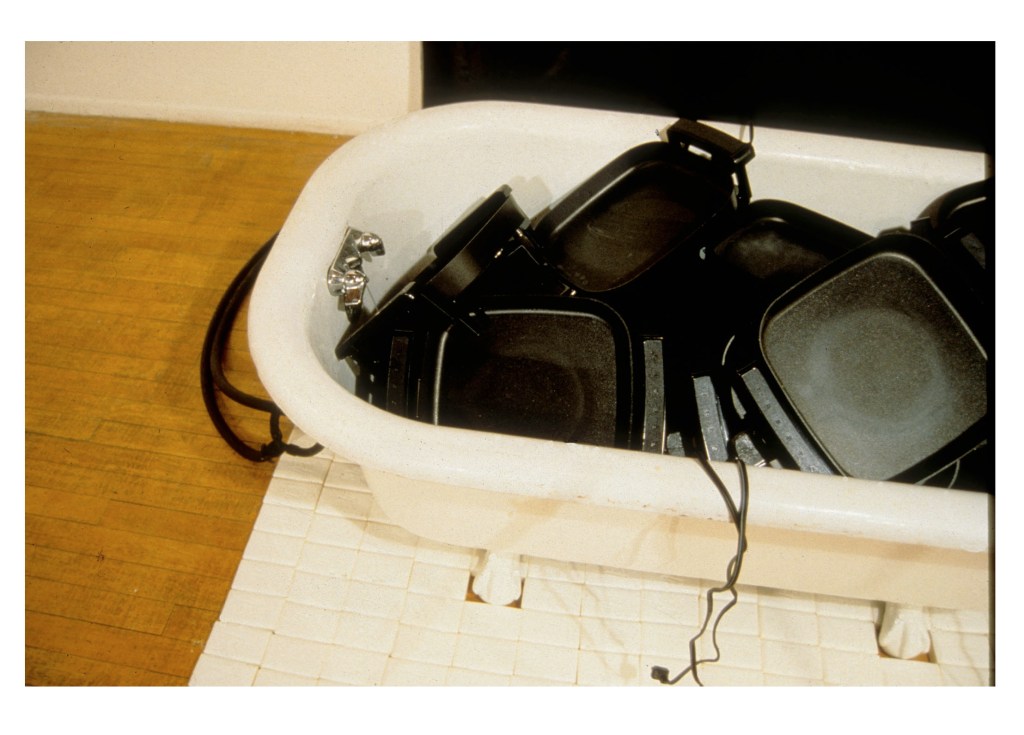
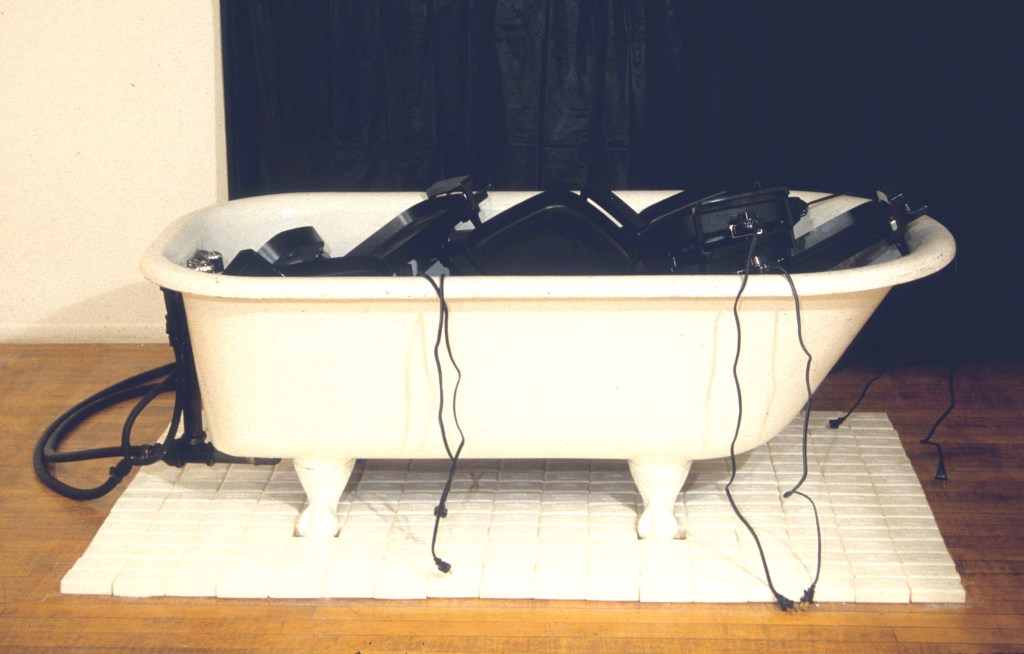
This piece evolved from a series of experimental pieces from an installation at Buckham Gallery funded by the Michigan Council for the Arts. Paint Creek Center for the Arts funded the purchase of the dishracks and frying pans. As a continuation of the work begun at Buckham, the sculpture worked well aesthetically, had a sense of humor, and could be recycled. It was exhibited twice–in Rochester, MI and in Southfield, MI. I donated the dishracks and frying pans to the Salvation Army.
A Collaborative Installation with Monica Bock, Mary Carlisle, Cathy Gasser (Ono), Melissa Goldstein, and Sandrine Sheon.
The six of us met in Pittsburgh to look at the space at 1414 Monterey and began to develop ideas for a collaborative installation. The subjects of our discussions ranged from Pittsburgh’s distinct industrial history, the surrounding northside neighborhood, and the specifics of the second and third floors of the former living space our work would occupy. We began to focus on the connecting spaces such as the stairway between floors, a doorway between two rooms on the second floor, a passage between two rooms on the third floor, and the windows on the third floor. And we spoke of developing a connection between the sidewalk and the interior. We returned to our homes in different parts of the country and continued to coorespond via email.
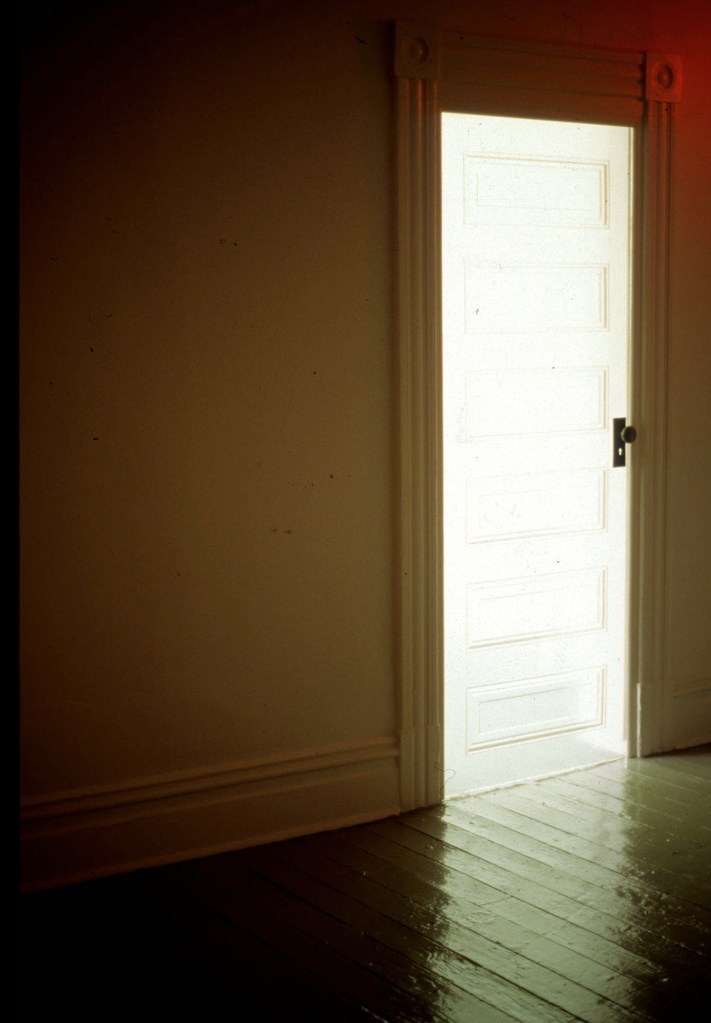
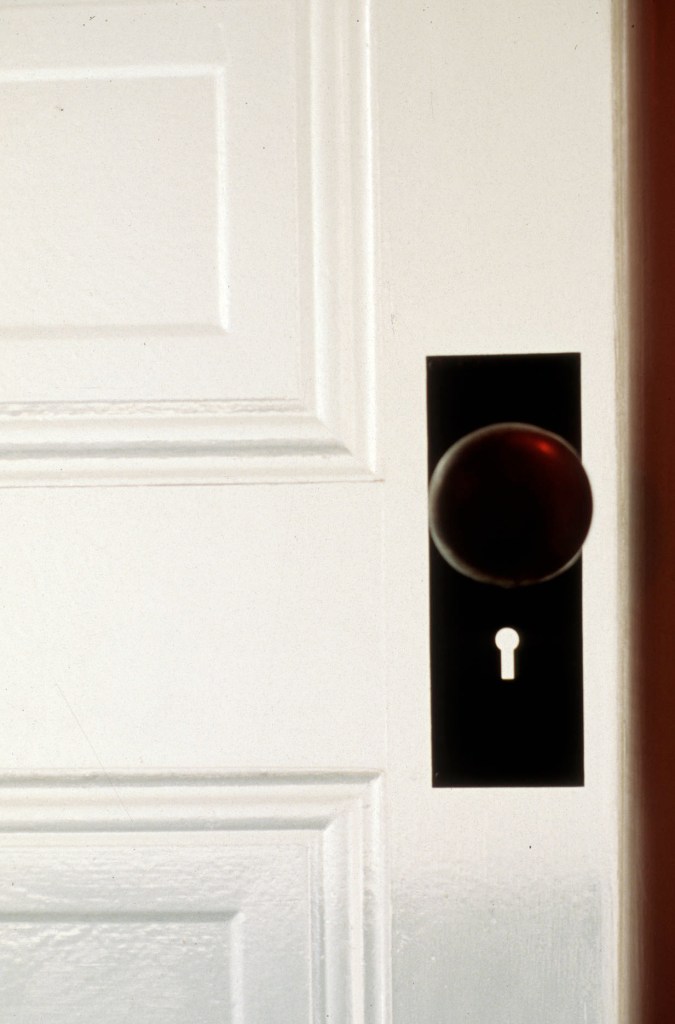
The inventions on the second floor would be minimal. We found an old raised panel door and made a mold of it. We cast it in clear resin and installed it between two rooms. We covered the windows in the first room. The only light entering that room emanted from behind the clear resin door. The light behind the door appeared to be from a window, though it shone both day and night, creating a sense of mystery.
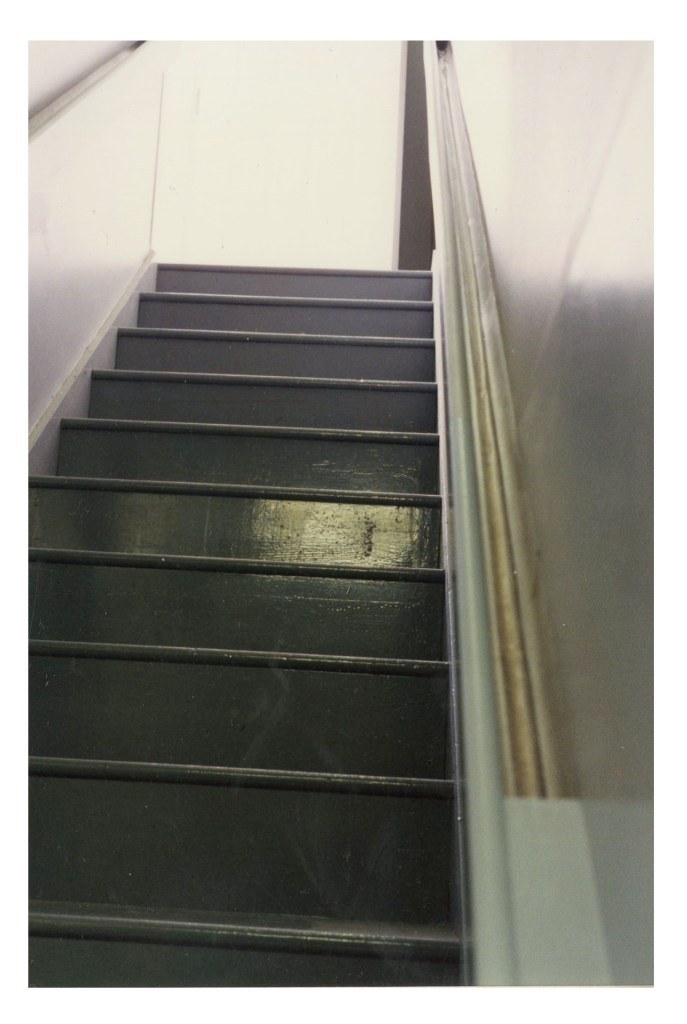
Just as the river separates the north side of Pittsburgh from the downtown, the waterfall stairway separates and connects the second and third floors. The sensation of warm water on one’s fingers as one gently grasps the handrail continues to surprise those who move between floors.
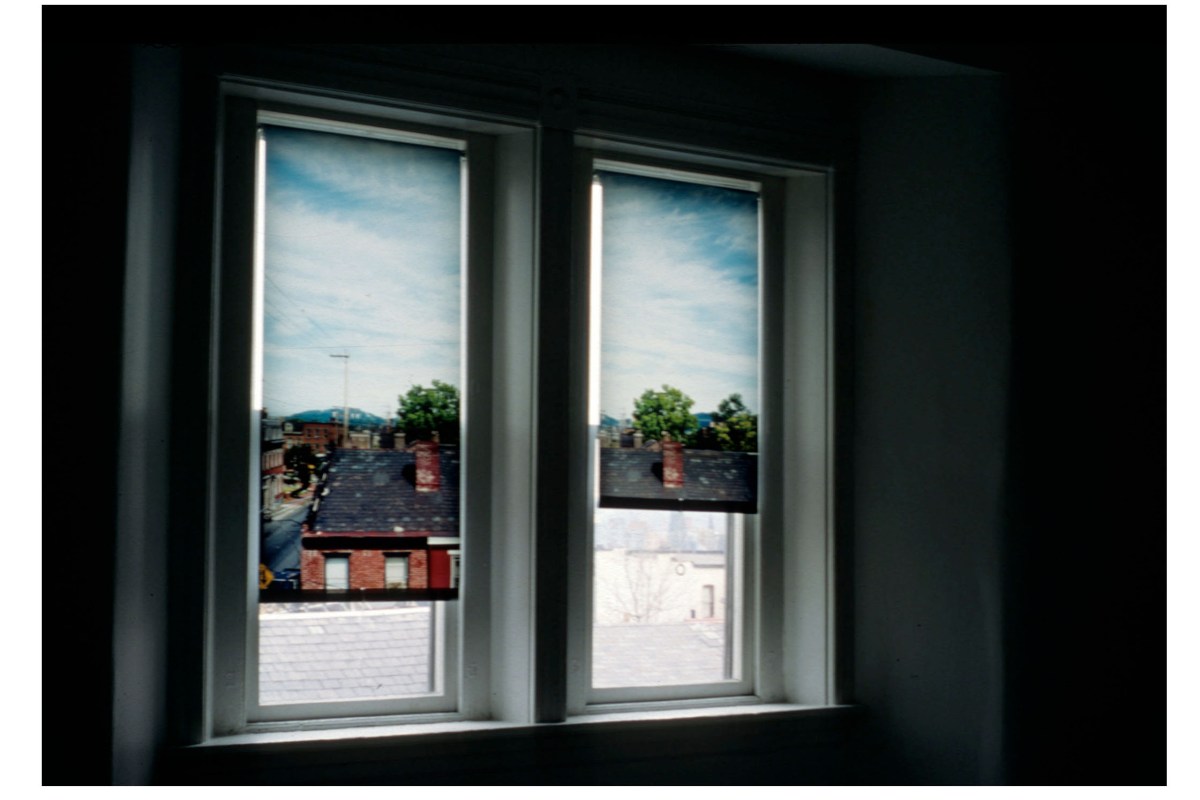
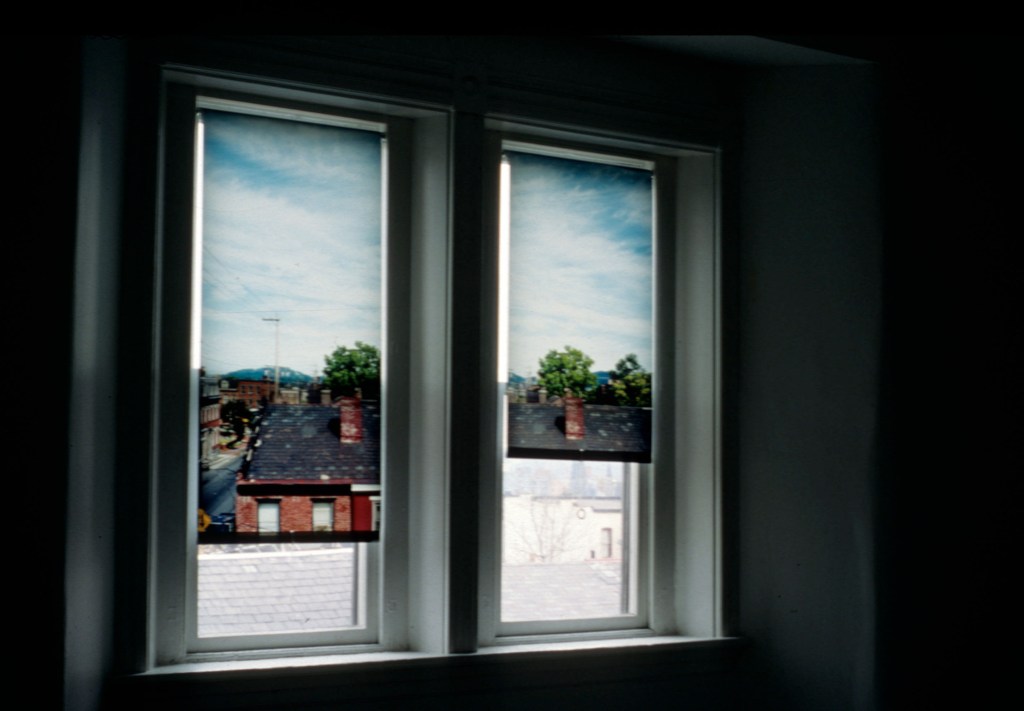
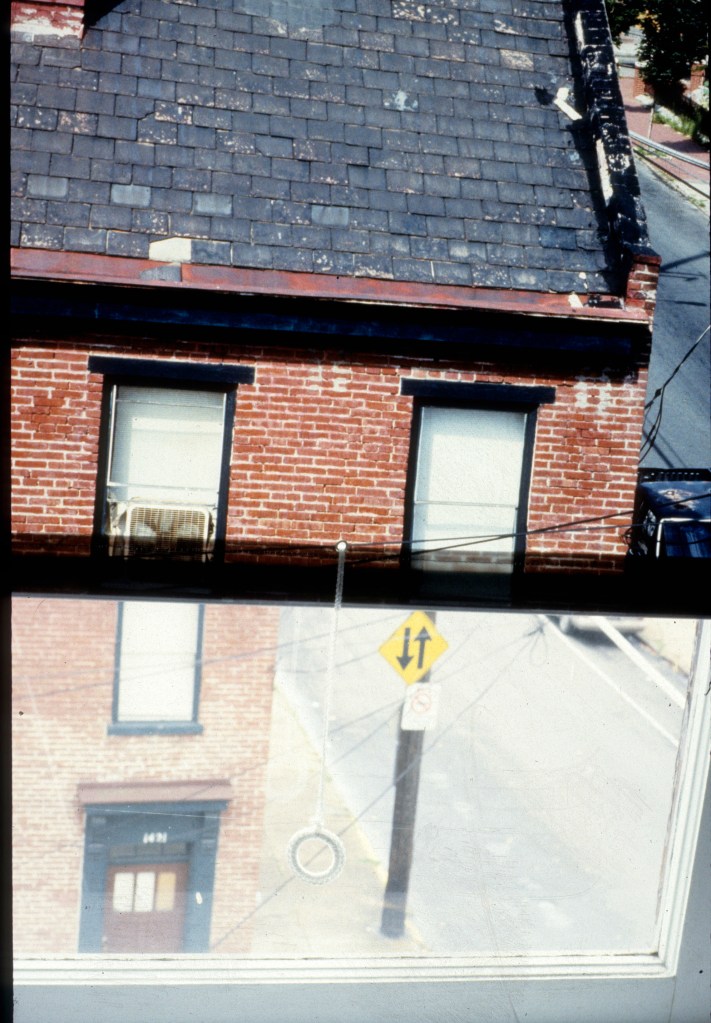
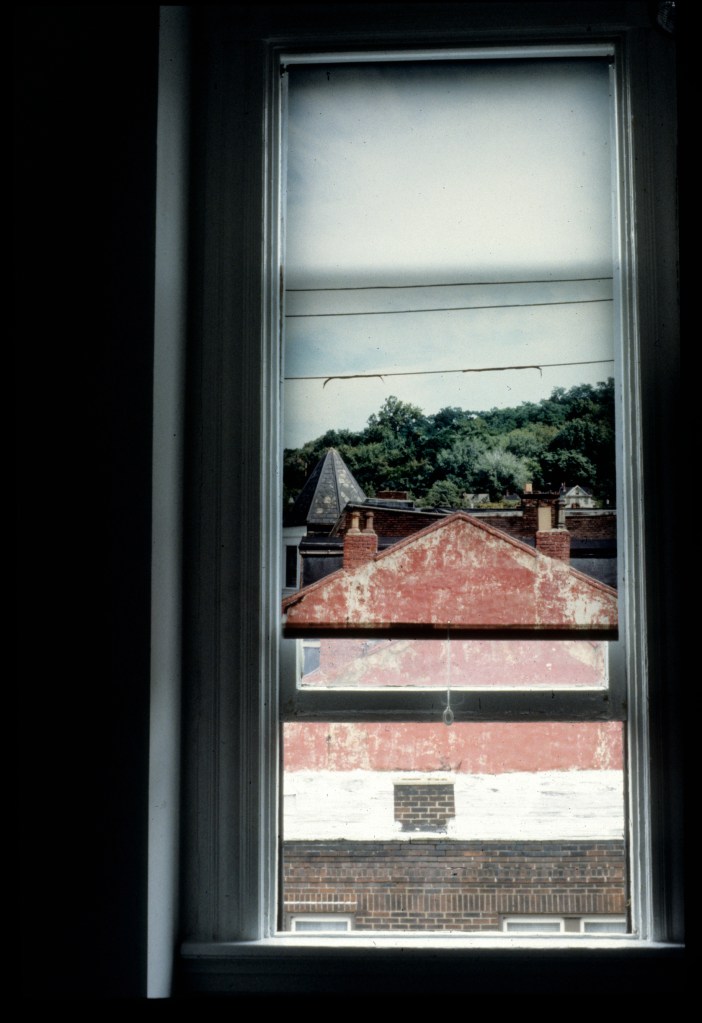
At the top of the stairs, another room appears to be vacant until the windows come into view. Each is partially covered with a shade, and on is each shade is a translucent photograph revealing the scene outside the window.
Clearly, we saw the space as a domestic one, yet, one that the public had access to. Families populated the neighorhood and on sunny days, people sat out on their front stoops. As evening fell, most migrated into the safety of their homes. The iron railings common to houses in the area influenced the concept for the balcony in the last room on the third floor.
An incised line in the wall across from the balcony held a material infused with the smell of freshly mowed grass.
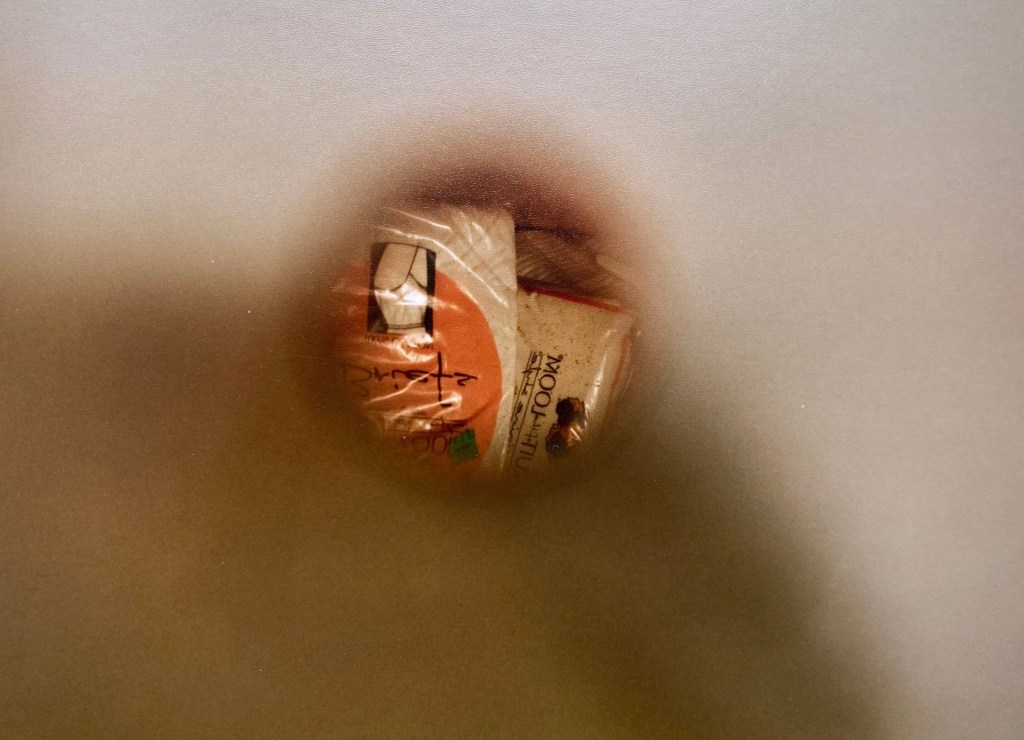
Finally, a periscope formed a connection between the inside and the outside of the space. Viewers who might be reluctant to enter the gallery space could look through the lens of the scope and see an image of a waterfall that appeared to be coming from the third floor window.
The title refers to power in democracy. The piece consists of a twelve-foot-long comb combining pick and pocket combs in roughly one to one proportion. The comb rests on hair embedded onto a long oak board. One can imagine the community effort needed to make this comb functional. The impossibility of reaching agreement of all members, the degree of compromise needed to reach consensus, and whether smaller groups can be served by this system are questions addressed by this piece.
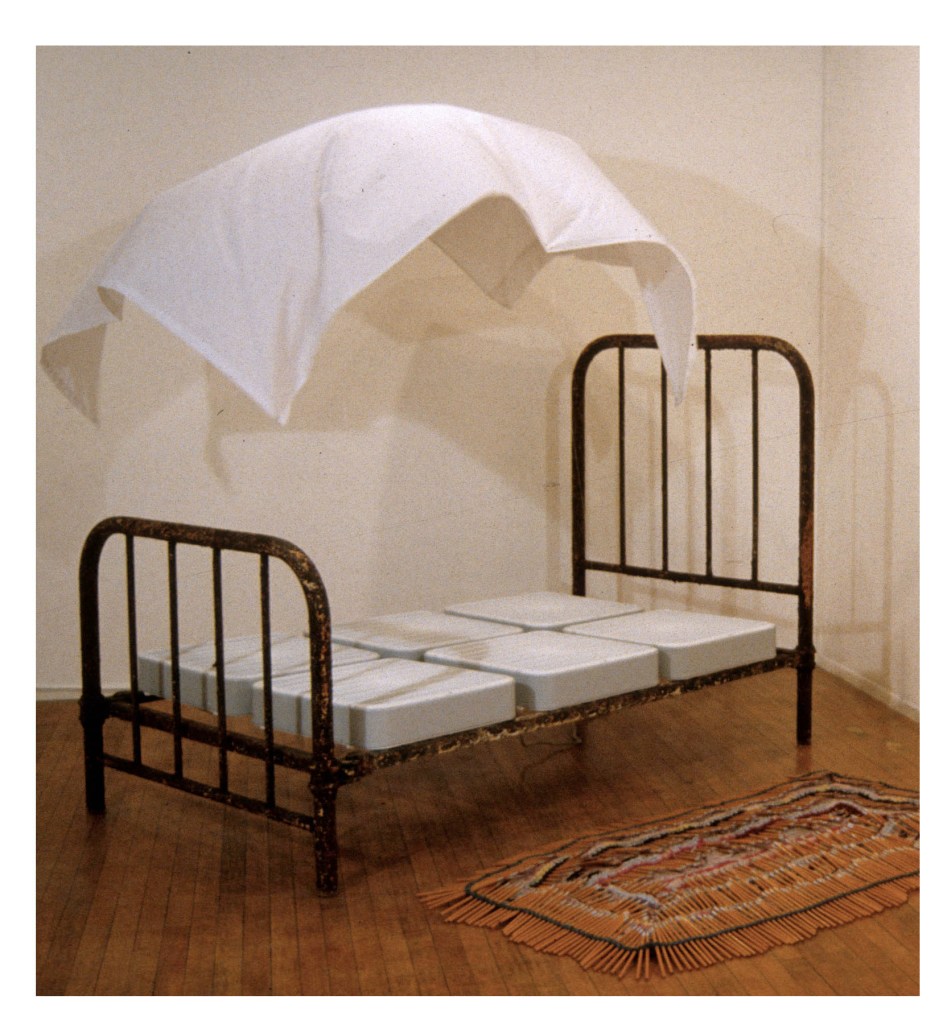
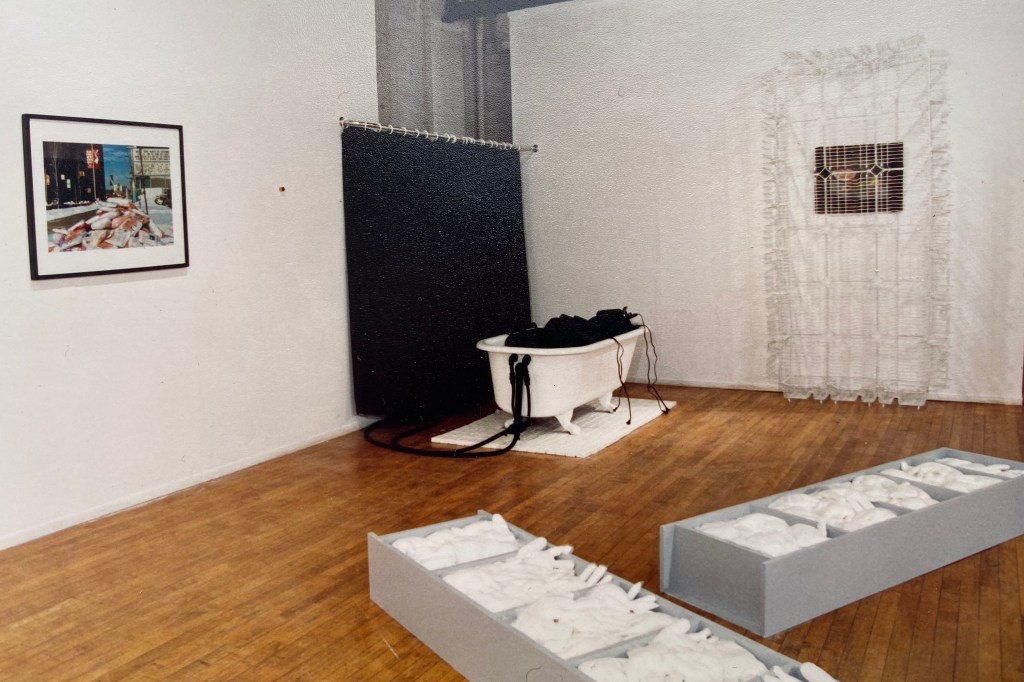
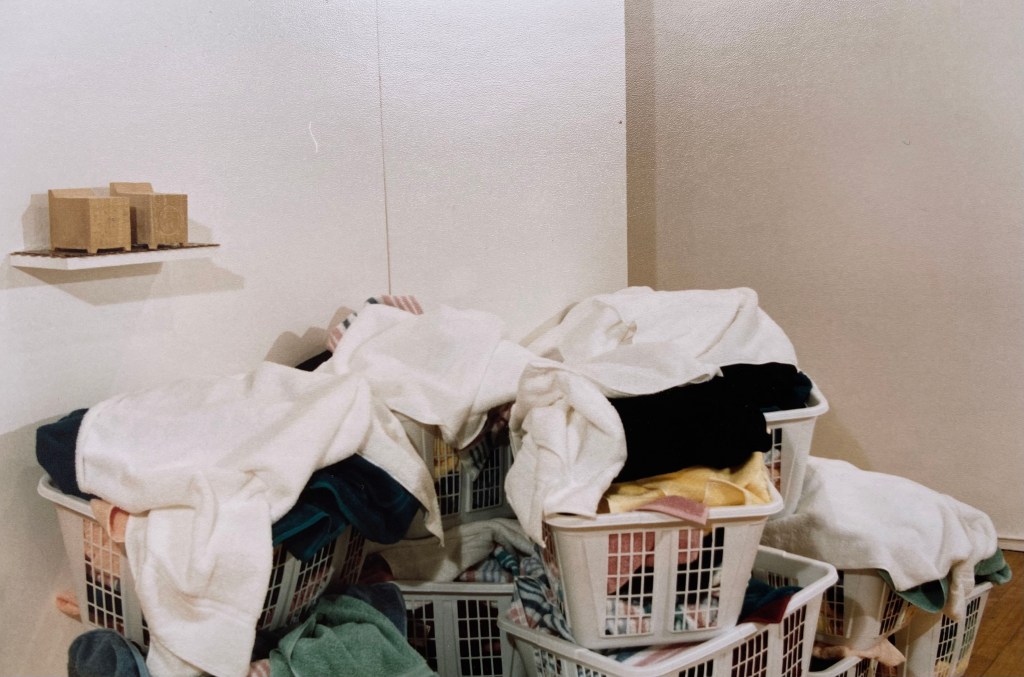
I will be working with the Shelter of Flint, Inc., an emergency shelter for women in Flint. I want to create a work which uses as its materials items of necessity for all of us, like socks, towels, and cooking pans, which, when juxtaposed in various ways will create metaphors about our daily lives. After the show is over, the materials will again take on their functional use when they are donated to the shelter. The feeling many have about being overwhelmed by day to days needs to the point where there may be no avenue for rest might be represented by a bed with fans in place of a mattress and a sheet flying in the air, and a bathtub filled with electric frying pans, water slowly dripping from the faucet. Some don’t have access to that comfortable tub, that soft bed. It calls to mind the situation of art right now. Artists feel the need to make their art count for something concrete in their communities and these needs overwhelm aesthetic concerns. I want people to be moved by my work. I want the work to be thought-provoking. But then after the show I want the material to o back into the community. In a way, it will be like improv, with the audience shouting out the parameters of the next skit.
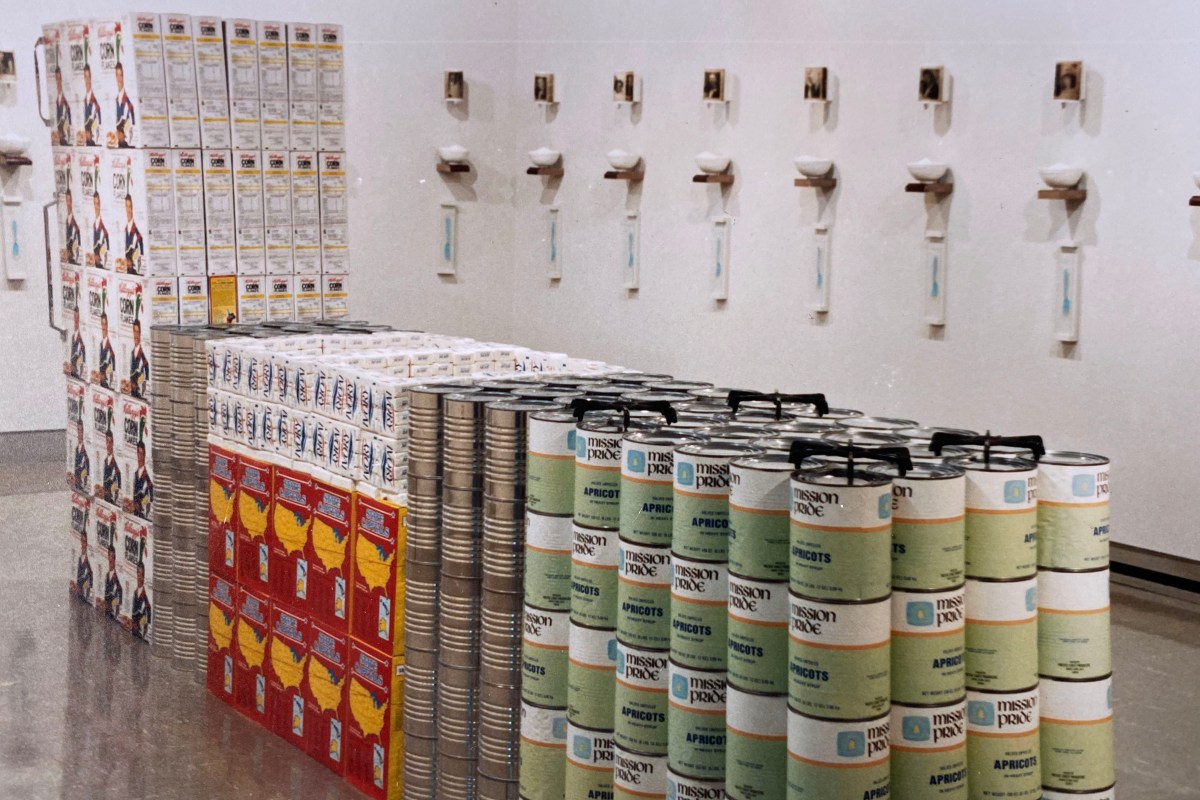
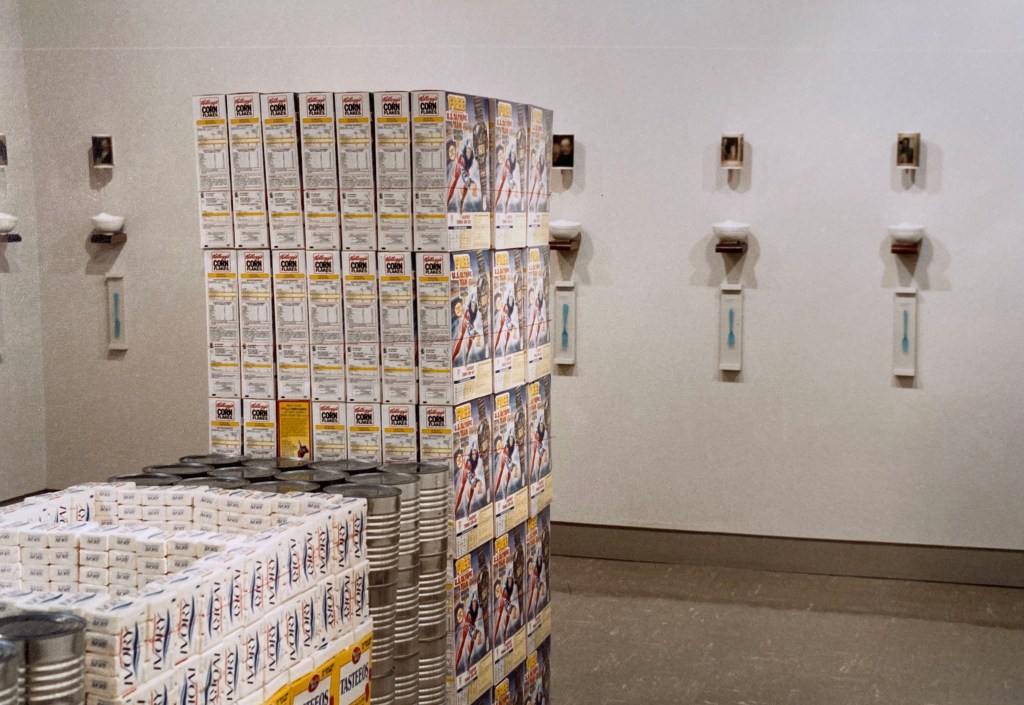
This room-sized mixed media installation is made up of two pieces. Who’s pulling the strings? And The Kitchen.
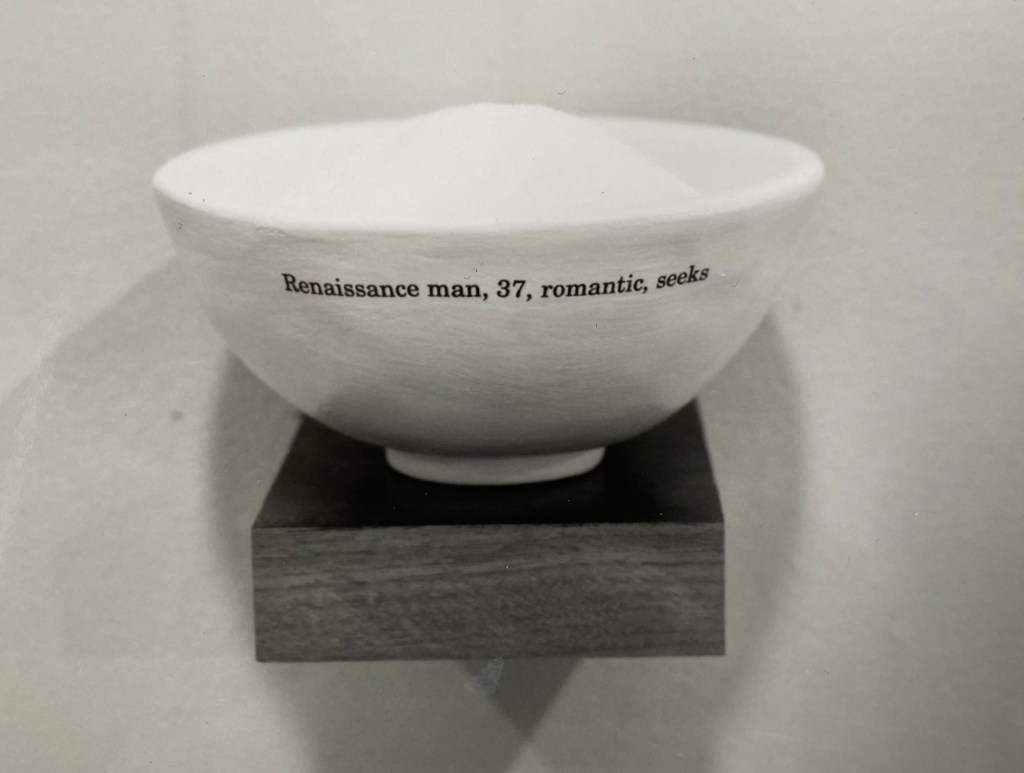
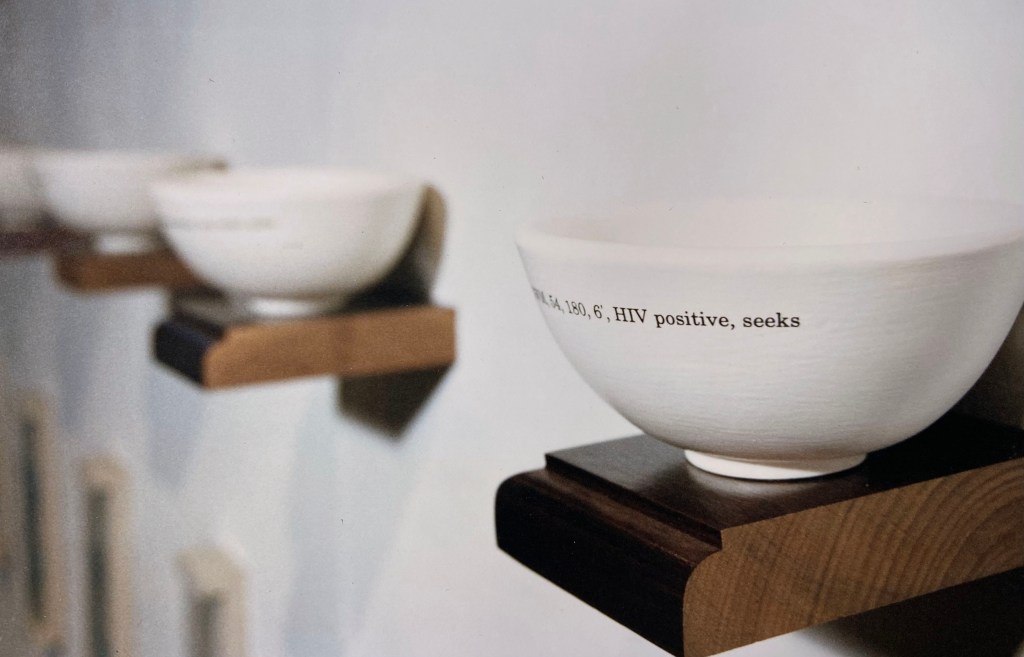
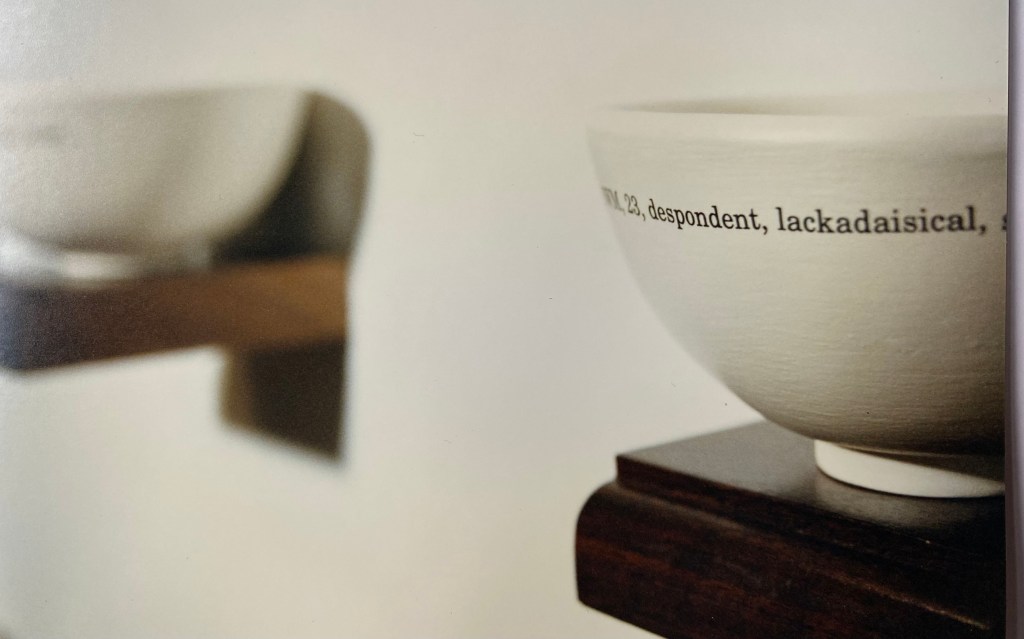
Food for Thought addresses our basic need for nourishment. As individuals we seek to fulfill our emotional desires through companionship and a sense of community. At the same time the physical needs of all of us can only be met when that community is responsive to these needs. Society balances between an organized goal0oriented body and a chaotic unstructured mass appearing as if it is too fragmented to define itself from within. It is that process of defining ourselves which brings us closer to a sense of community—to fulfilling our desires. Yet ironically this act also separates us and brings us into conflict as the needs of some groups are privileged over the needs of others. While the act of naming ourselves is essential for seeking out others who might nourish us–who won’t make us feel vulnerable—when we take on labels, we also fall into categories with preexisting stereotypes, which fragment and weaken these bonds.
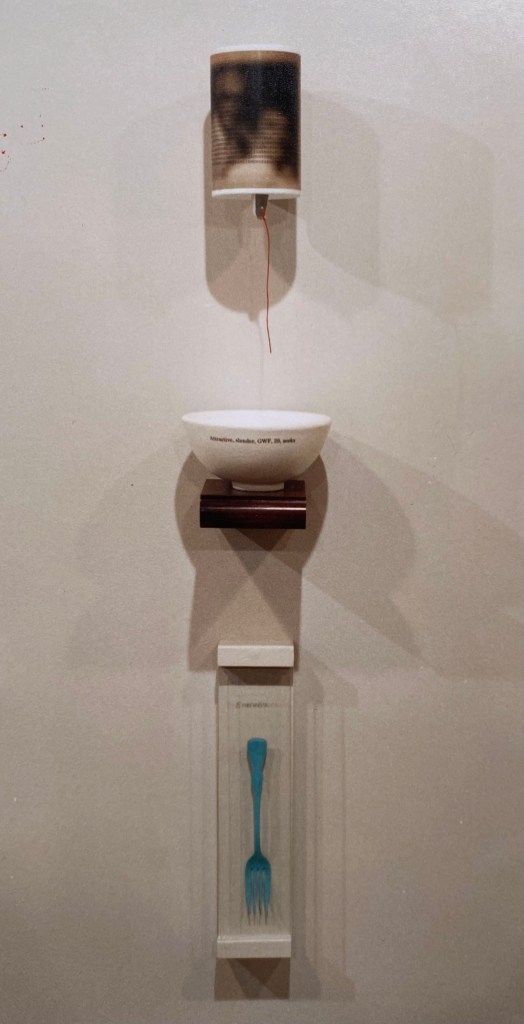
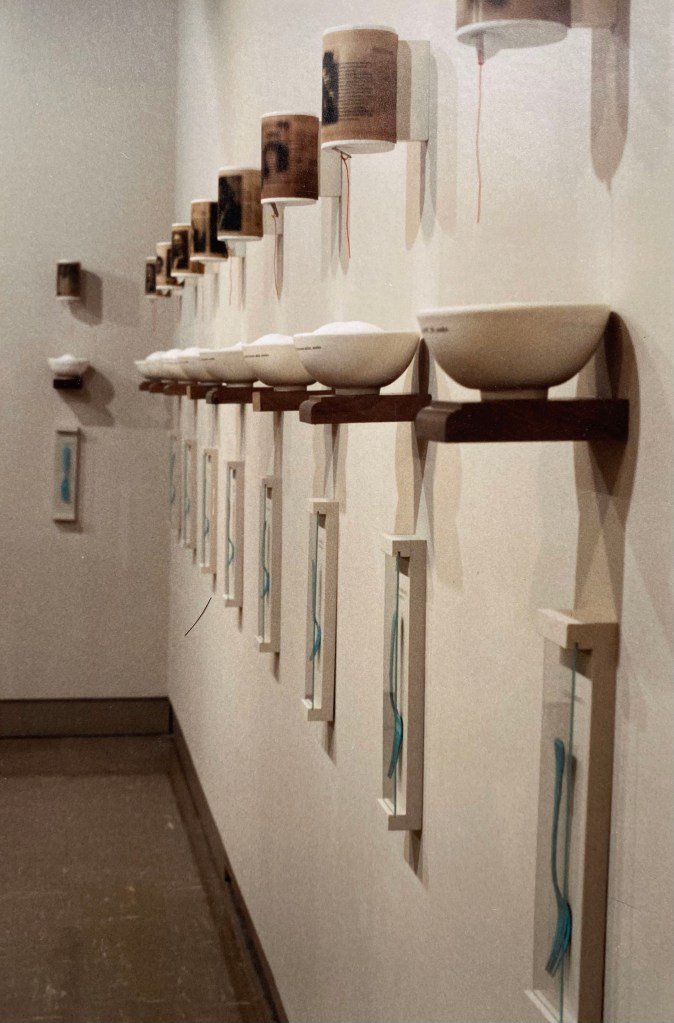
In Who’s pulling the strings? 40 bowls, each with a line from the person’s, encircle the room. Each bowl sits on a shelf which resembles a large dining table which has been cut into small pieces. Above each bowl is an upside down container of salt. Viewers are invited to pull the string above any bowl they choose. The piece points to our implicit acceptance of our own commodification as a substitute for community. The salt has both positive and negative connotations: “the salt of the earth” and “rubbing salt into one’s wounds.” We are both feeding and laying barren in our act of choosing. Depending on the community in which the piece is shown, certain bowls may be left empty a the end of the day or week, when all the bowls are emptied and the process starts again.
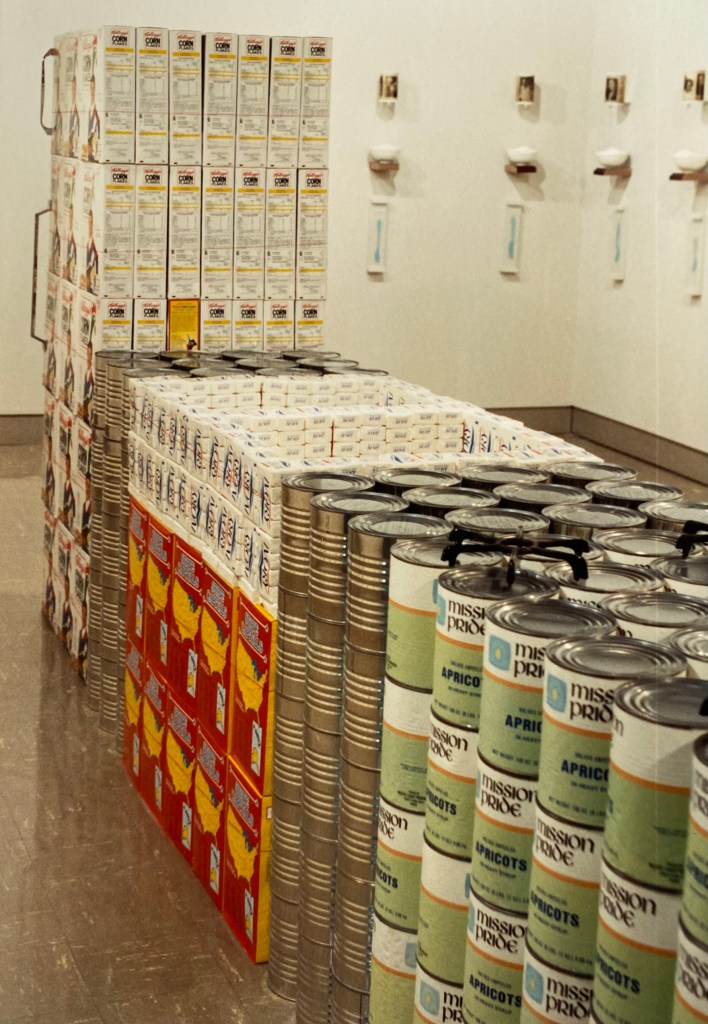
The Kitchen is made up of canned and boxed food and forms the elements of a kitchen: stove, counter, sink and refrigerator. Members of the community donated money to the local food bank, which in turn lent the food for the exhibition.
The kitchen seems like an appropriate vehicle for looking at the role of society in nourishing its individual members and for questioning the role of the artist. Can the artist still provide emotional and intellectual nourishment? One would hope we can at least provide a little food for thought.
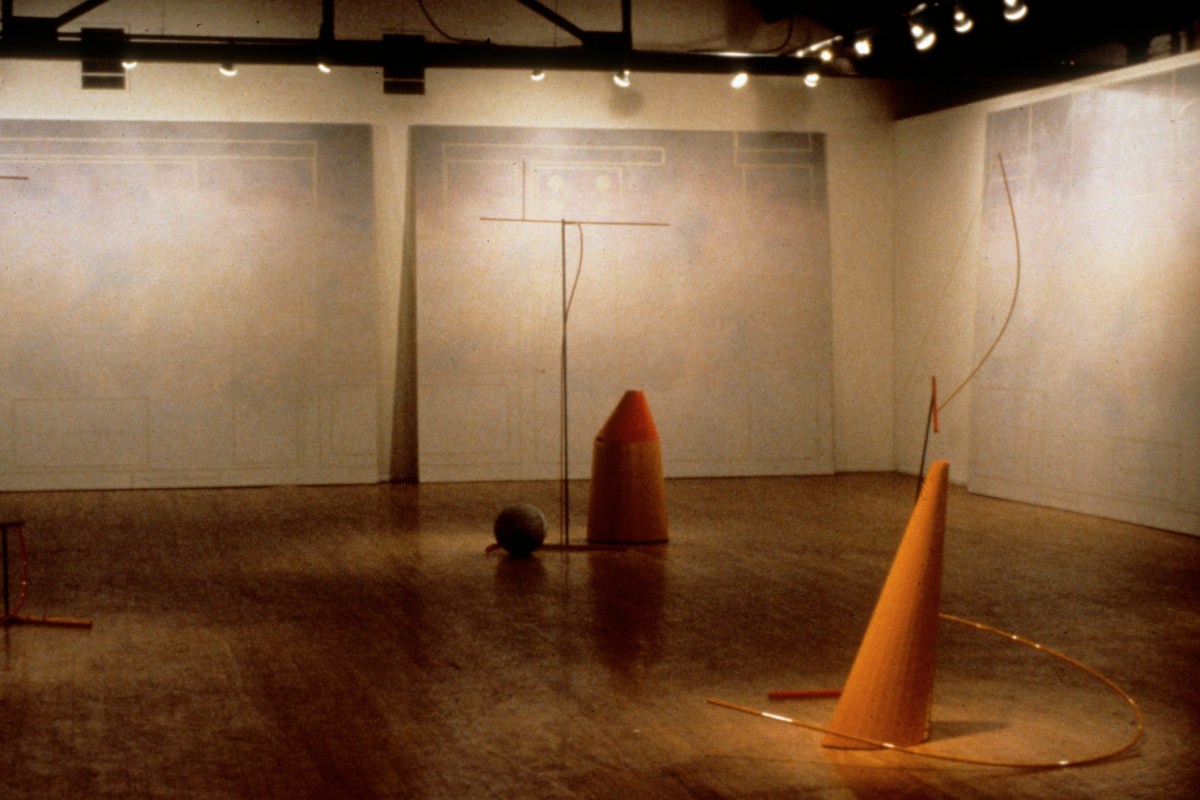
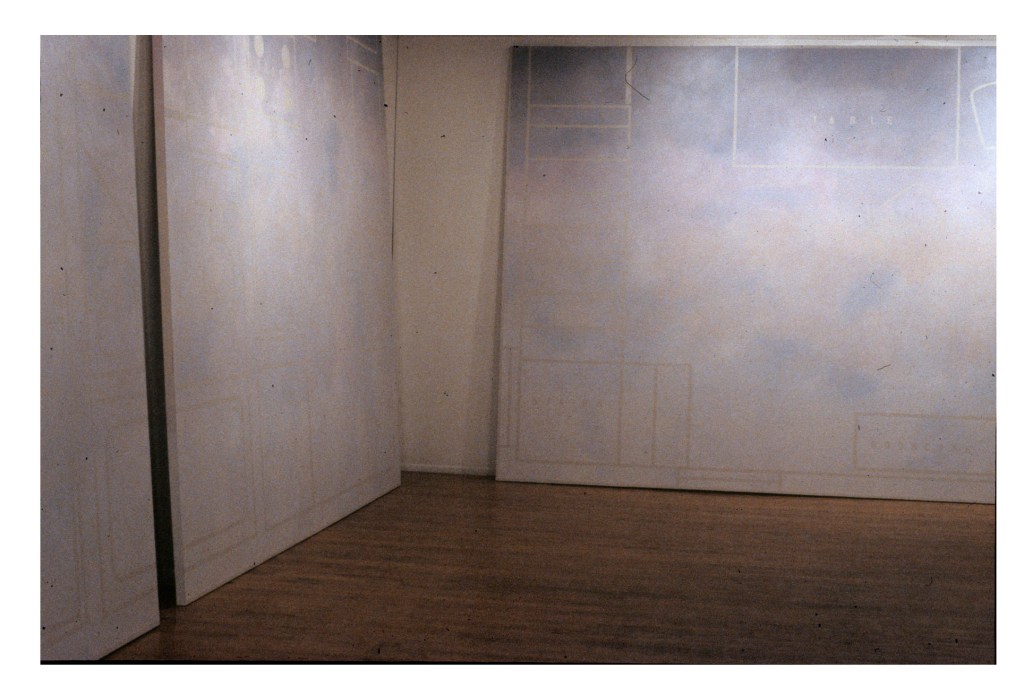
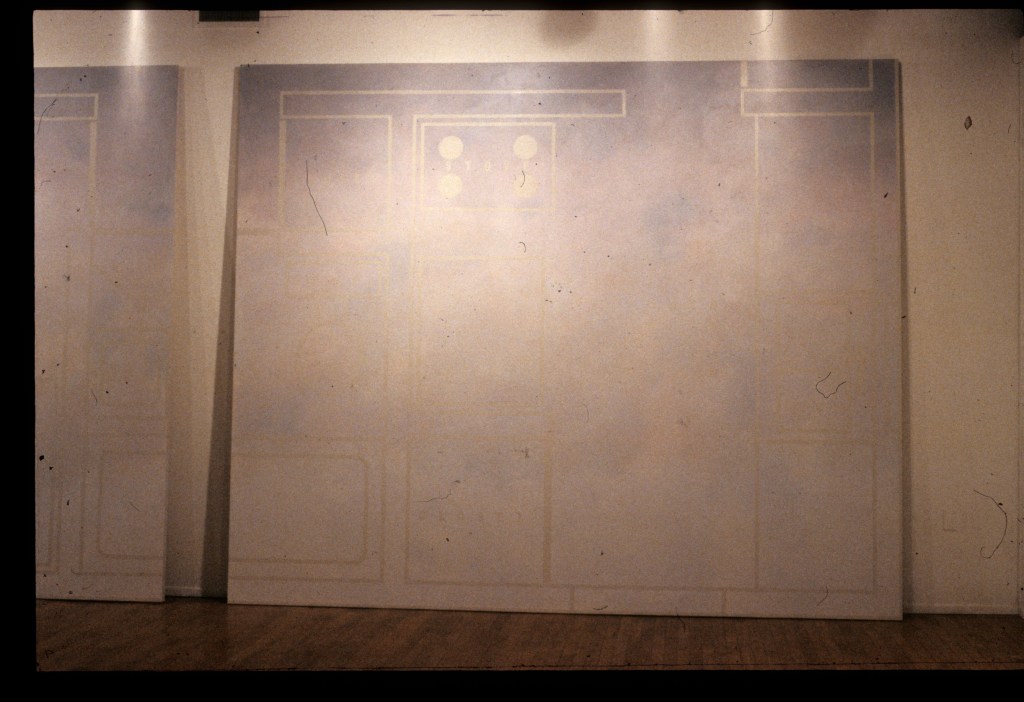
When I moved to Flint, MI, in the early nineties, the numerous neighborhoods with small single family homes struck me as an indication of an egalitarian community where the existence of a strong union provided enough income for the workers to own their own homes. But at this time, Michael Moore’s film Roger and Me, about the devastating loss of jobs in the auto industry, had just come out. For many in Flint, the American Dream of economic security faded from view.
On a trip to New York City, a friend and I contemplated the huge paintings of Julian Schnabel at Pace Gallery. She asked me whether one of those paintings might be the size of my small house in Flint. This question inspired me to make four 10 x 12-foot paintings of the outline of my 20 x 24-foot house. Outlines of the position of the furniture and appliances appear against a background of sky.
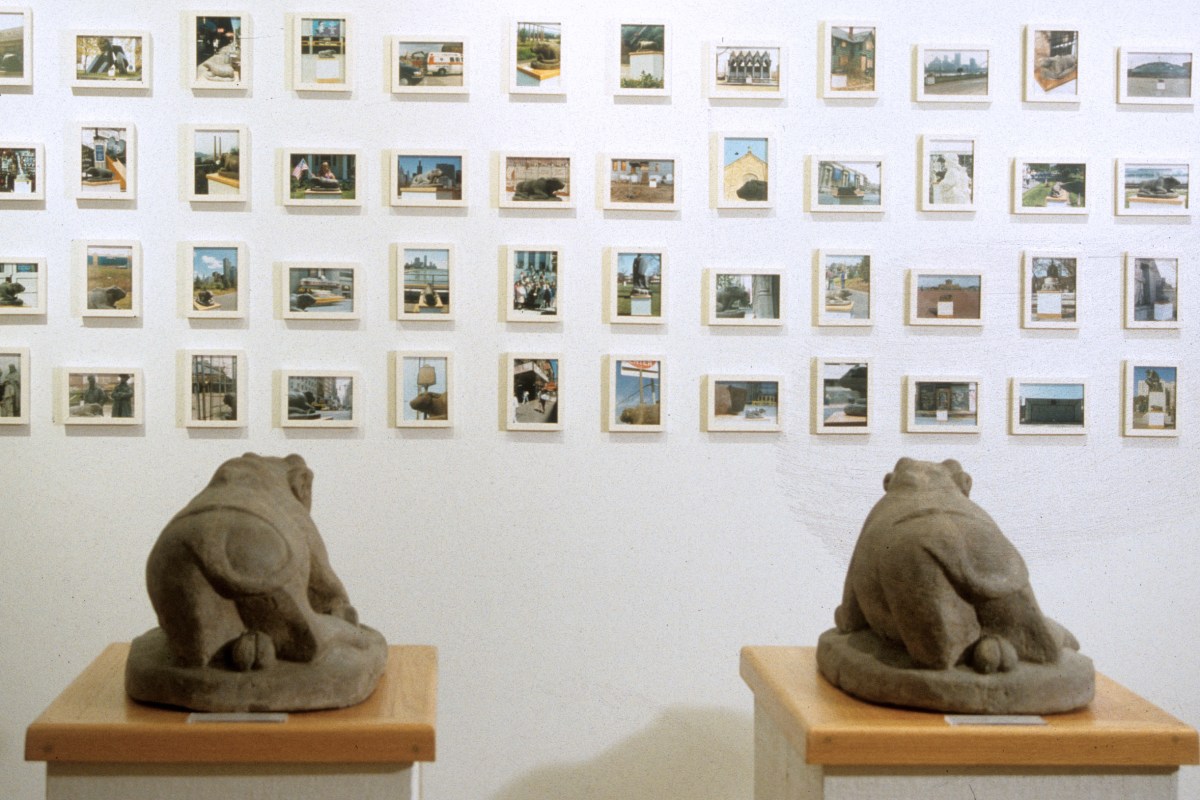
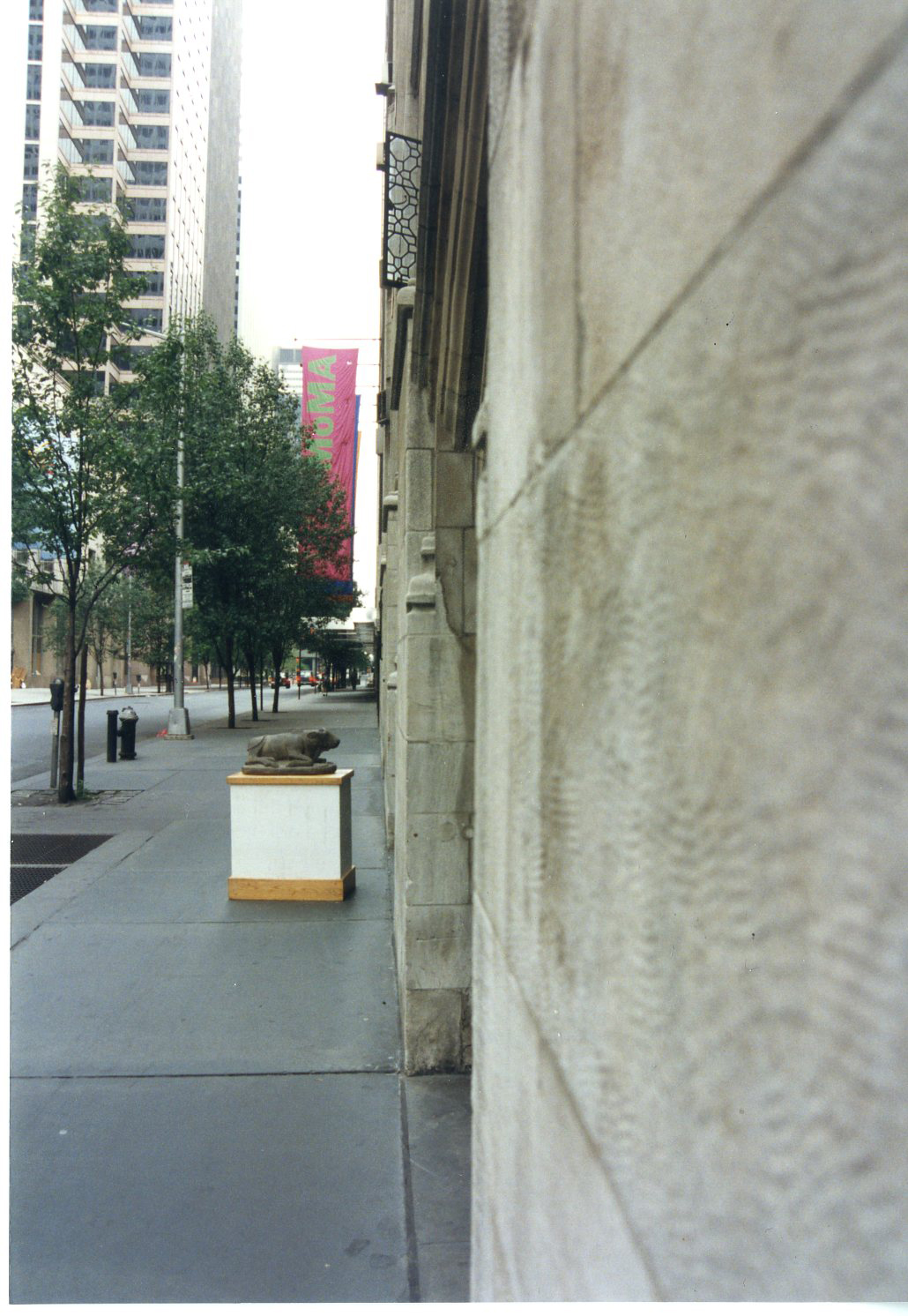
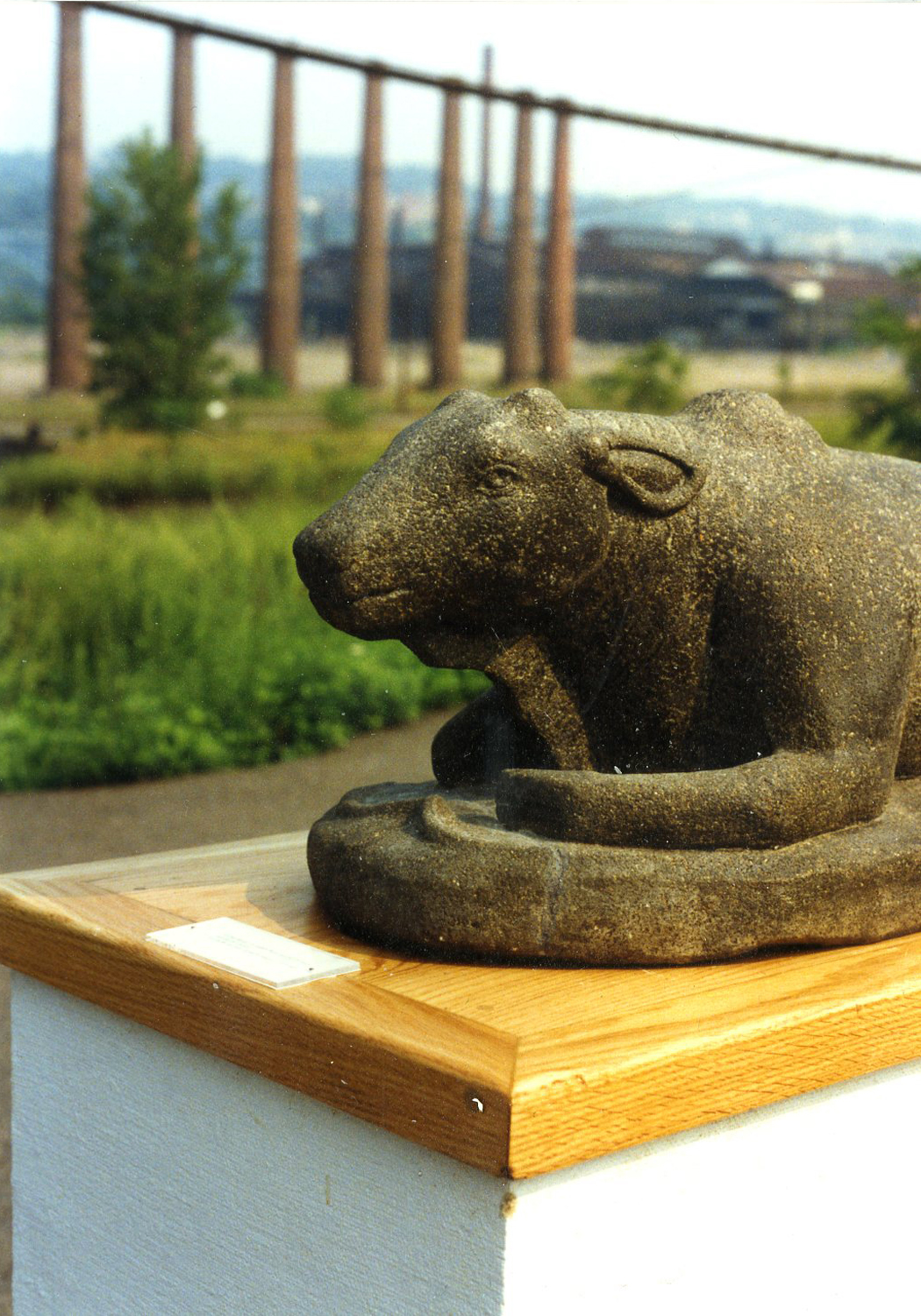
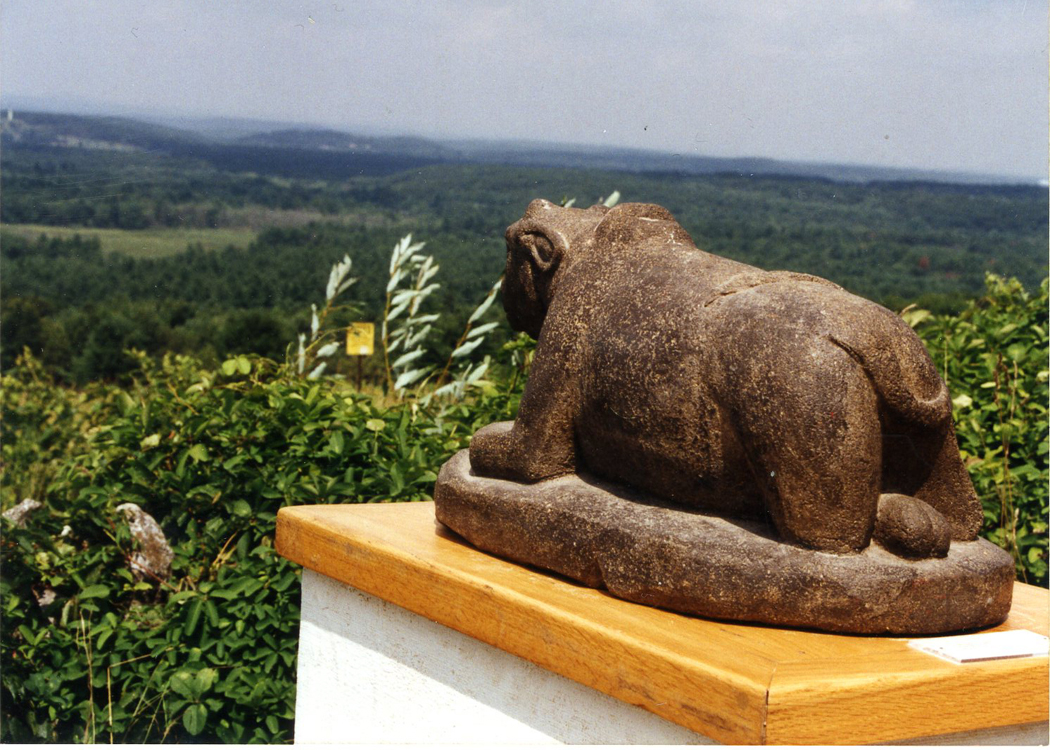
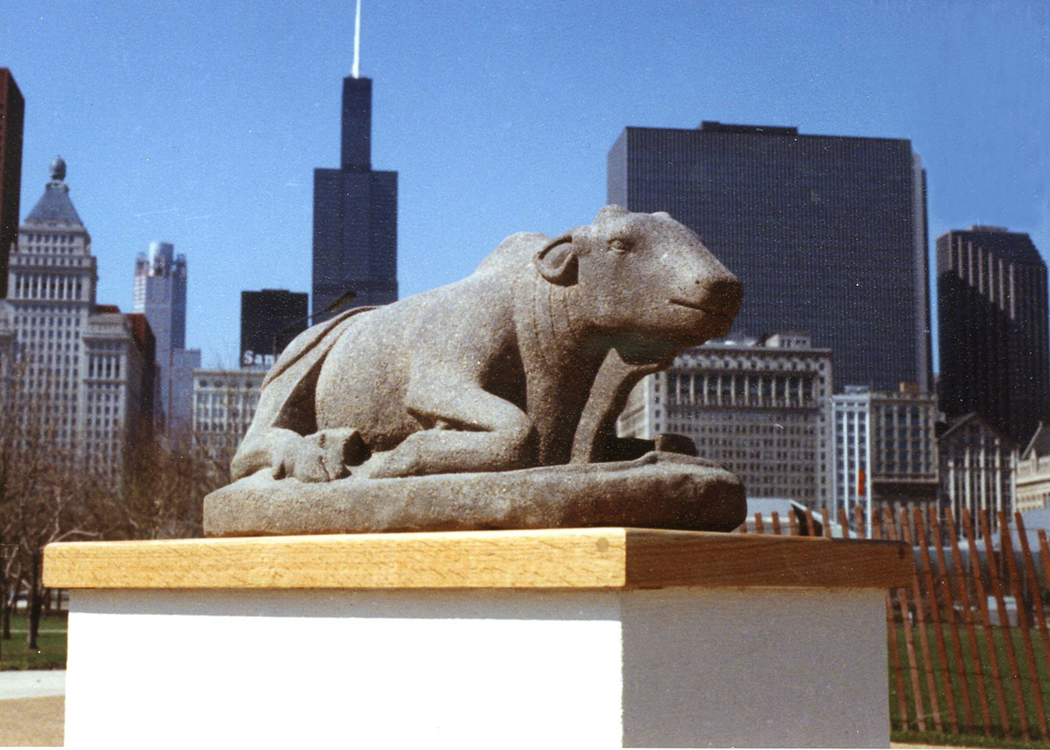
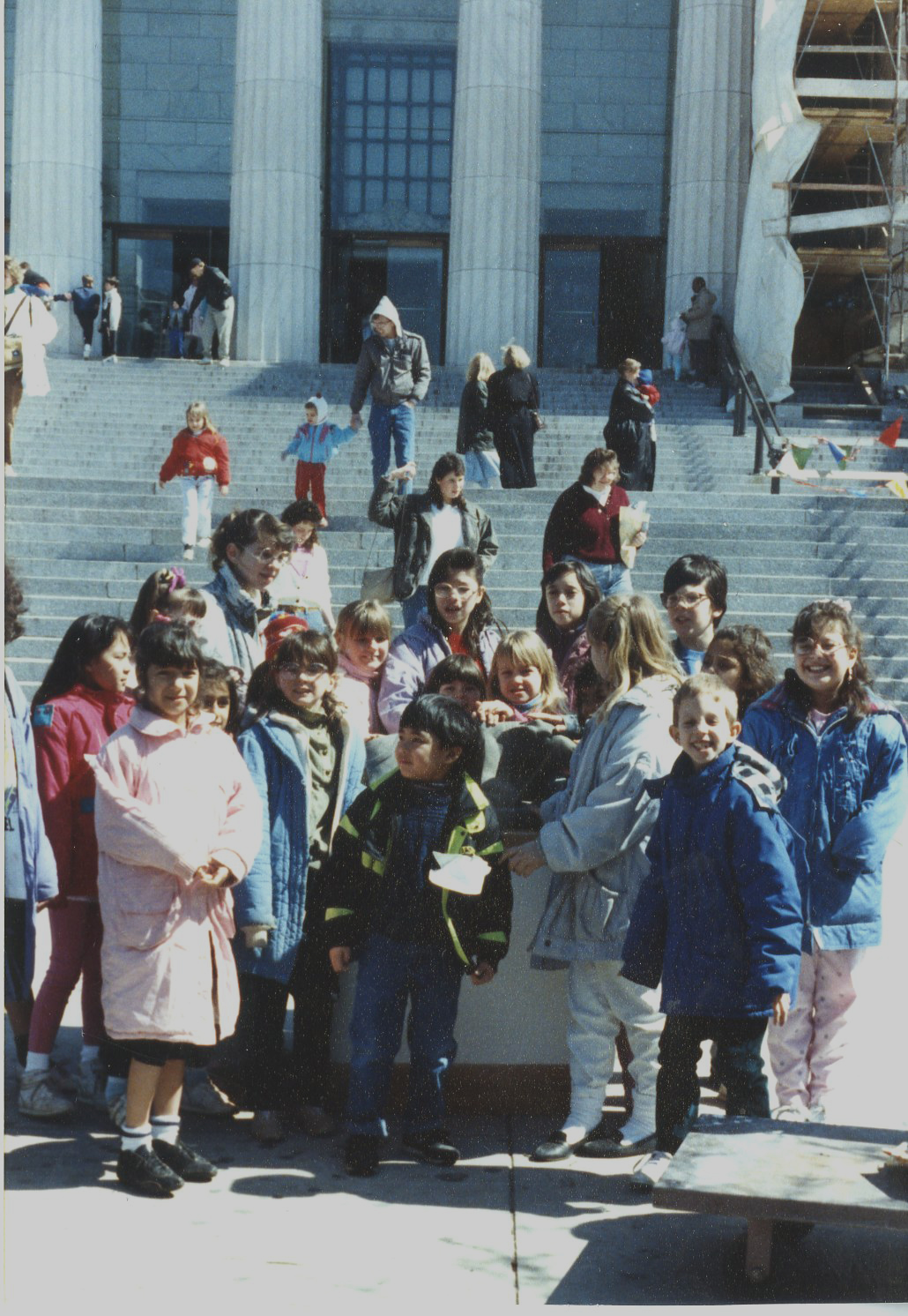
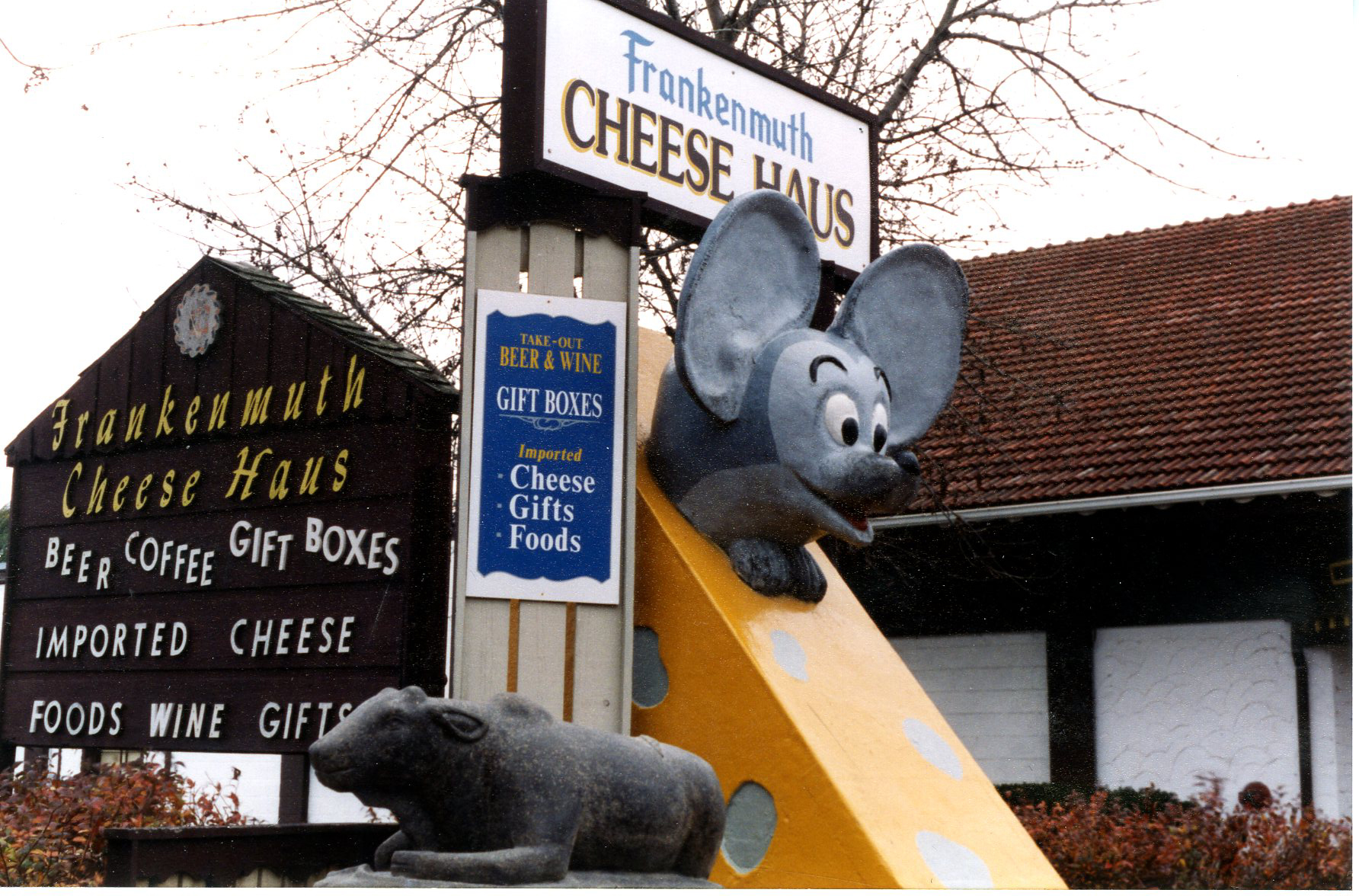
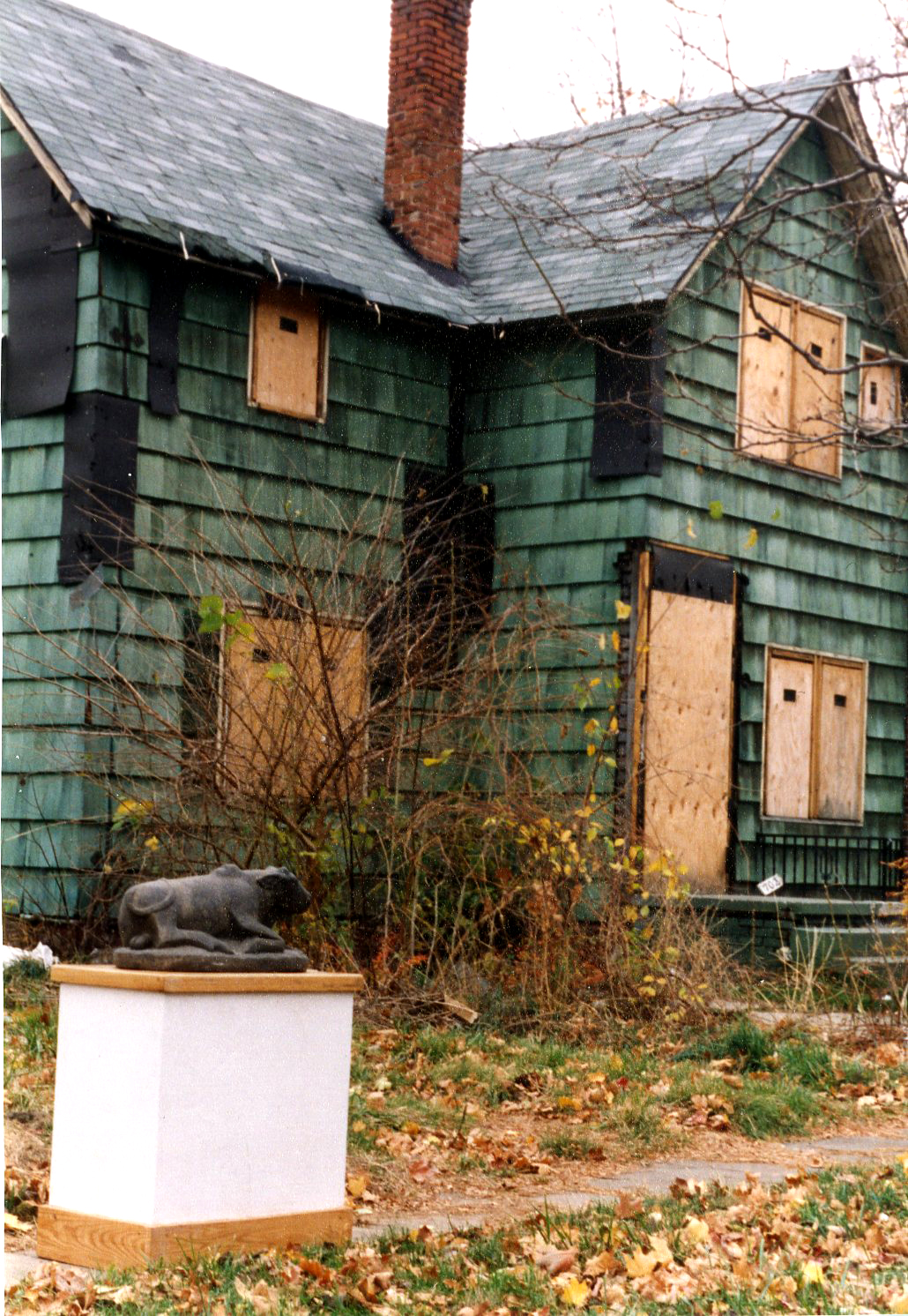
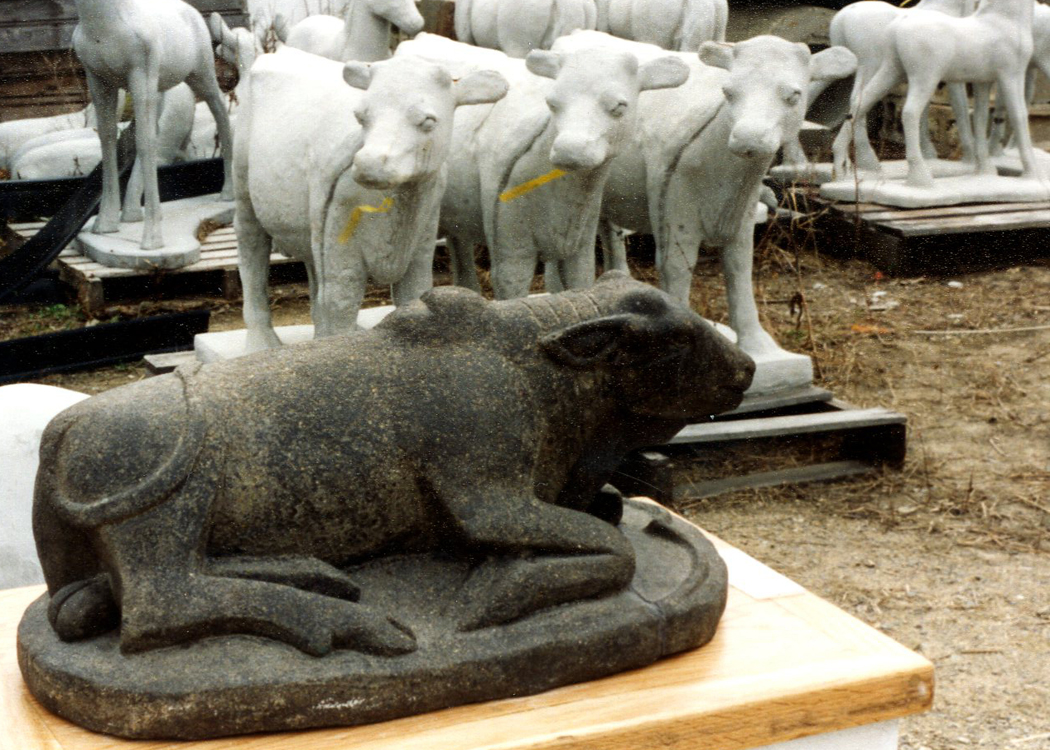
The Image of Nandi in America is the last of a series of sculptures and installations begun in 1988 while I studied at the School of the Art Institute of Chicago. The Stone Image of Nandi, Bull Mount of Siva, is a favorite piece at the Museum and many people who walked by it reached out to touch it. I began to make an exact copy of the piece simply because I wanted to touch it and I wanted others to touch it. Re-making the piece symbolized, for me, the artist taking the work back–regaining the power to define the work. In the process, I thought a lot about what a thing is and who and what determines that.
Does the artist own the work? Is there only one meaning–the original one? How does history and environment effect meaning? How does who possesses the work determine its meaning?
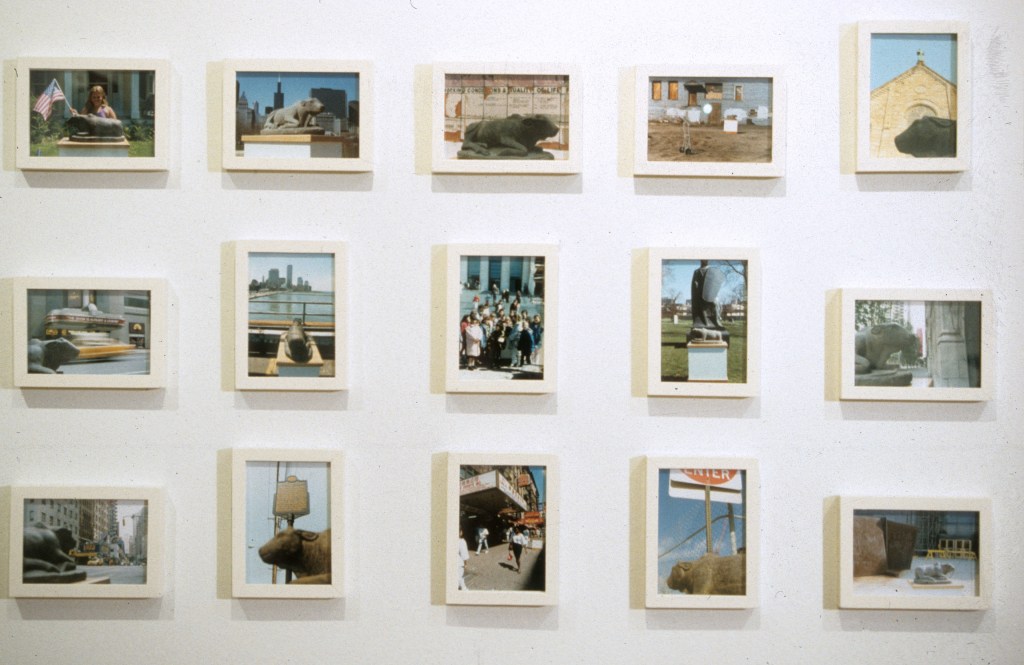
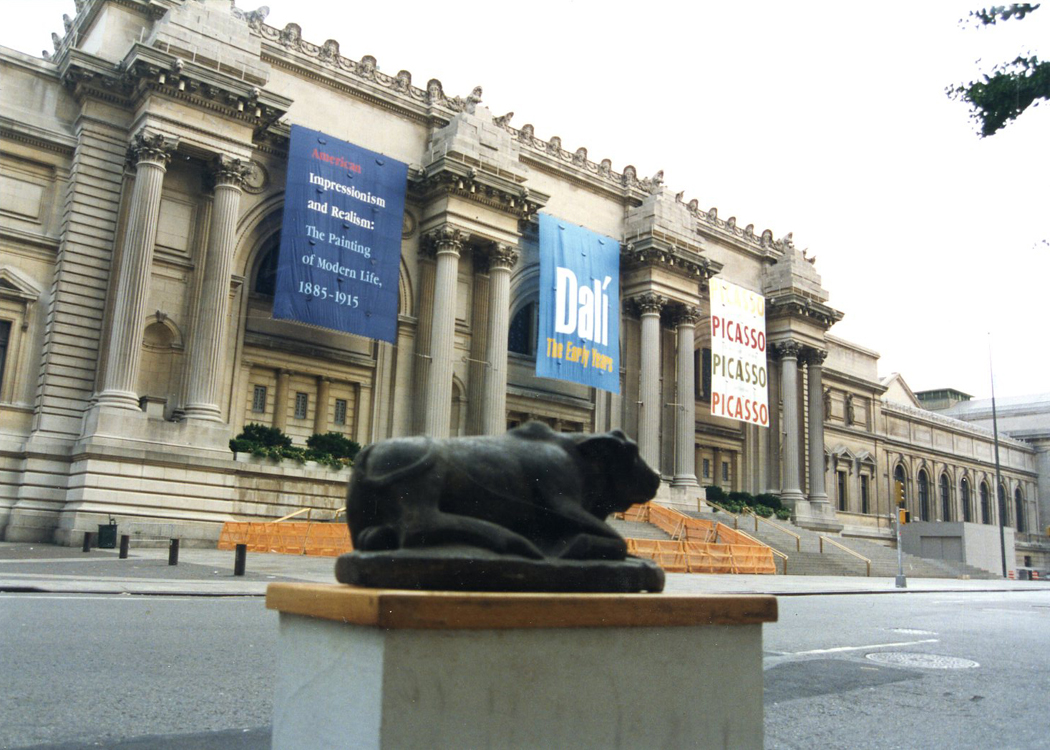
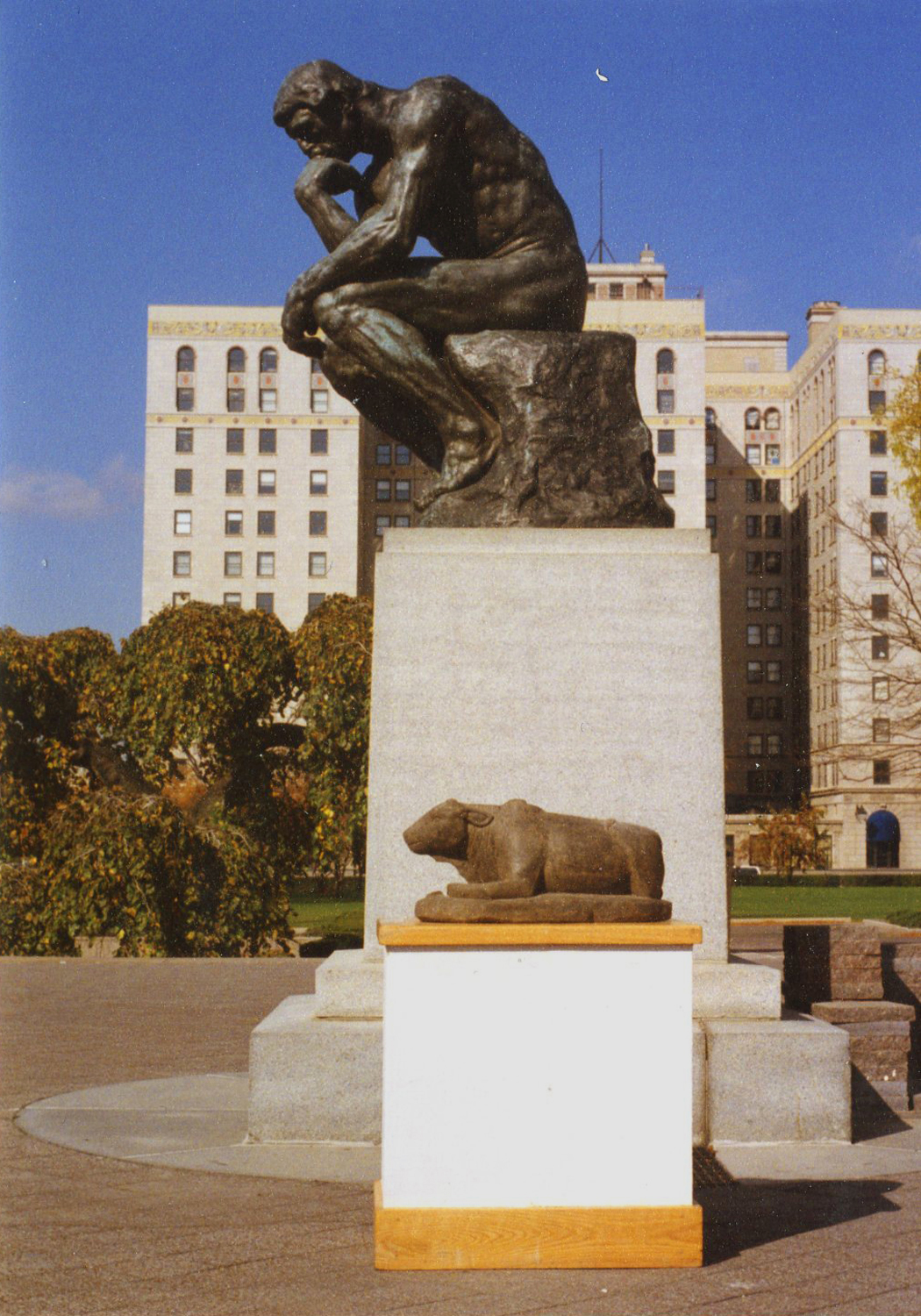
Copying and removing the Nandi from the Museum and then photographing it in different locations calls into question its place in the Museum to begin with. The photographs seem humorous to people because they see something that is unexpected. The Nandi doesn’t seem to belong anywhere.
But calling into question the relationship of the object to its environment also asks how it is defined, and who defines it. It means something different in a cemetery (is it an ornament for a gravestone?), in the yard of a lawn statuary company, in front of a church, next to a statue of Lincoln. Without the original context for which it was created, its meaning is slippery. It’s interesting that in the Hindu religion, these icons are only believed to be inhabited by the god during the ritual. This Nandi has been uninhabited (evacuated) for quite some time.
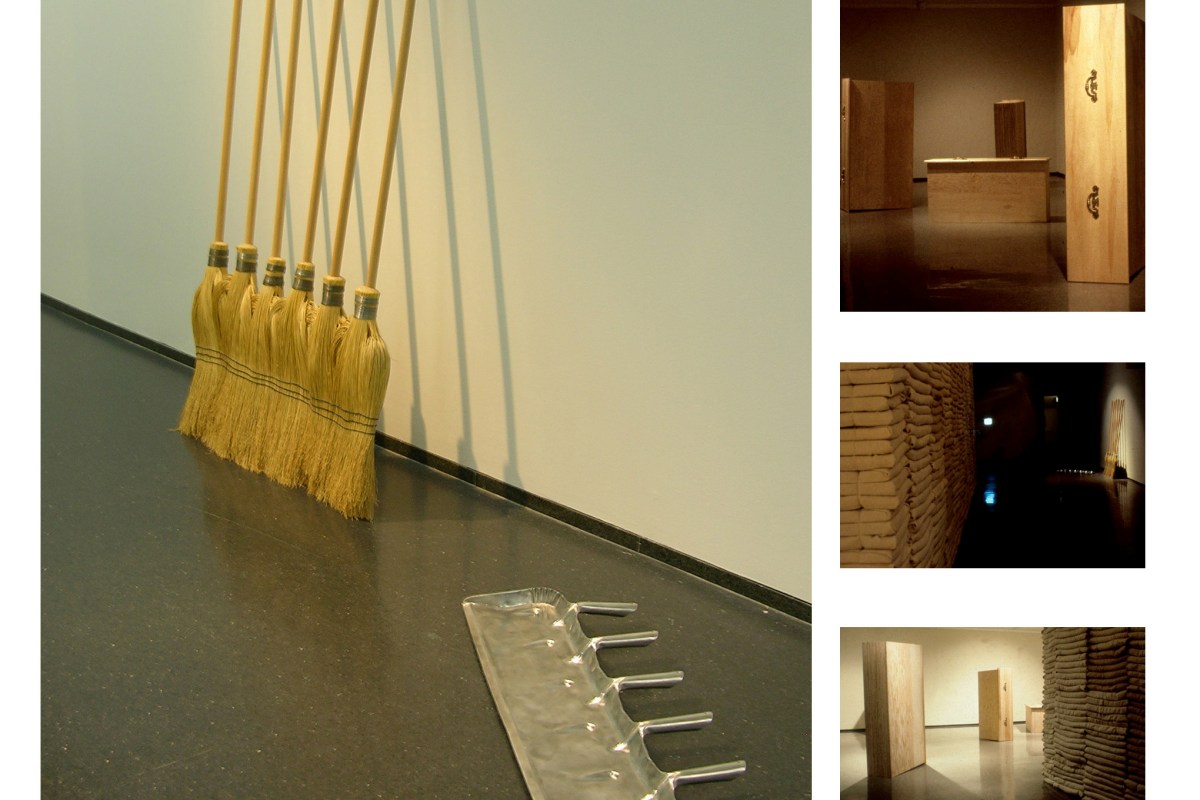
Margin of Safety: A Collaborative Installation at the Museum of Contempory Art in Chicago with Monica Bock, Mary Carlisle, Cathy Lynn Gasser (Ono), Melissa Goldstein, and Sandrine Sheon
Wool blankets, plywood, bronze, aluminum, 16 mm film, video monitors, sound
Margin of Safety has as its premise the fundamental need for physical shelter and psychological refuge. The piece explores the tension between the need for secure boundaries and the impossibility of insuring or maintaining that security. In the face of both natural and social forces of displacement, the boundaries between public and private realms have been erased. Previously held notions about space and its connections to a sense of psychological interiority, completeness, and physical well-being can no longer be assumed. Yet within this slippage, a sense of home or refuge is constantly being made and maintained.
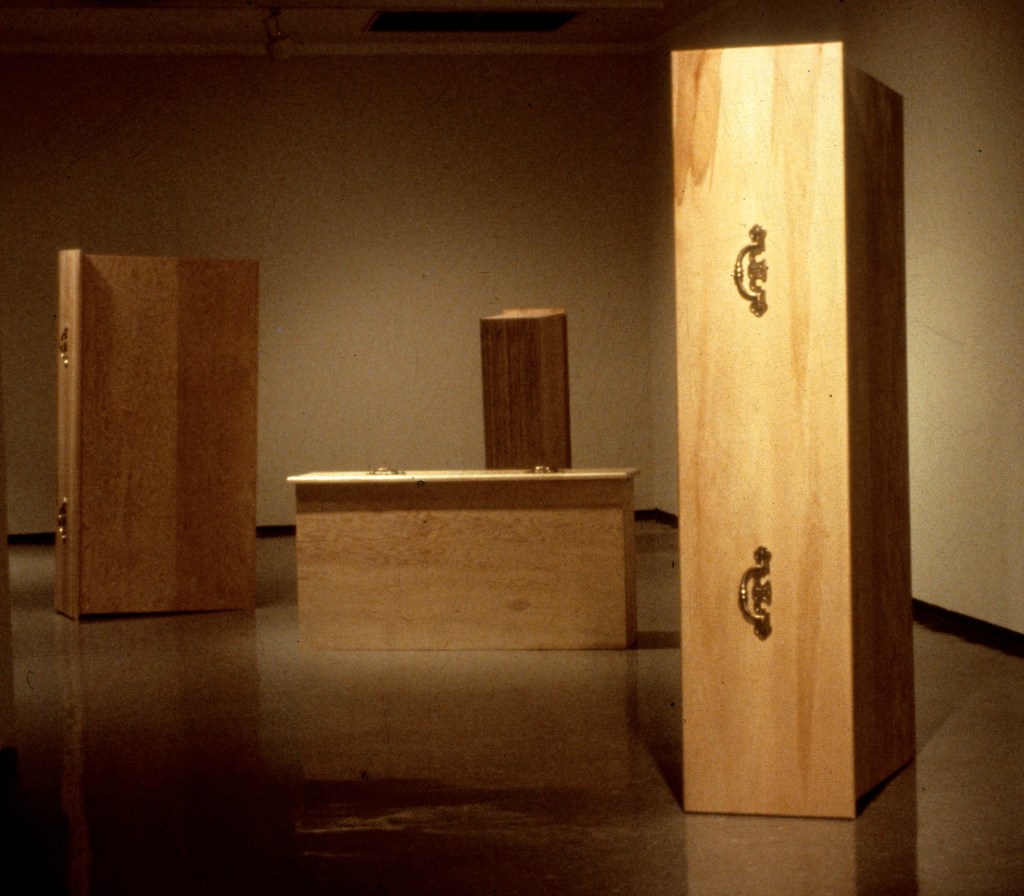
One enters the piece by walking among a series of solid life-sized drawers toppled from a nonexistent chest. Their cavities blocked, the drawers suggest an absence of useable space. Denying their function as containers of personal belongings, they posit the illusory nature of a unique and private self.
Beyond the drawers are two massive structures of folded and stacked blankets. The space created by the blankets provides retreat and a sense of interior self, a place where one hears one’s own breath. The refuge only becomes secure, however, through excessive accumulation; this exposes the structure to the threat of collapse and dispersal. Accumulation requires a constant and collective tending, while discouraging retreat of the individual into an idealized intimate space. The autonomy of the individual is questioned at the same time that its protection is sought.
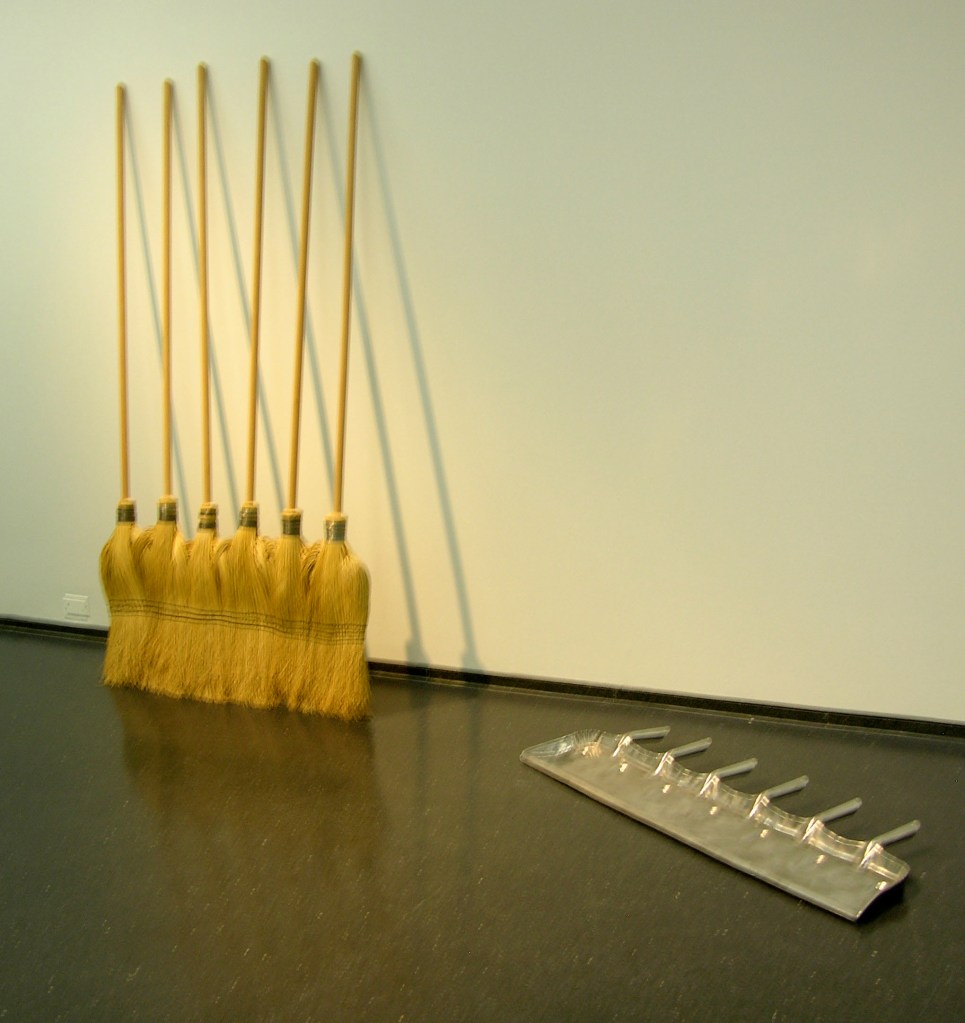
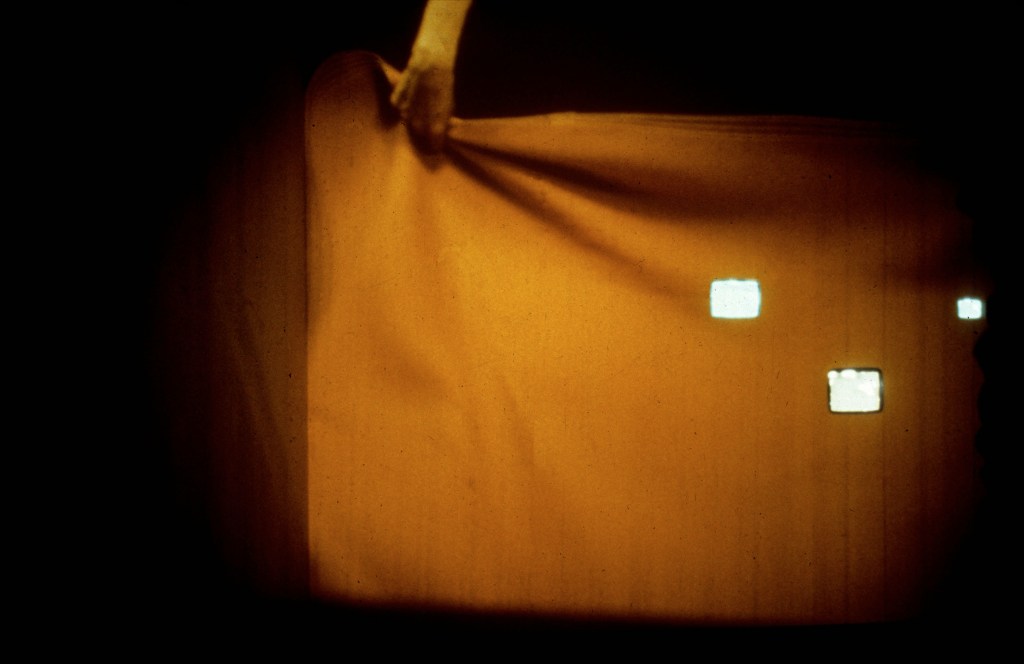
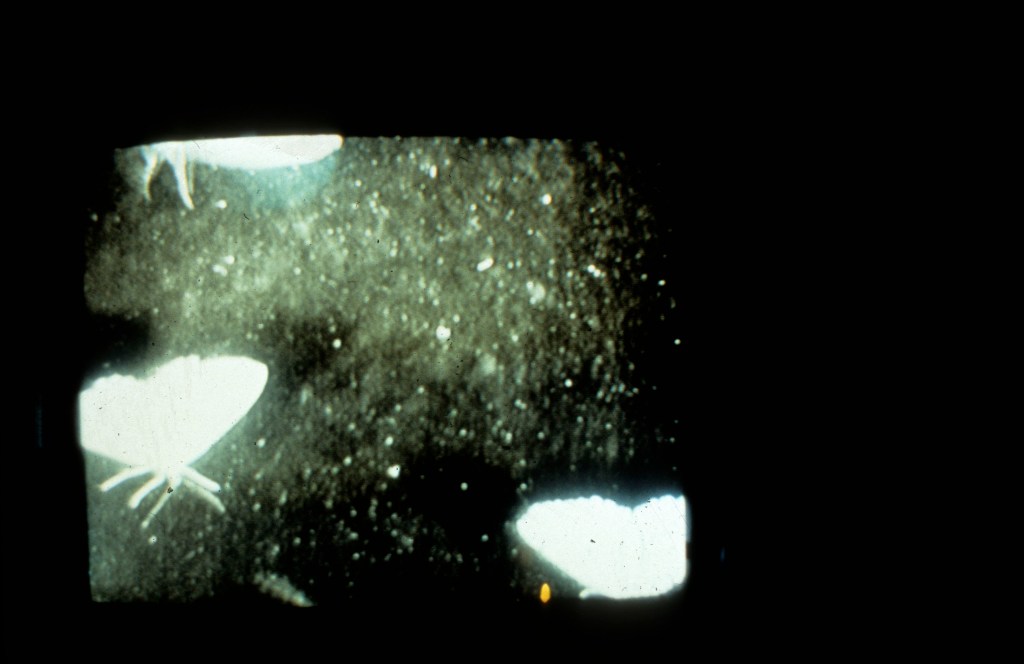
Leaning against a side wall, the six-handled broom and dust pan are an absurd expression of the shared maintenance of habitable space. Projected on the back wall, the culminating image of hands shaking moths from a blanket underscore the individual’s persistent attempt to fend off decay. Like the collective maneuvering of a six-handled broom, it is at once a suite and hopeful gesture representing our desire to adapt in the face of change.
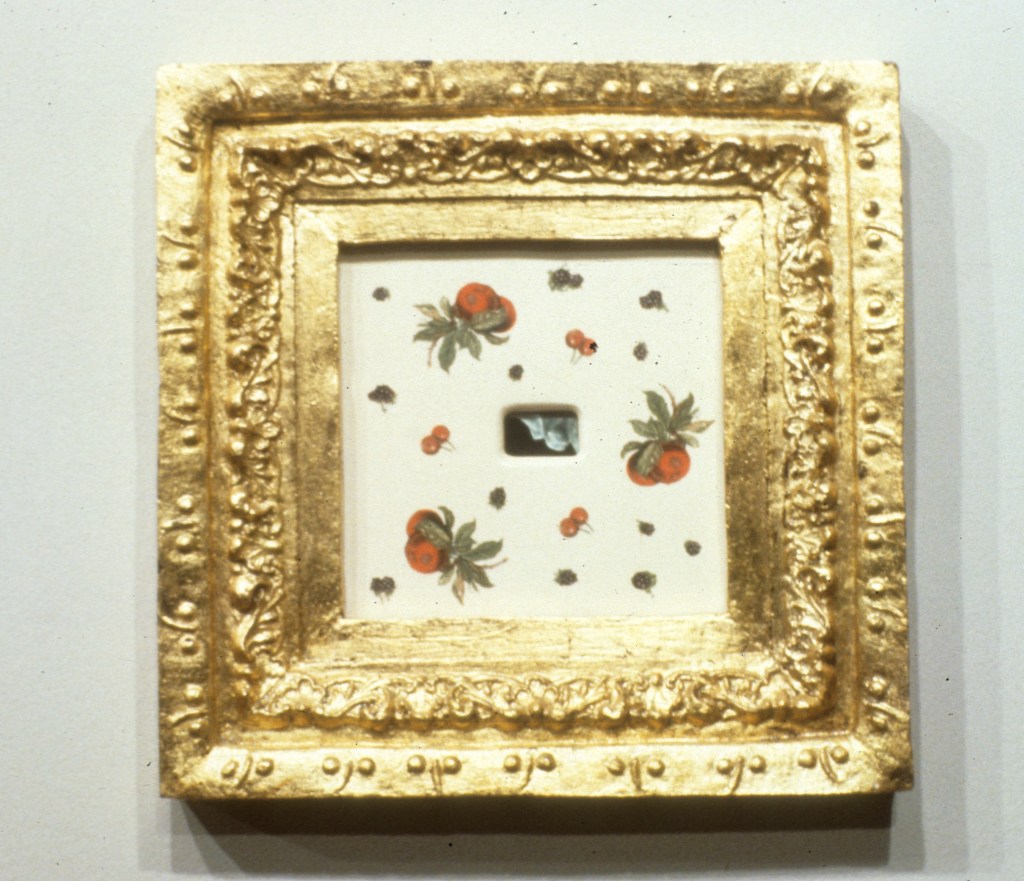
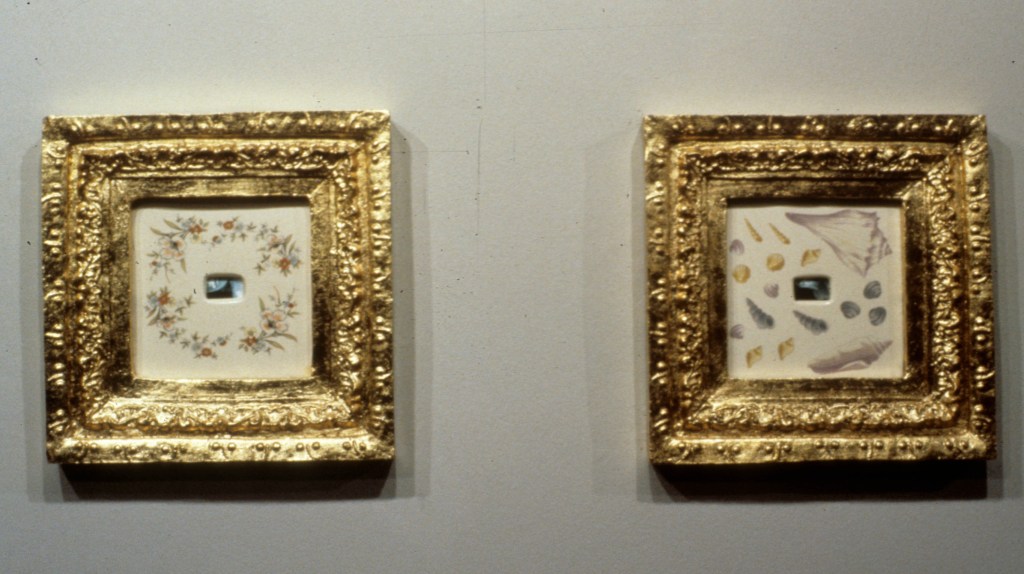
This work centers around public sculpture in Chicago and looks at how gender, race and class are portrayed in statues. The pieces sexualize and eroticize the representation of phallic power embodied in the general’s horses as a way of undermining the equation of male genitalia with domination. The monumental has been miniaturized and made precious. It has been subsumed into the aesthetic and offered up for the viewer’s enjoyment, while at the same time creating an unexpected imbalance. The five color photographs are matted in handmade ceramic mats and surrounded by artist-created plaster frames with motifs from the natural world that suggest phallic shapes. The images record the underbellies and genitalia of the sculptural representations of the horses of these five generals: General Washington, General Logan, General Sheridan, General Koscluszko, General Grant.
Review by Curator Gerry Craig
Detroit Artists Market: Journal of Exhibitions
Volume5/number5
1993
Excerpts from her article
“Flashing: General’s Horses combines rich metal-leaded surfaces with the look of inexpensive ceramics to create colorful alluring textures which draw the viewer in. The tiny images are photographs of the underbellies of five generals’ horses from public sculpture in Chicago. The fruit, shells and floral patterns of the ceramics and the outer motifs of the plaster frames mimic the sexual forms in the photographs, turning the tables on how women’s bodies have served as metaphors for scores of natural forms which are dehumanizing and objectifying.
. . . her juxtapositions of seemingly disparate elements creates powerful statements on politics, sexual politics and cultural institutions. Flashing: General’s Horses began with the artist’s observation that all public sculptures in Chicago were of men, mostly military heroes, presumably because there have not been women deemed worthy of these kind of monuments. Women are lionized for their physical attributes, their body and beauty, not their courage or patience or stamina. Catherine reverses which sex has its body parts glorified in Flashing, with the male genitalia of the horses shown in the center of the seductive albeit overwhelmingly large framing device. The proportion of the stereotypes ‘feminine’ images of flowers and fruit combined with the horses’ photographs comment on who it was that actually carried the generals. The luxurious gilded frames imply both the material gratification accorded war heroes and the goals of the military-industrial complex which makes war heroes possible. . . .“


















 Cate Smith Art