The Image of Nandi Evacuated Three 1991

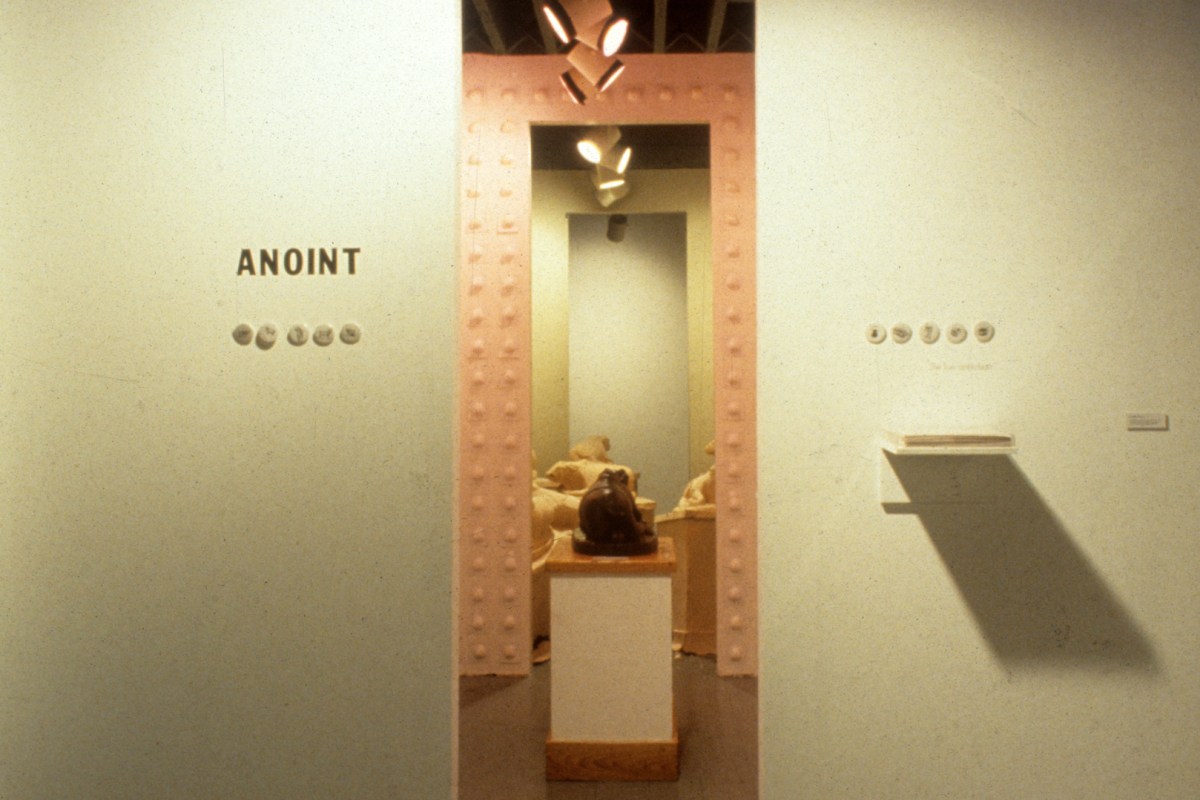
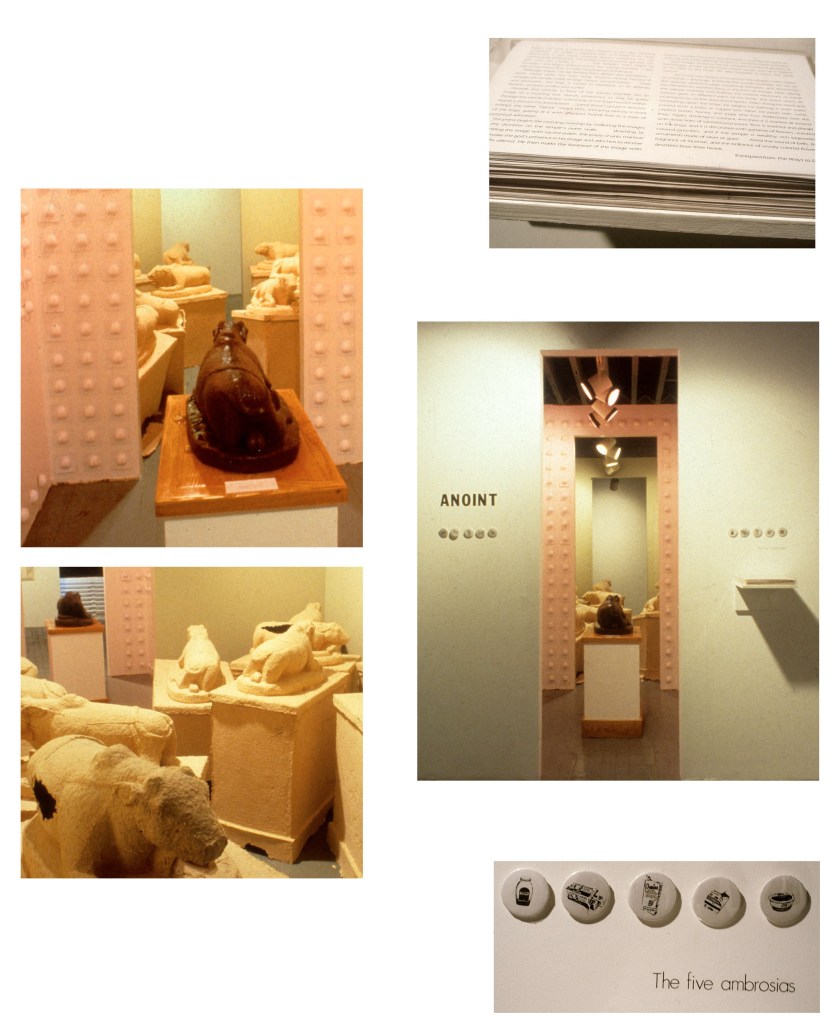
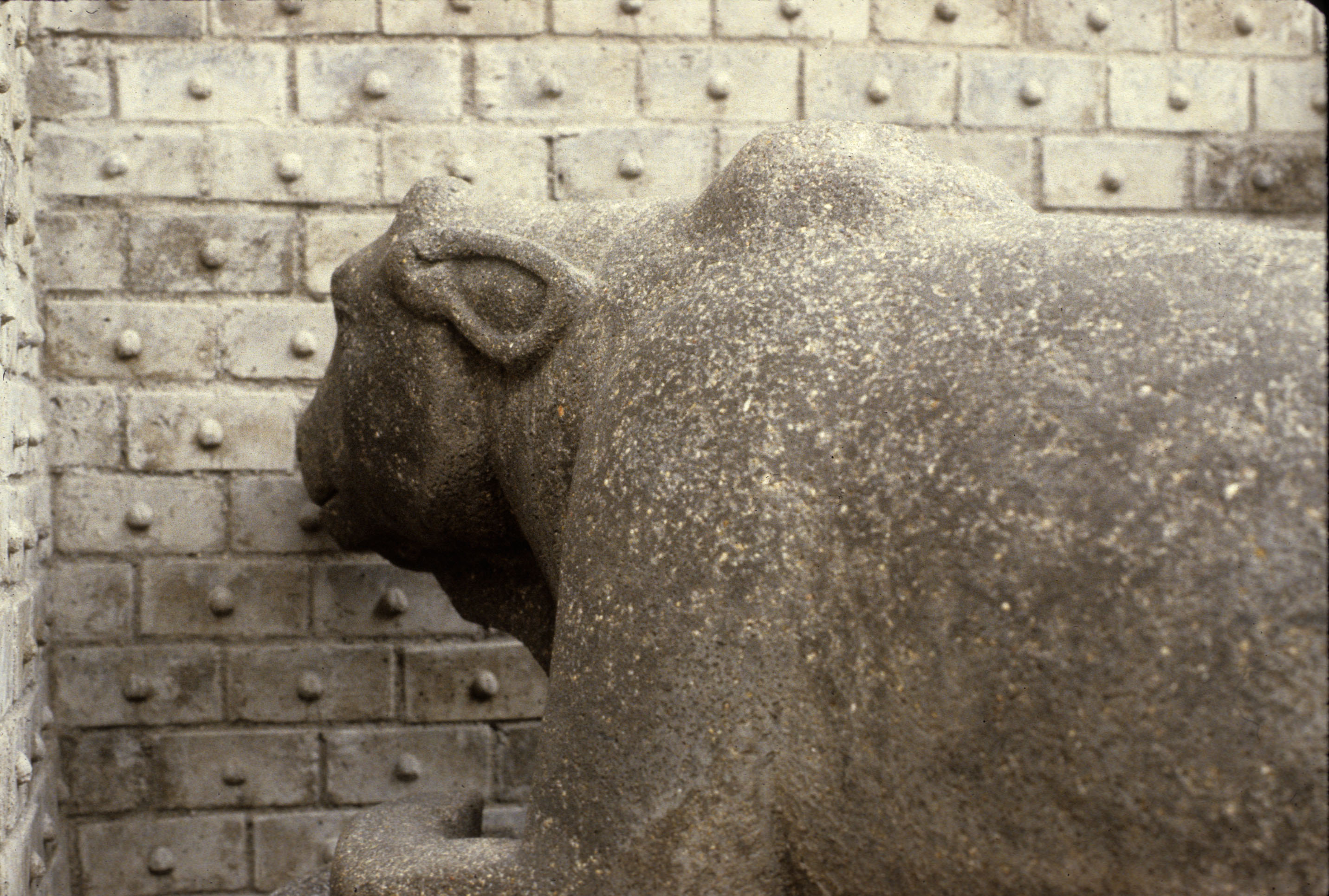
This work produces new environments for a sculpture from the Art Institute of Chicago collection—Stone Image of Nandi, Bull Mount of Siva, Java, 8th-9th century—which attempt to show how the positioning of this piece by the museum neuters (disempowers and displaces) and neutralizes (empties of meaning). The Nandi in the first room reverses the museum orientation—yet resembles that of a Siva temple where he would be approached from behind as he stares into the main temple, called the womb chamber, at the linga, a phallic representation of the god Siva. During the ritual in which Siva is persuaded to inhabit the linga so that he can be worshipped, the linga is bathed with the five ambrosias—honey, sugar, clarified butter, curds and milk. In the installation, Nandi stares into a room occupied by hollow imitations of his own form, and empty containers which once held the products we would associate with the five ambrosias are formed into phallic triplets and stored above Nandi’s sight.

In a Hindu temple, infertile women may pass by to touch his testicles, hoping to increase their chances of having a child. In the museum his testicles are unseen—in fact he is often misrecognized as an ox, a cow, or even a lamb or goat. He is unknowingly neutered by all who see him. The multiplication of testicles in the first room represent the usurping of power of the Nandi, the vehicle of Siva, and a god in his own right, by the institution. The fact that he is approached from the front in the museum neutralizes the image. He is seen as every other western sculpture of any antiquity which is assumed to exist to cover up some architectural structure. This aestheticizes the image and allows it to become merely “cute.” 

The Image of Nandi Evacuated Two 1989

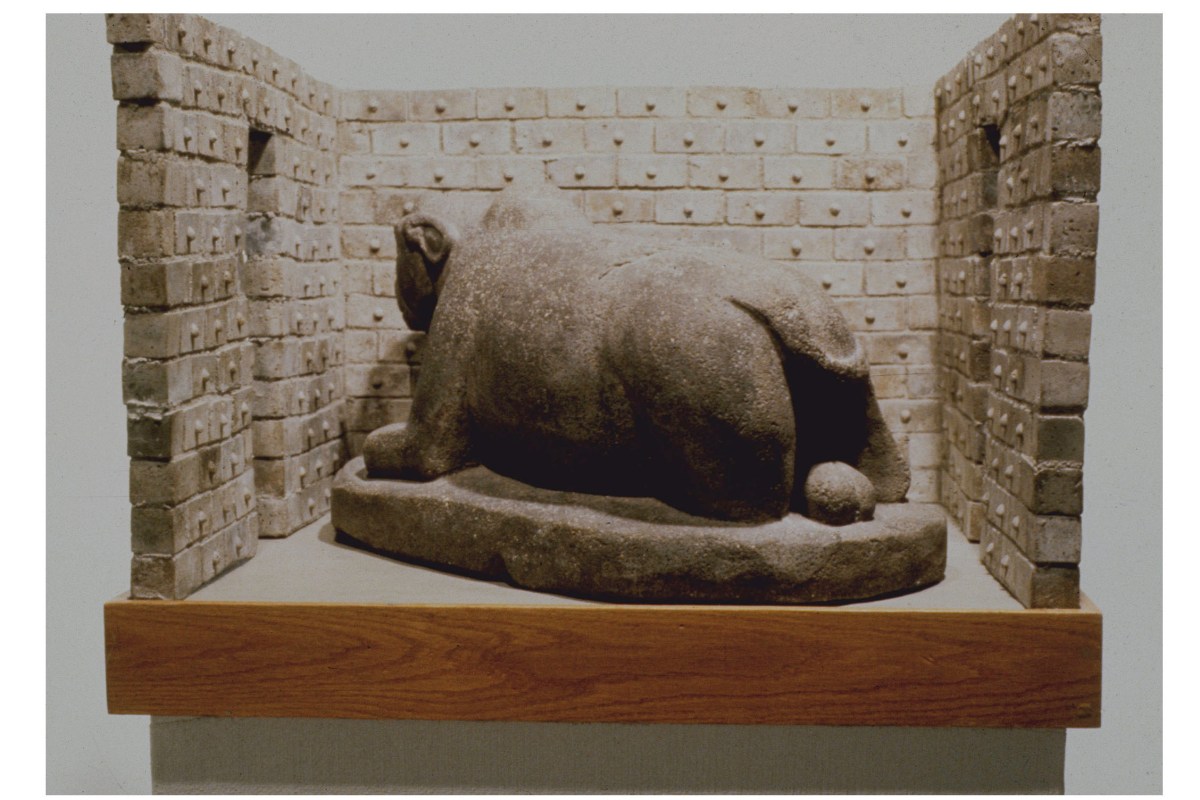
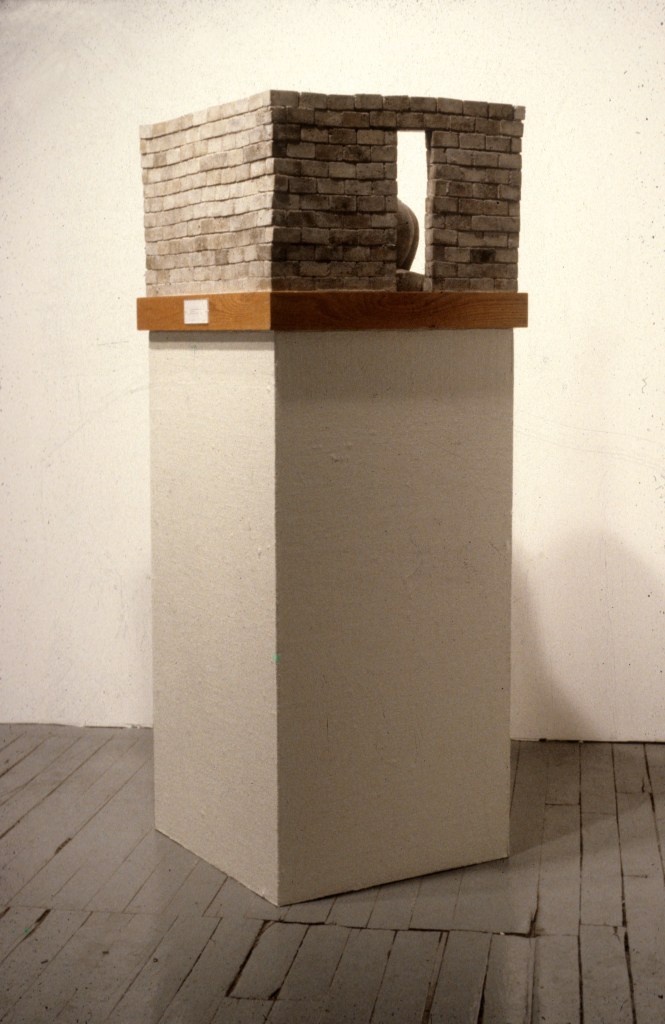
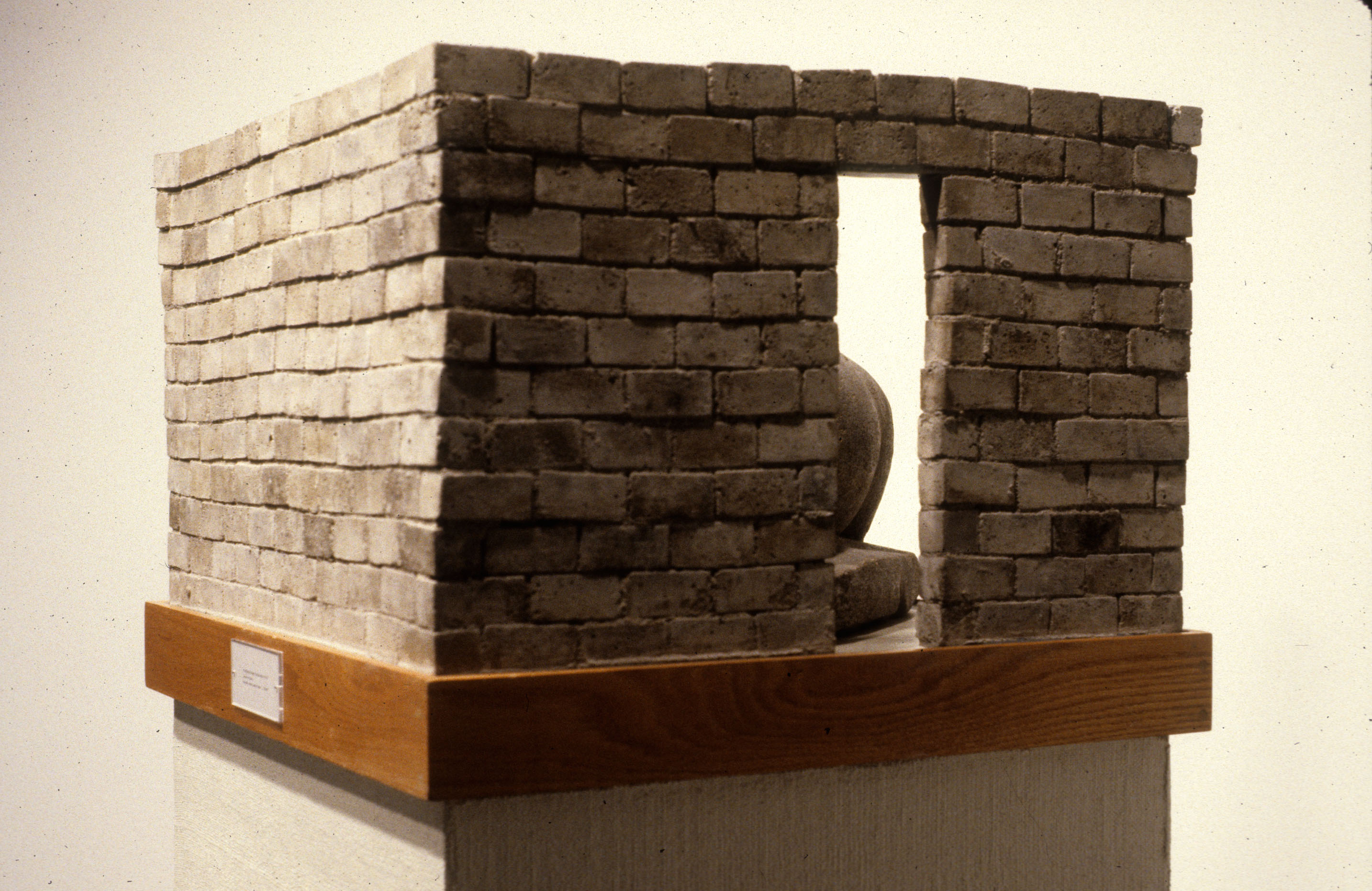
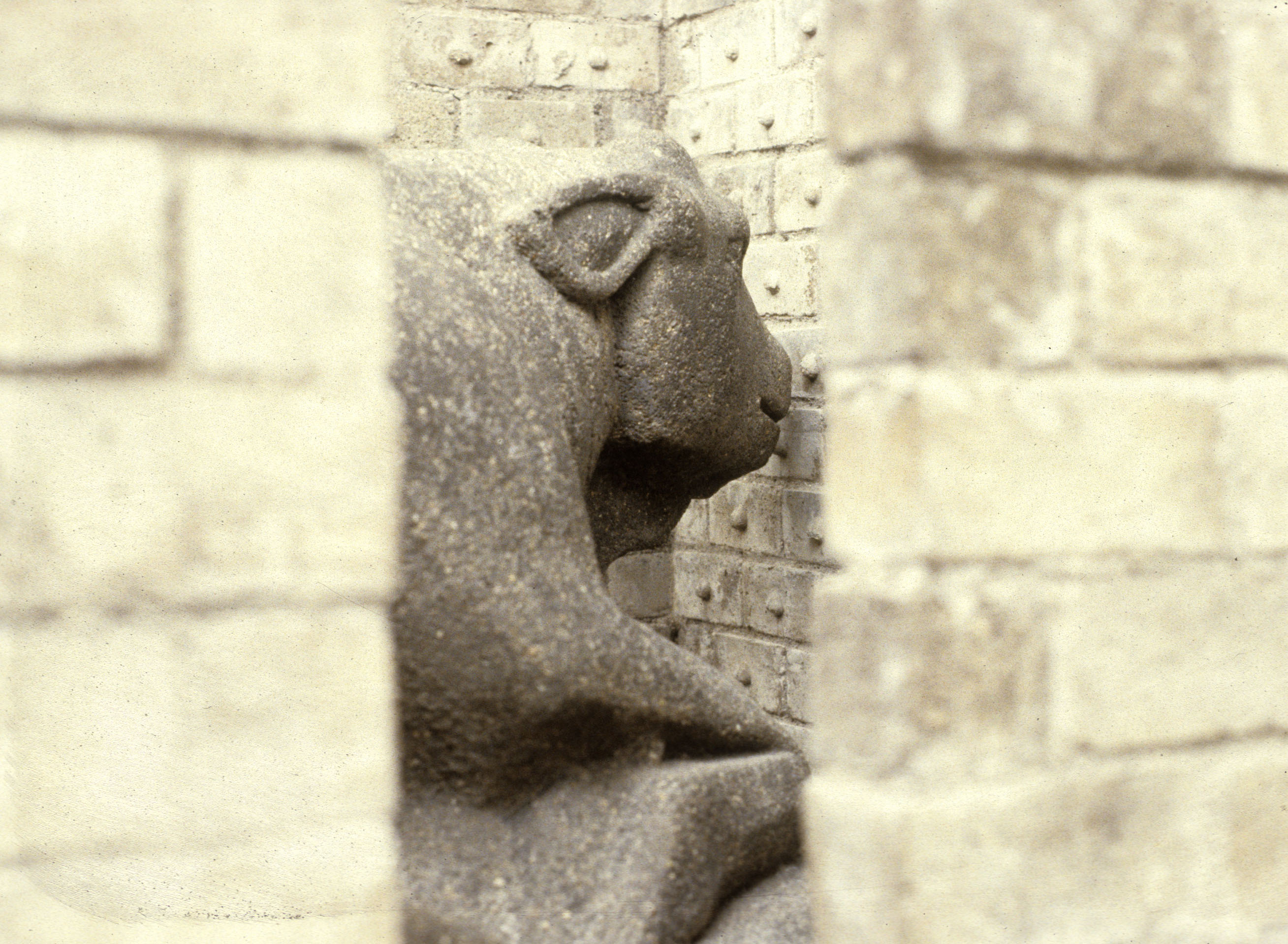
Nandi is cornered and enclosed in a tomblike structure, trapped in a room of tiny cinderblocks (reminiscent of the basement of the museum where I had my studio when I made this piece). Each cinderblock is “decorated” with a motif in the form of his testicles. The bull is not visible until the viewer walks around and into the corner to face the back of Nandi. Both tombs and museums embalm their contents enforcing a notion of a need to protect. One justification for removing artefacts from other countries is that they can not properly be cared for in their place of origin. This need to protect corresponds to an unsexing, a taking of power. This piece frontalizes and giganticizes the bull’s sexuality which is a metaphor for empowering it. It also attempts to reestablish the way it would be approached in its original context—that is, from behind.

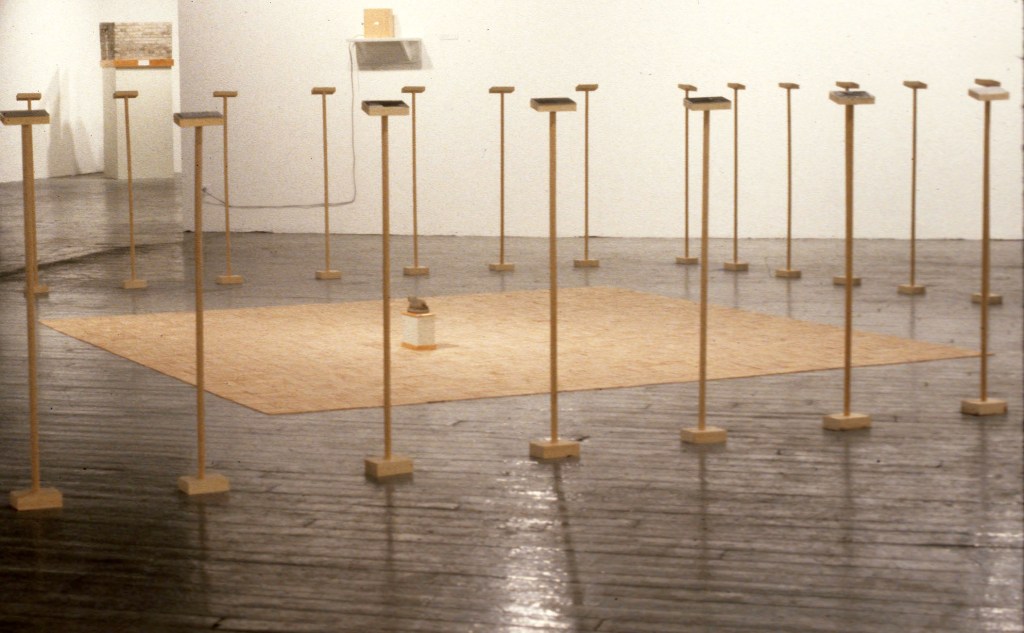
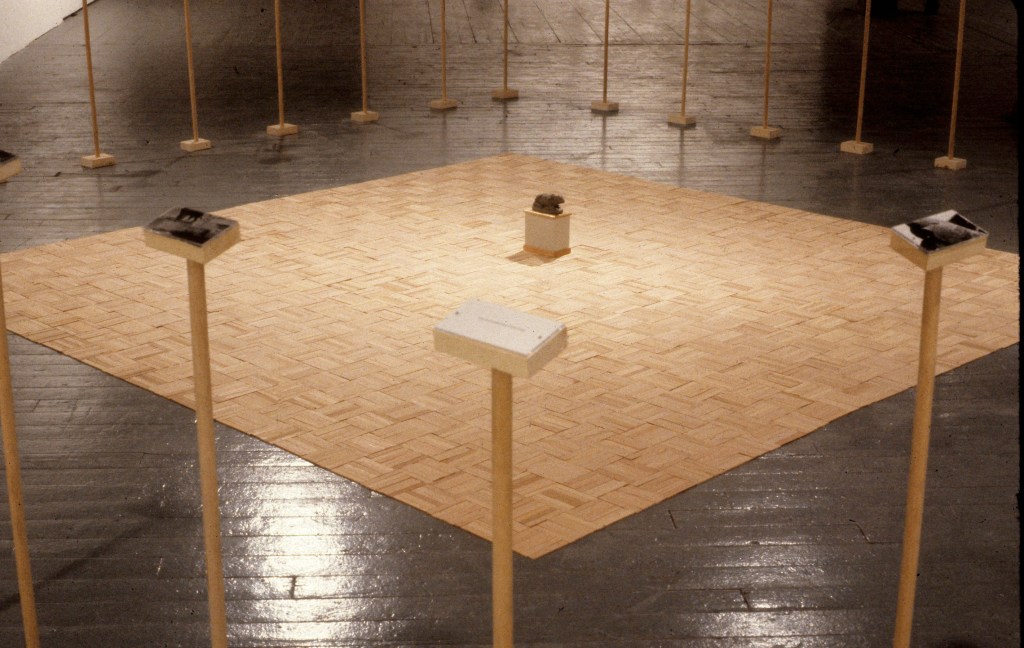
Image of Nandi Evacuated One 1989

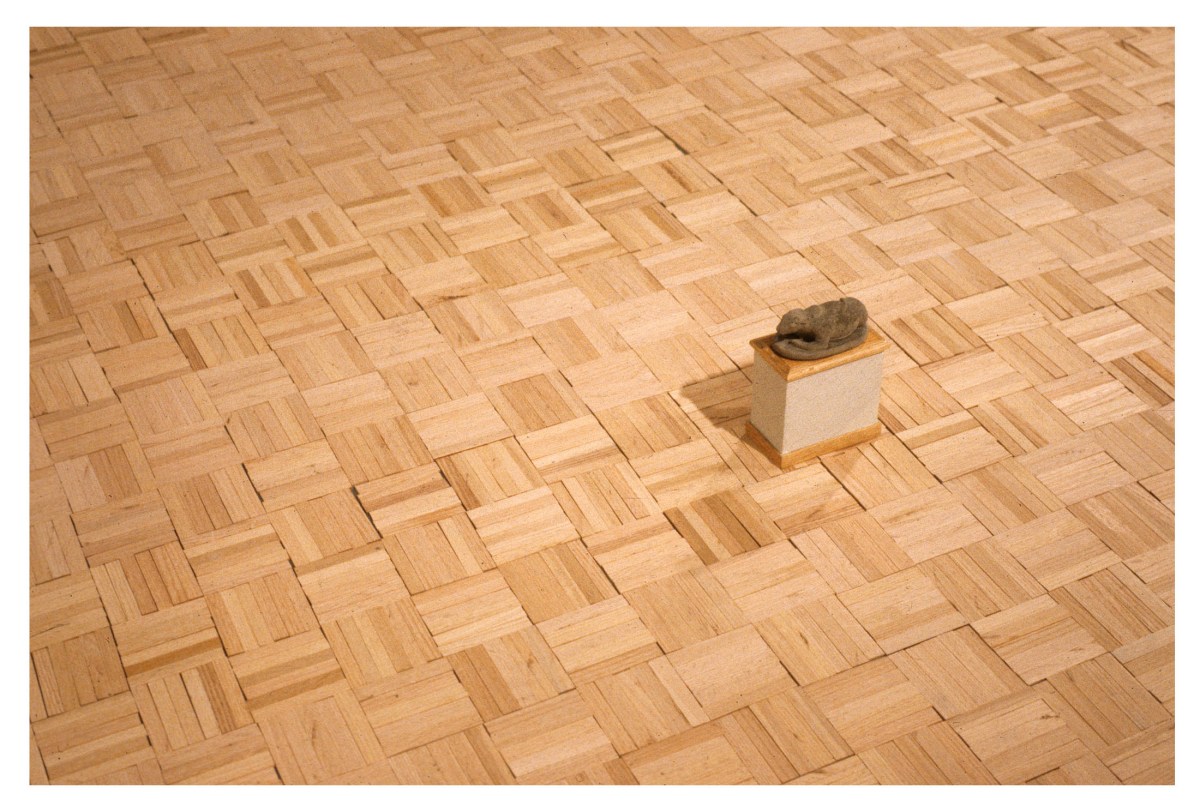
The souvenir-sized Nandi is dwarfed by the museum-like parquet floor. Individual plaques on stands spatially distance the viewer while at the same time they provide an overabundance of information. Some of it the viewer wants—the part which deals with its meaning in the culture it came from. Other information reveals new relationships—with Chicago and the museum—which distance the viewer. Without this information, we consume the Nandi as a “cute” aestheticized object. With it, we consume Nandi as an exotic religious artefact. By providing different kinds of information, I hope to reintroduce the idea that there is a conflict. This Nandi becomes a souvenir which can’t be possessed (known) because it is made explicit that as its context changes so does its meaning.