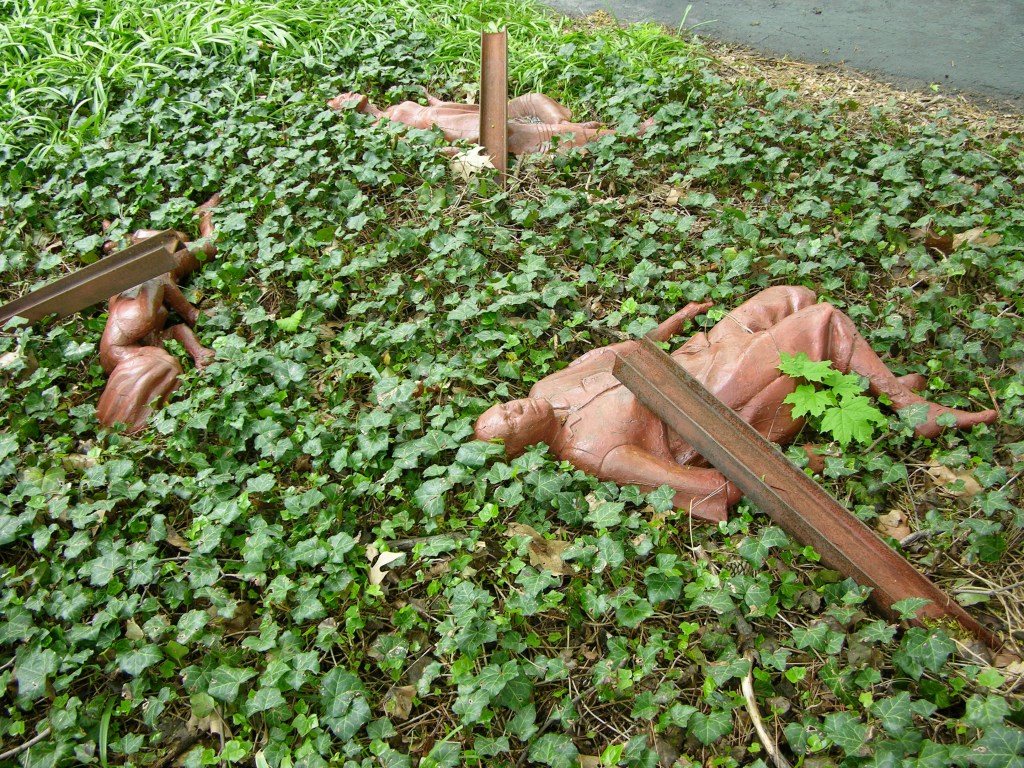
Sprawl consists of three figures gazing off in the distance, as if dreaming. A heavy I-beam—which references the infrastructure–hovers over each, indicating possible danger. Despite the threat they appear to remain hopeful for their futures as they look forward.
The figures where modeled in clay as two-thirds life-sized portraits of three distinct individuals. Started over eight years ago when the three studied art at Mott, these representations mark a transition for each. They have since gone on to their adult lives. This piece represents my fears for them as they mature in an environment filled with high unemployment and crime rates.
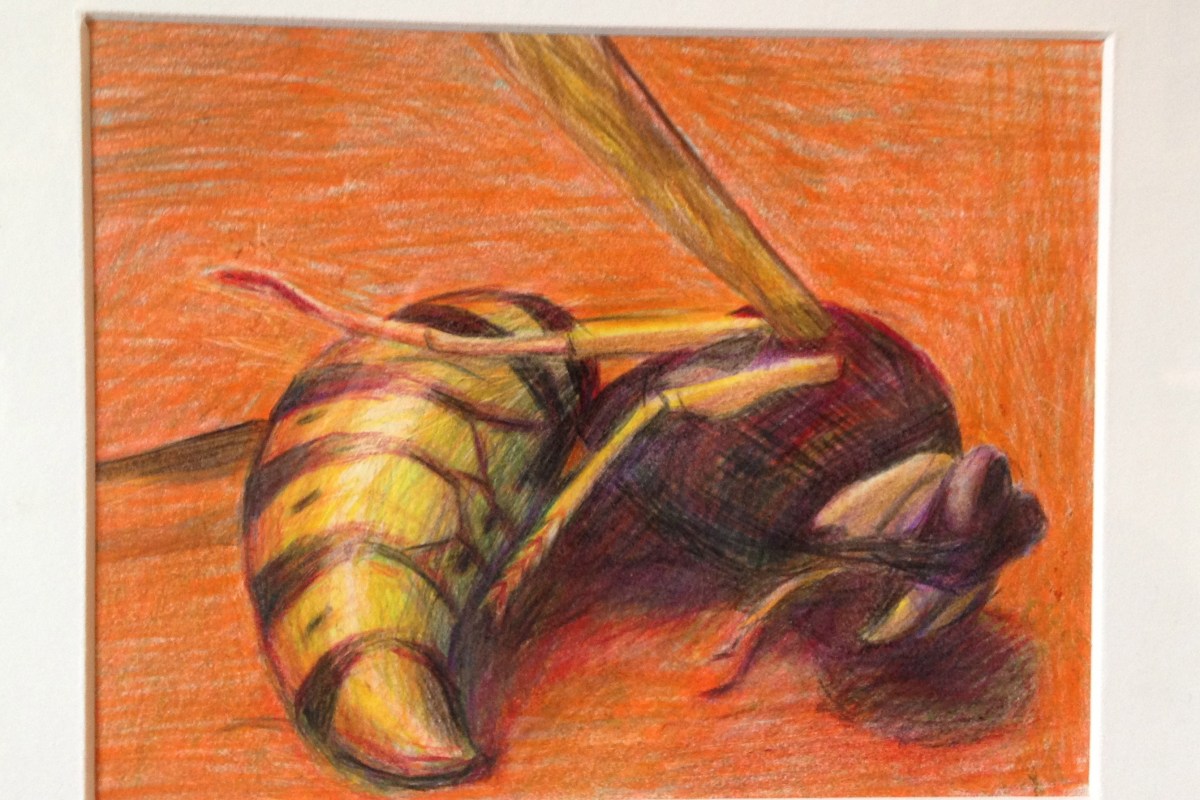
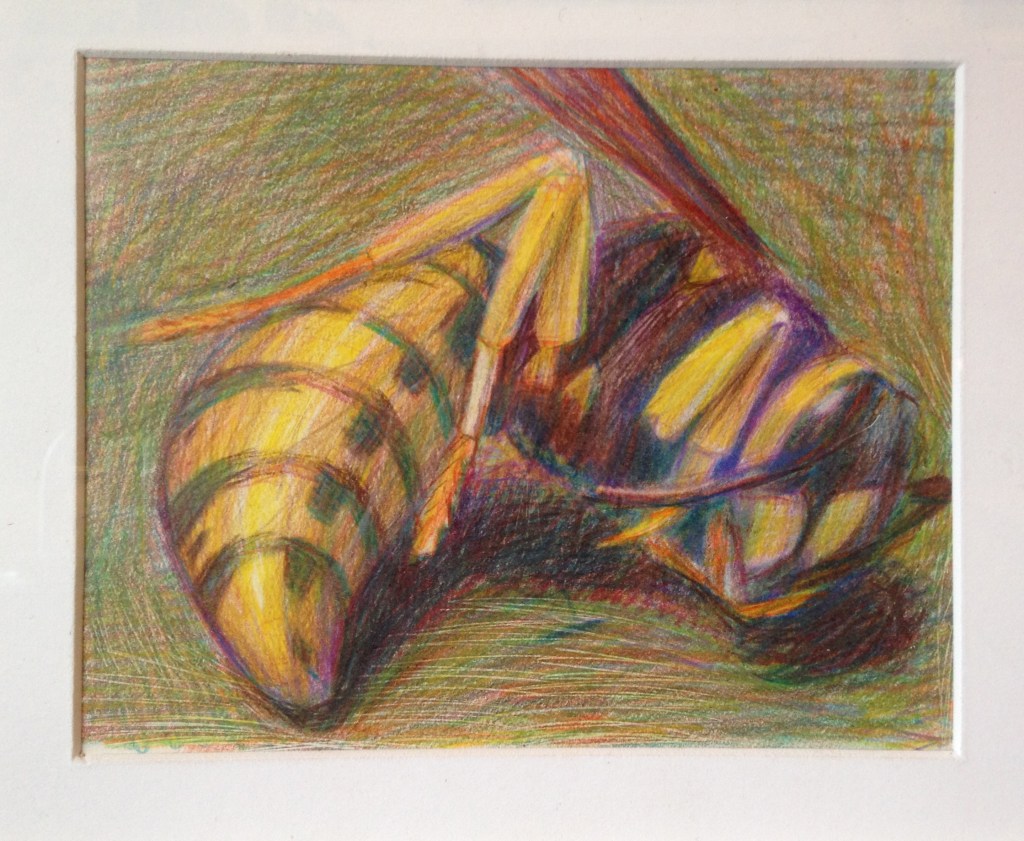
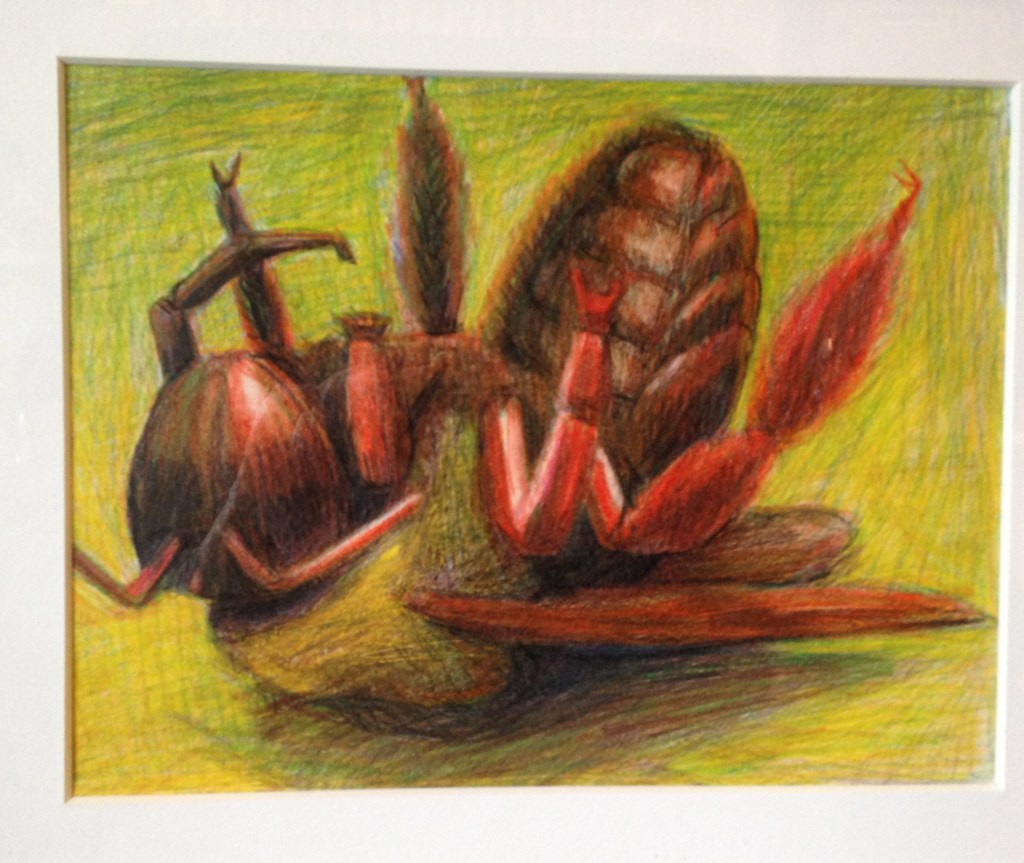
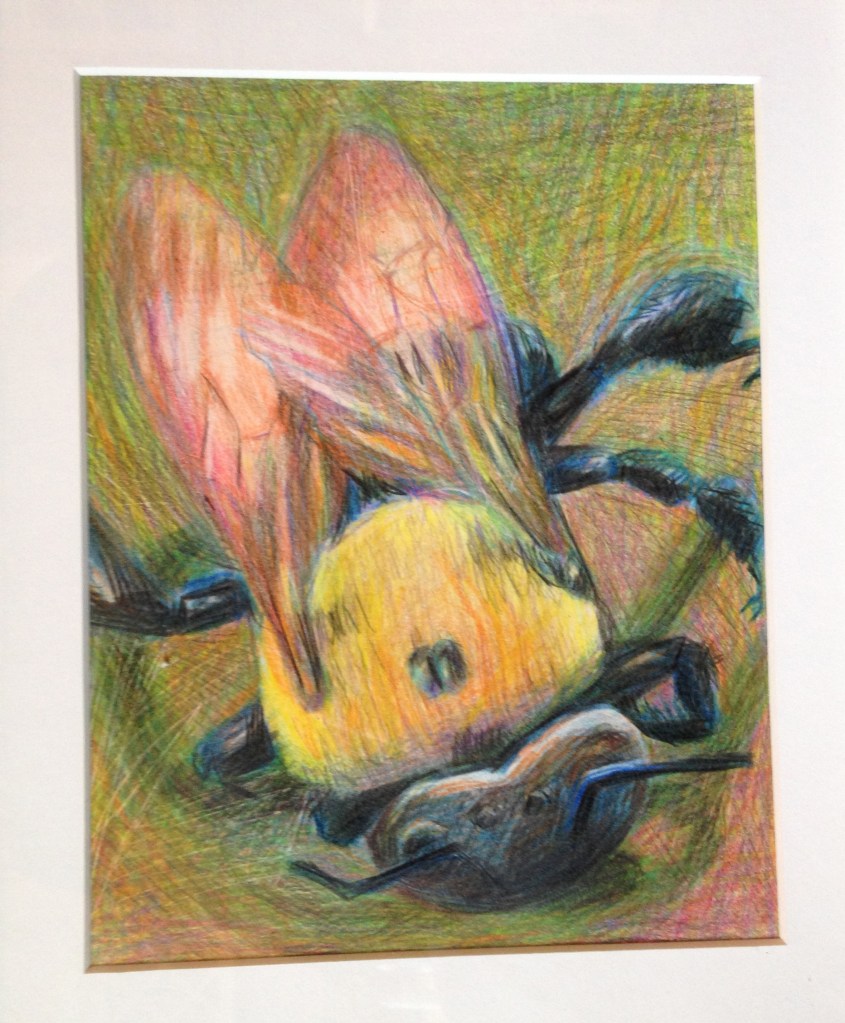
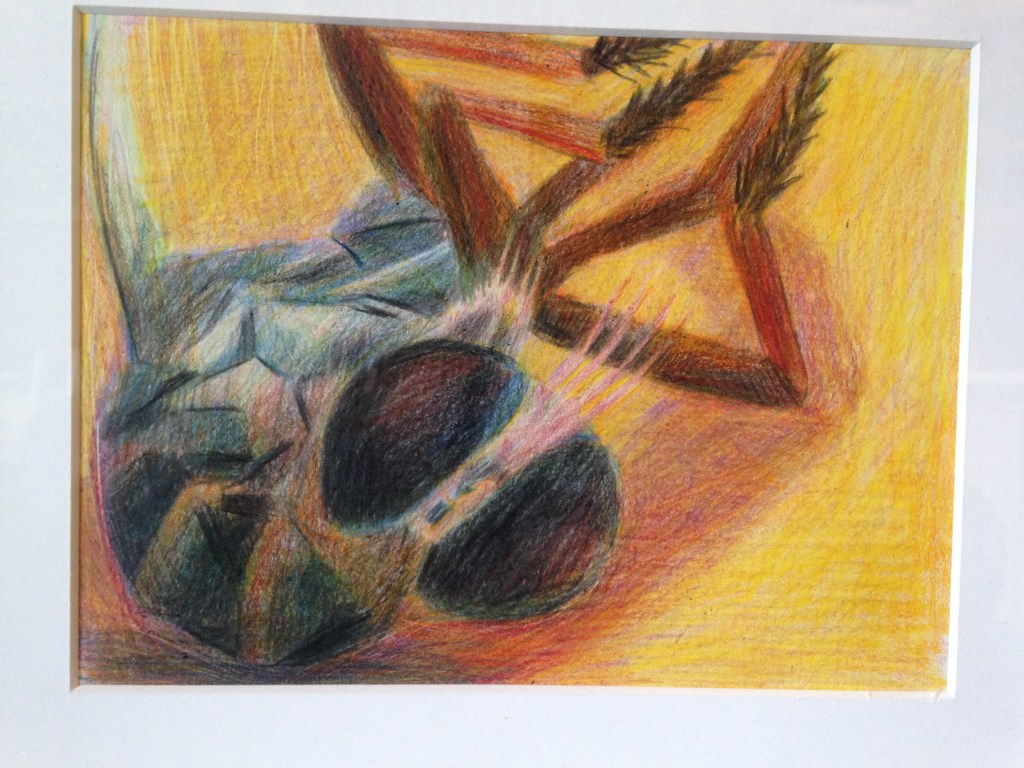
For several years I have been making small drawings, working in the evening when I’m too tired for more physical work. At first my collection of Mexican folk art provided inspiration for these drawings. Scanning my house for a more natural subject matter, I settled on the dead bugs I found in windowsills and on my screened porch. I draw from life using a variety of magnifying glasses and build up layers of very vigorous marks until the forms emerges.
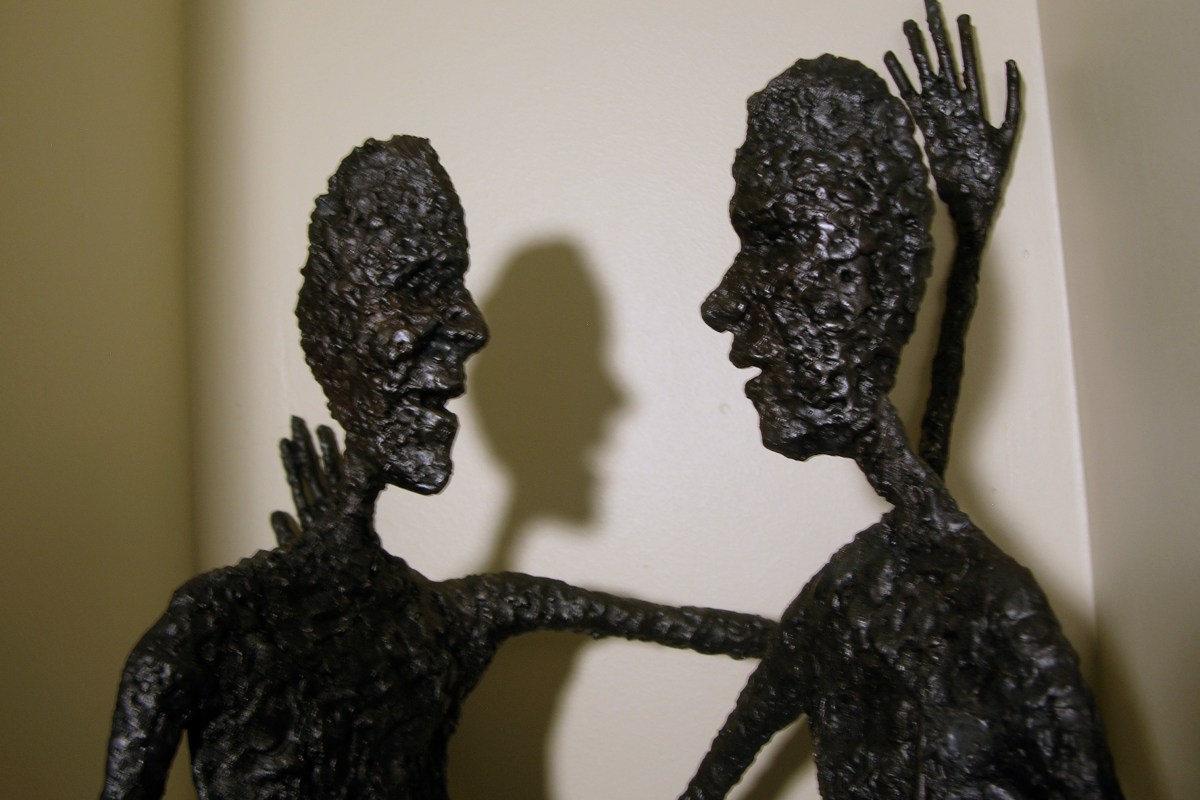
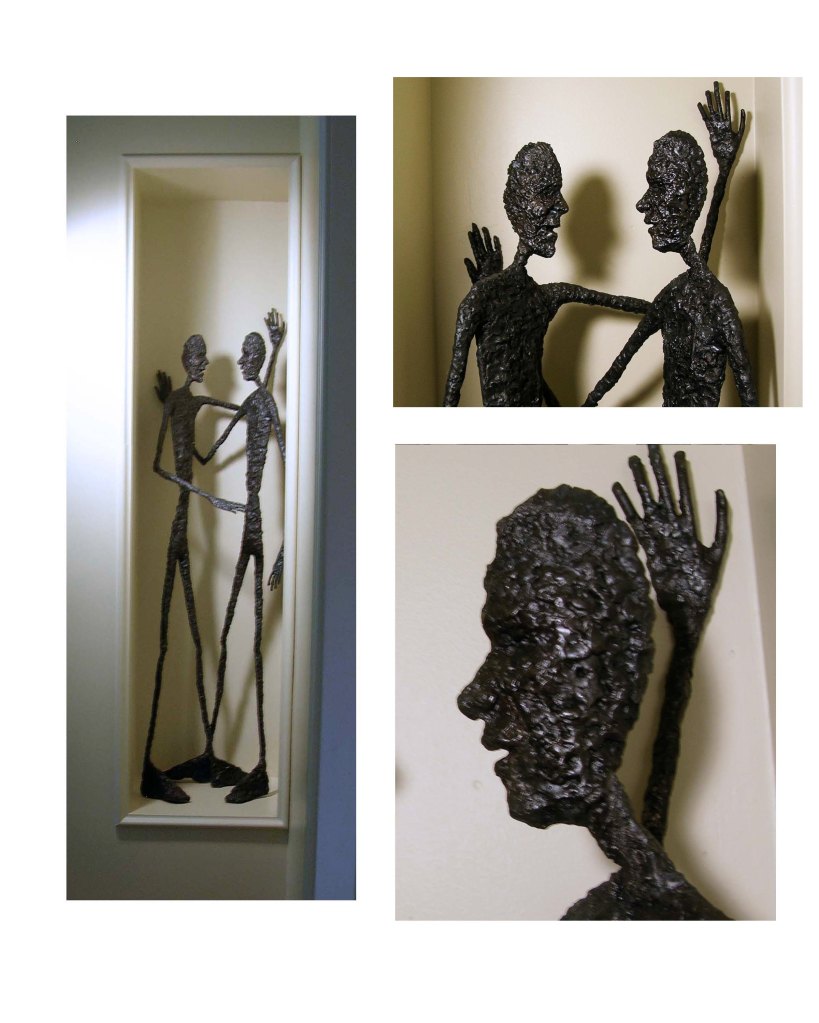
When some friends asked me to make a piece for a long thin alcove in their living room, I immediately thought of a portrait piece in the style of Giacometti. After realizing that the thin limbs would not work in fired clay, and knowing that bronze would be too expensive, I decided to fabricate the piece in steel. Giacometti made his work in clay or plaster and his brother Diego made the molds and handled the casting. Not having the luxury of having a relative willing to make the molds and knowing the time and expense involved led me further to th idea of working in steel. I started with 3/8 inch steel rods and filled with more steel, at times using 1/4 rods as filler. Halfway through the process, I changed the pose. Originally the figures touched and did not interact with the wall. I spent a year off and on working at it. In the end, I wanted the faces to be suggestive of the features of the soon to be owners of the work. By patiently melting steel, the forms became more three dimensional and the features became more distinct.
When I began to model three figures many years ago I didn’t know exactly where the activity would lead me. The word “sprawl” related to two separate meanings. I had just moved into an older home outside of Flint and became more aware of urban sprawl. Former farm fields transformed into condos and single family homes within months. Some of these now sit vacant since the downturn in the economy. The second concept related to the word “sprawl” had to do with the high murder rate in Flint. This statistic seemed to haunt Flint and still does eight years later. So this single word determined the pose that the models would take. I asked each to dress in their favorite clothing so that they contributed something to the overall effect.
The piece was always about the vulnerability of the young people who grew up in this city and the surrounds. Once a stable environment with exemplary primary and secondary schools, the rapid loss of manufacturing jobs has lead to instability in so many lives. Another version of these portraits in terracotta, with I-beams looming over the people, addresses the roll of institutions in holding them back.
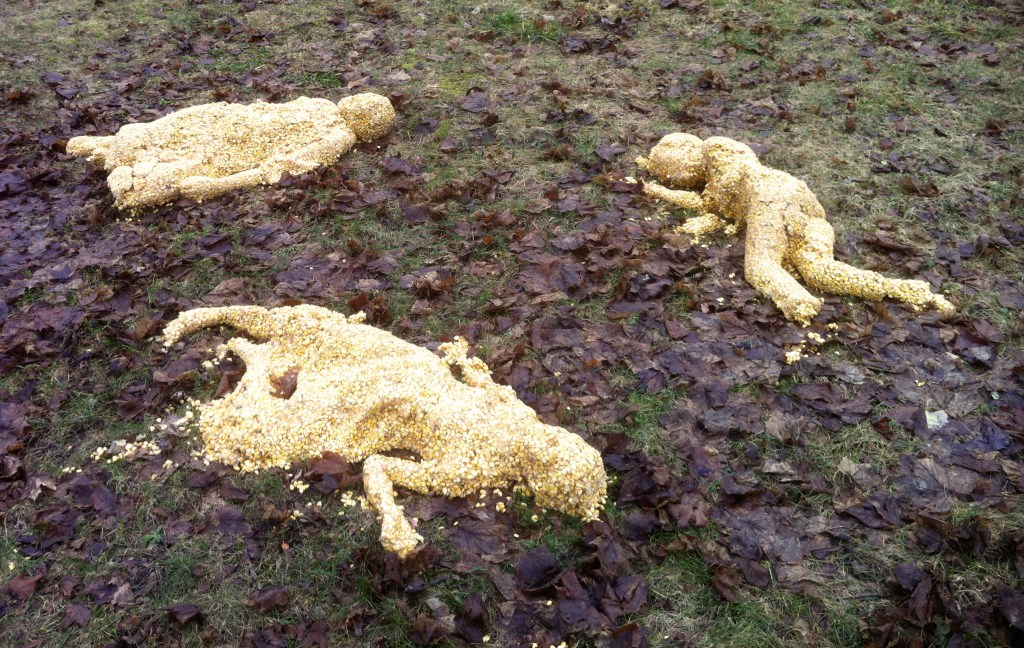
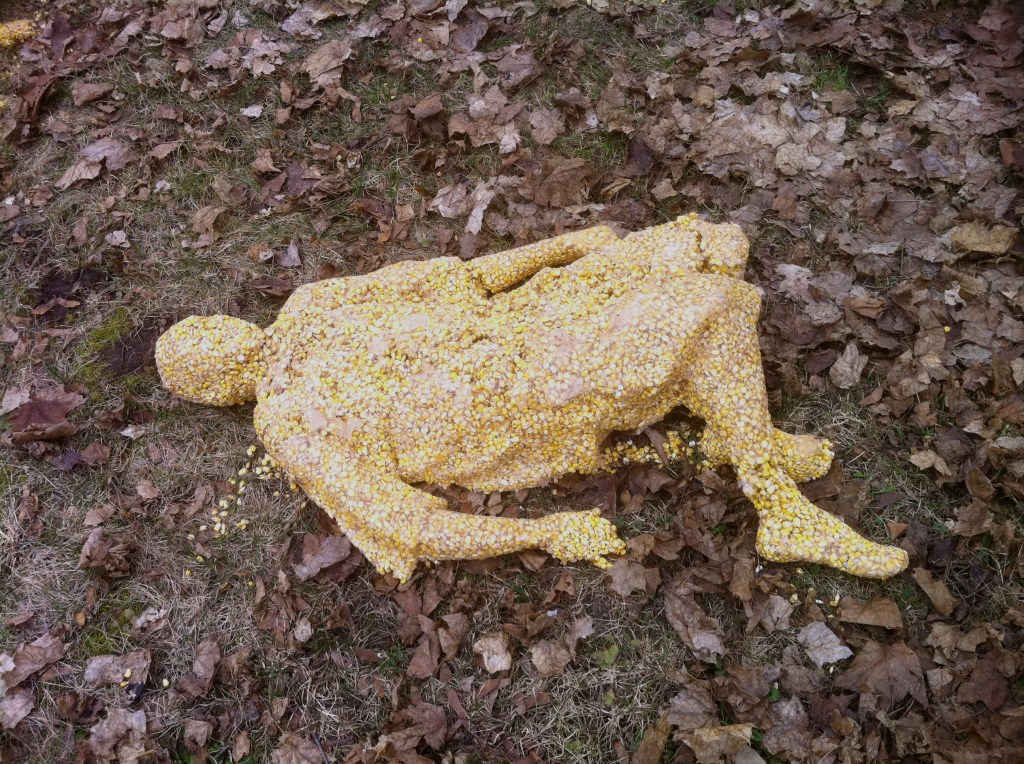
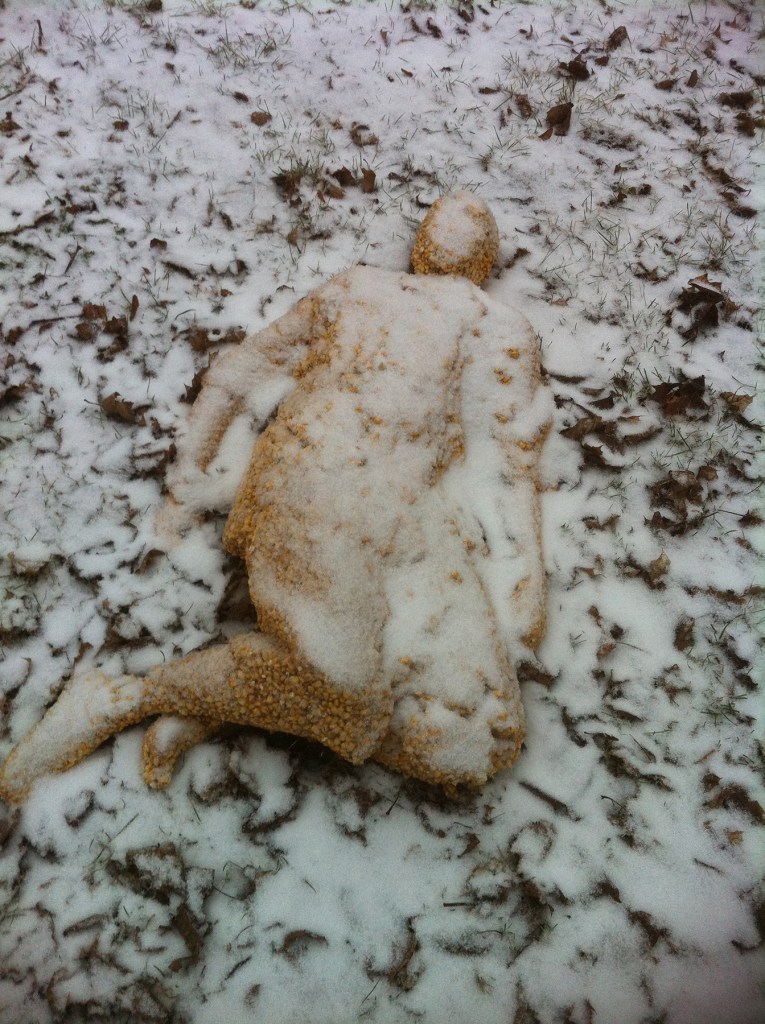
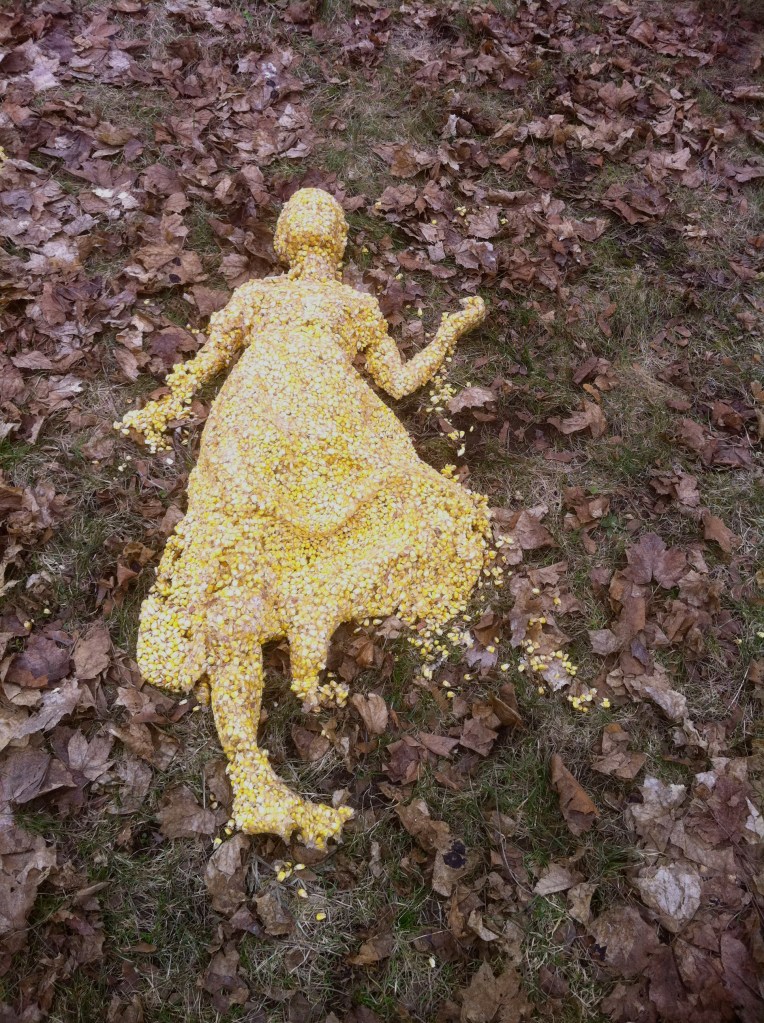
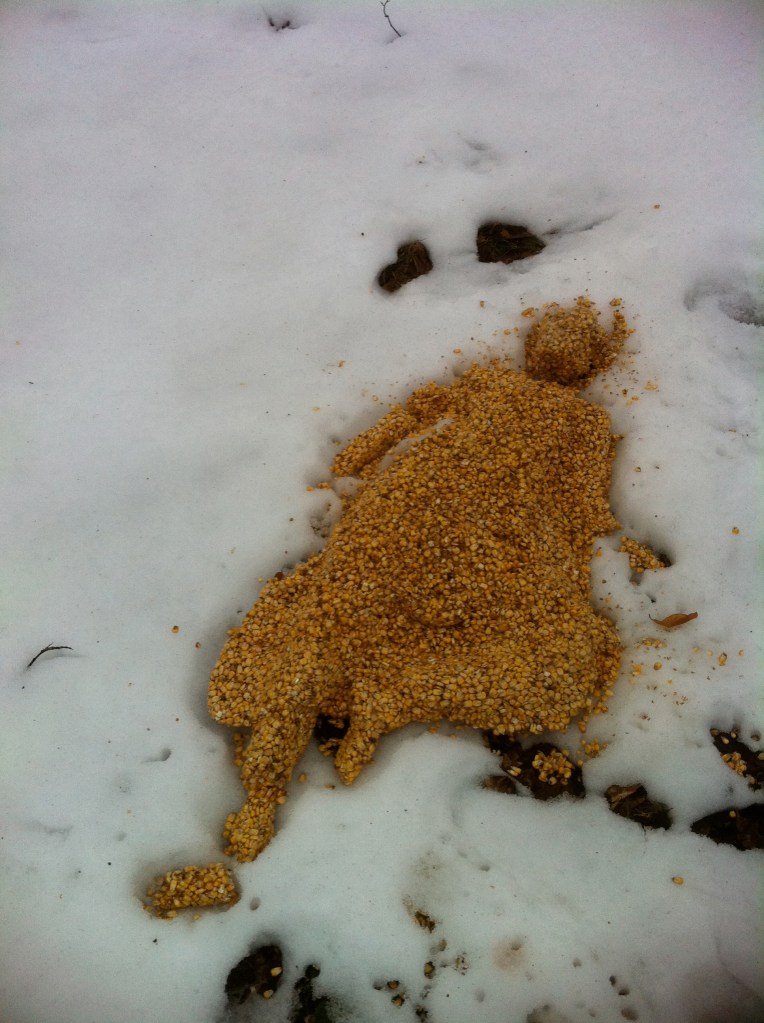
For a long time I thought about what the figures would be cast in. I had been thinking of birdseed for some time as a symbol of compassion. When I began researching I found that seed could be held together with gelatin, peanut butter or suet. I settled on gelatin because it wouldn’t alter the color of the feed. I decided to use dried corn instead of seed because it would attract mammals as well as birds.
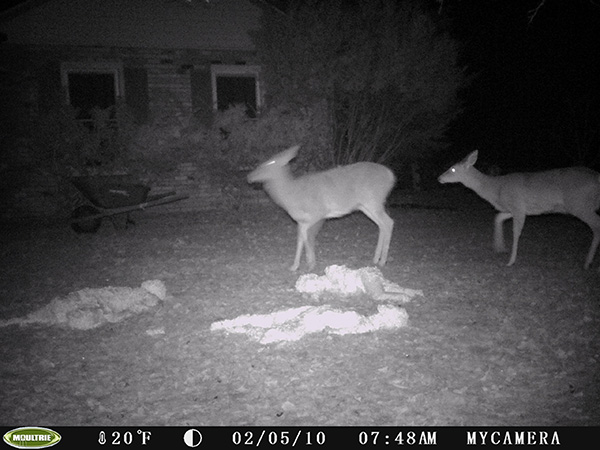
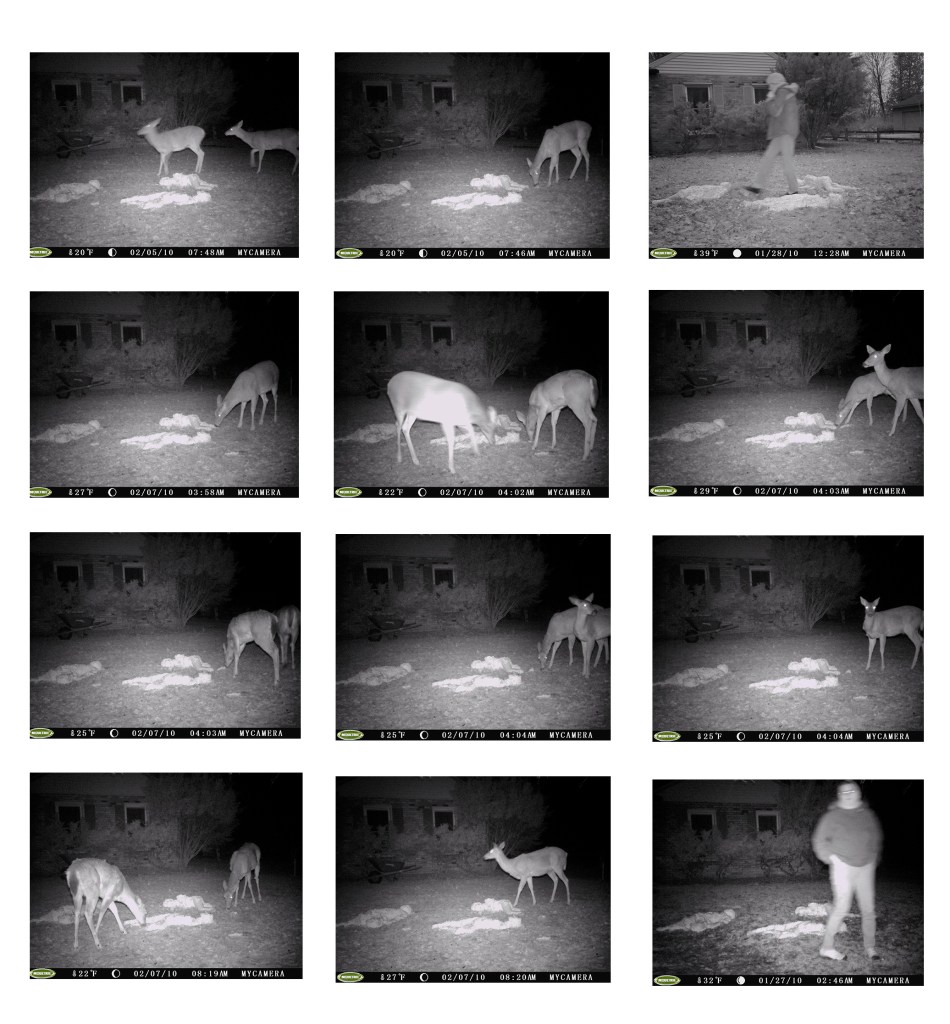
Several weeks ago we completed the casting of the three figures in corn and gelatin to place on the ground in my front yard. The images of the deer and people interacting with the pieces came from a wildlife camera placed on a tree nearby. Much like I discovered when I drew the porch bugs, the presence of the deer remind me that a whole other world of which I’m unaware exists around my home.
I would like the viewers of this piece to see the vulnerability of these young people. Over the course of several months, they will disappear as deer and other animals come by at night to feed. But also, I see these young people as giving of themselves, of being themselves the compassionate ones. I have a lot of respect for my students here. They have overcome many hardships to come to college and they are very resilient.
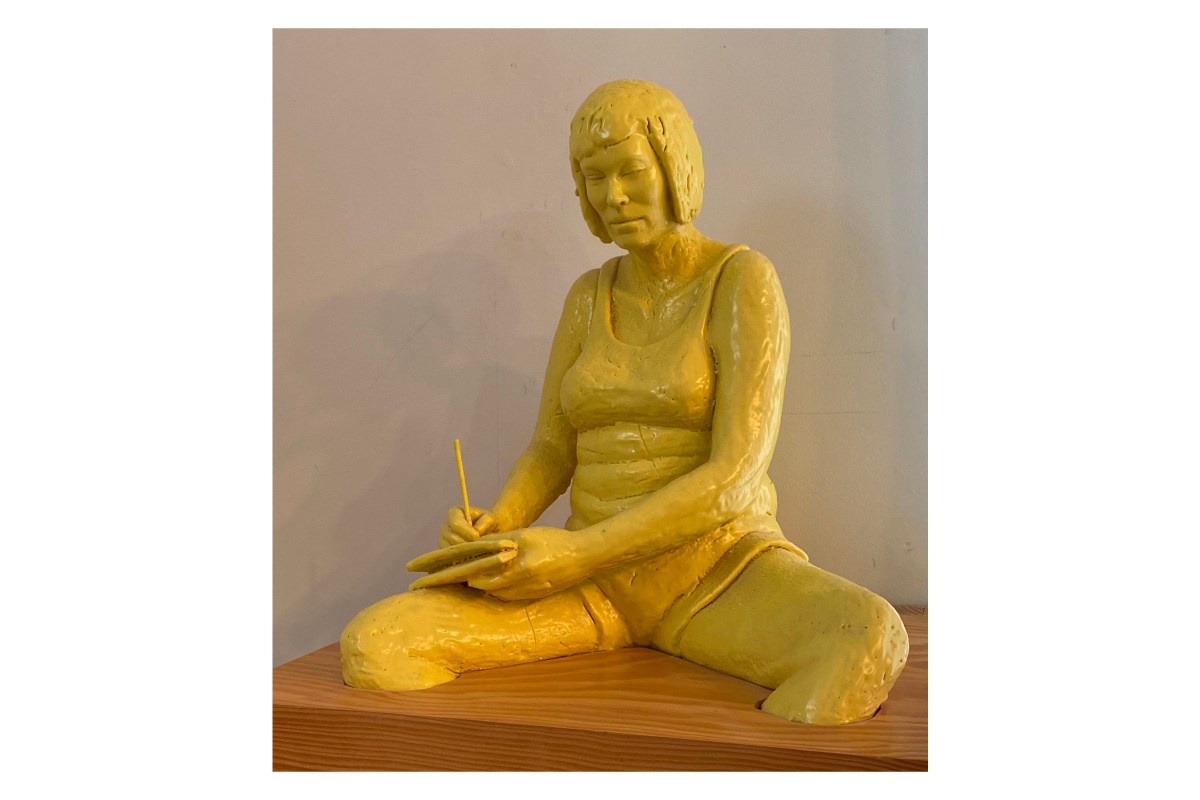
The concept for Shelby Writing a Check came from a discussion in sculpture class about poses that challenge stereotypes. One of the students suggested the idea of a woman writing a check. I jumped on the idea and worked alongside students that semester to create this piece.
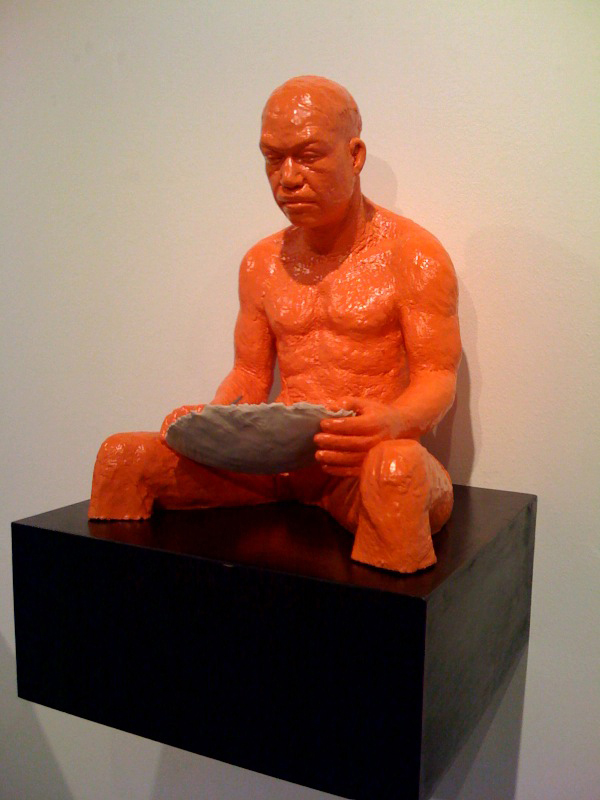
Roger Cooking
Half Lifesize
Glazed Stoneware
I asked Roger to come up with a pose that challenged gender stereotypes in a figure drawing class I taught one semester. Since he often cooks for his family, he found a wok and spoon in the shelves of still life objects we kept on hand and posed holding them. A few semesters later he took the same pose in a sculpture class. I joined the students in making a clay sculpture.
A collaboration with my sculpture students at Mott Community College
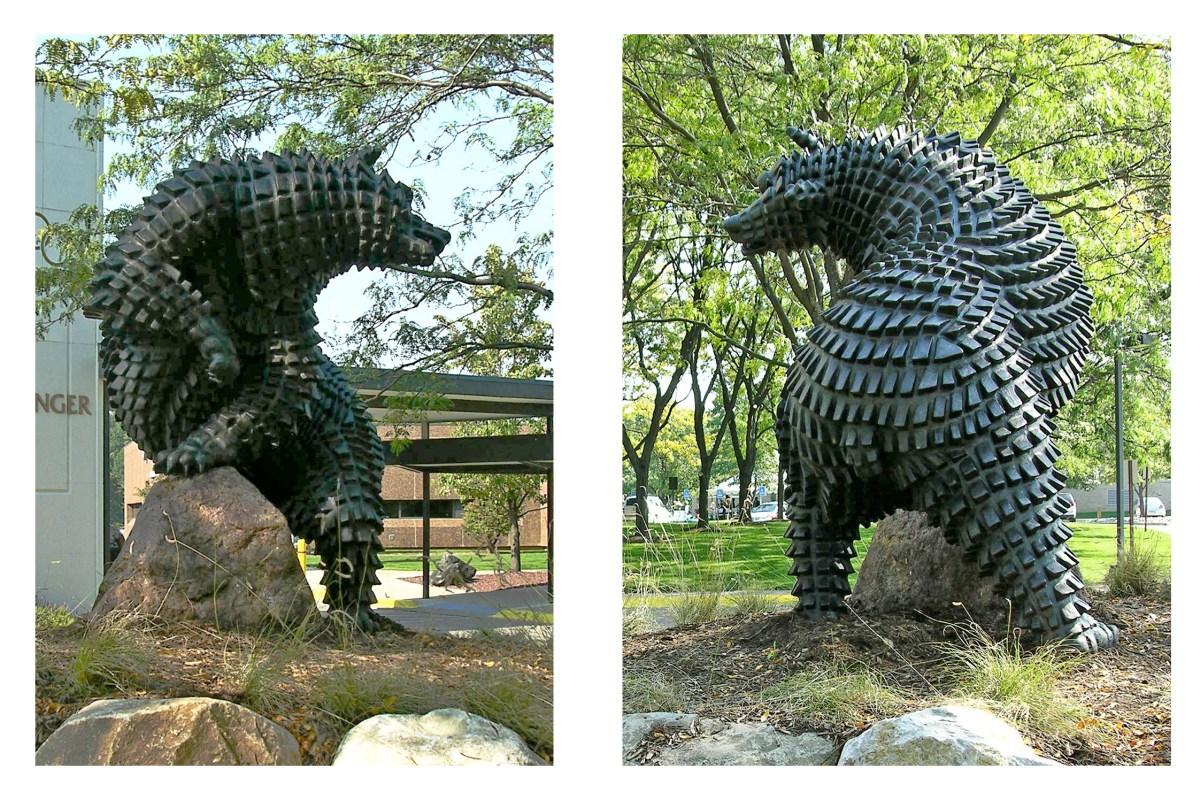
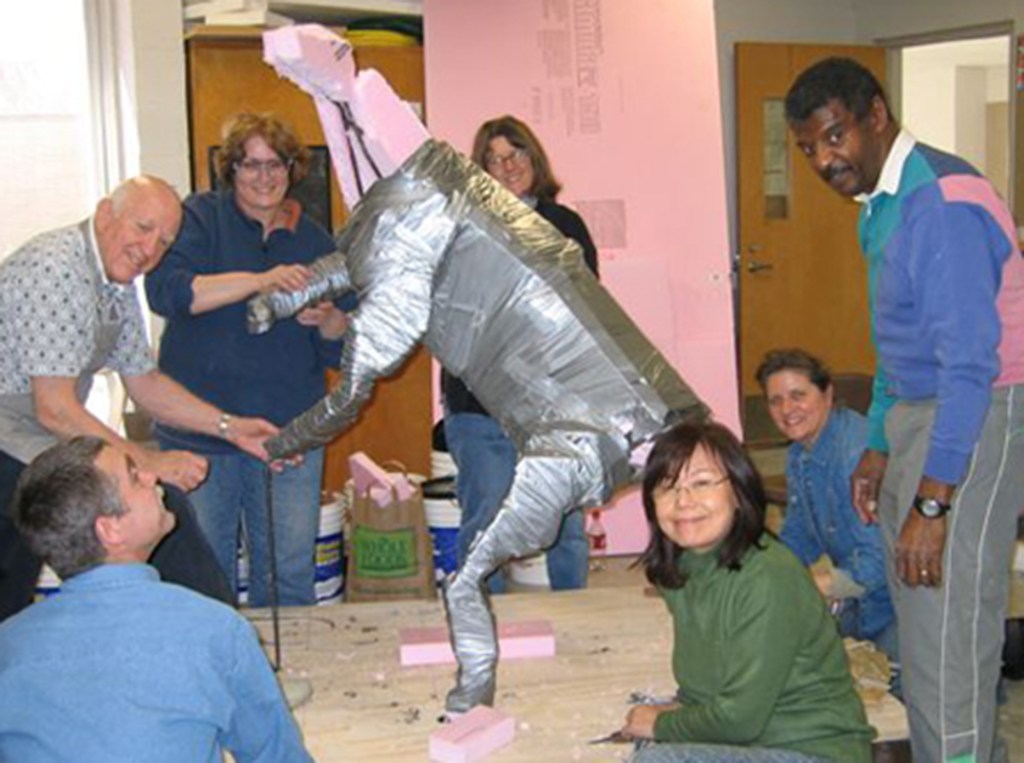
For centuries the artist has used the grid to aid in replicating scenes for their paintings. Alberti and Durer looked through a transparent grid to draw more accurately. Post-minimalist artists of the last half of the twentieth century like Sol Lewitt and Eva Hesse made the grid the subject of their work. Today many artists are interested in digital animation. 3-D programs like Alias Maya use the grid to describe complex forms. The same process that was used by sculptors hundreds of years ago to “point up” a plaster sculpture to create an accurate copy in marble is used today by computer programs to enlarge prototypes and to create animated figures.
We used toothpicks with flags made out of masking tape to mark the points on our model before we made the larger bear. Each point is a certain distance from the front or back of the stand and a certain distance from the side of the stand and a certain height. These three points tell us where that point is in space. When we multiply each one of those numbers by a factor (for instance, we may want the final piece to be 4 times as large as the model and then we would multiply by 4), we can find that point in space for the large bear. This pointing system helped us to make the large bear.
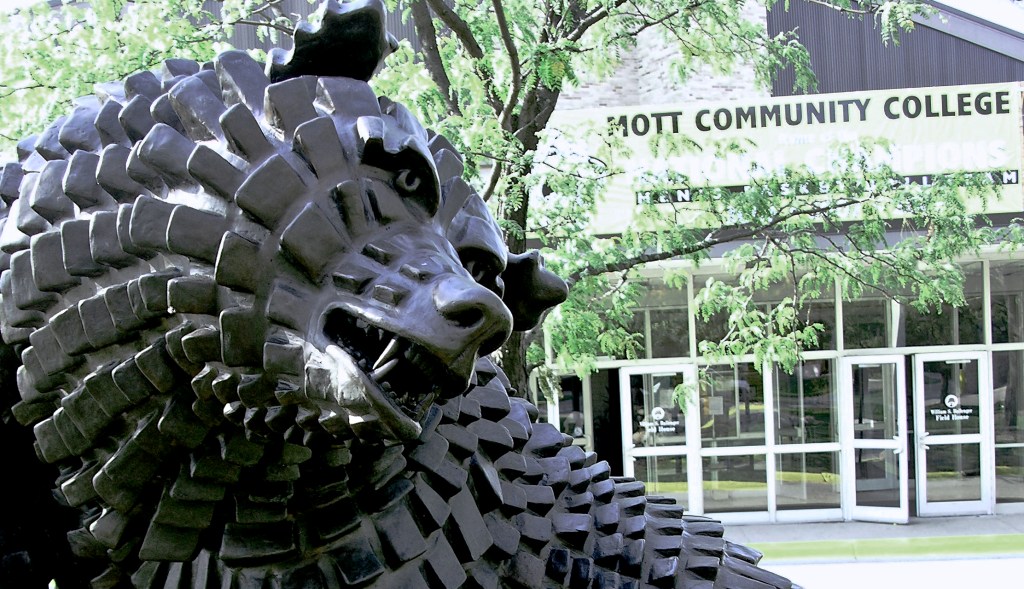
The texture evolved out of a need to figure out the proportions of the body parts to each other, to create forms that were consistent and symmetrical and to develop an idea of direction of the flowing hair. In much the same way an animator invents a form using 3-D programs like Alias, we created a bear in a pose without the benefit of having a real bear to look at.
We discovered that the grid looked contemporary because it references the digital age and the strong connection the arts can have with technology. The grid texture is also original and in that sense it is creative and it challenges our preconceived notions of what a bear sculpture should look like.
The grid mirrors what we try to do in an educational setting. It creates an order and therefore a way of understanding. It asks to be looked at in a new way and asks the viewer to be open to what is new and inventive. It is receptive to its environment as the multiple squares seem to move as the viewer moves around the sculpture. The reflected light from the sun will enhance and animate the surface further.
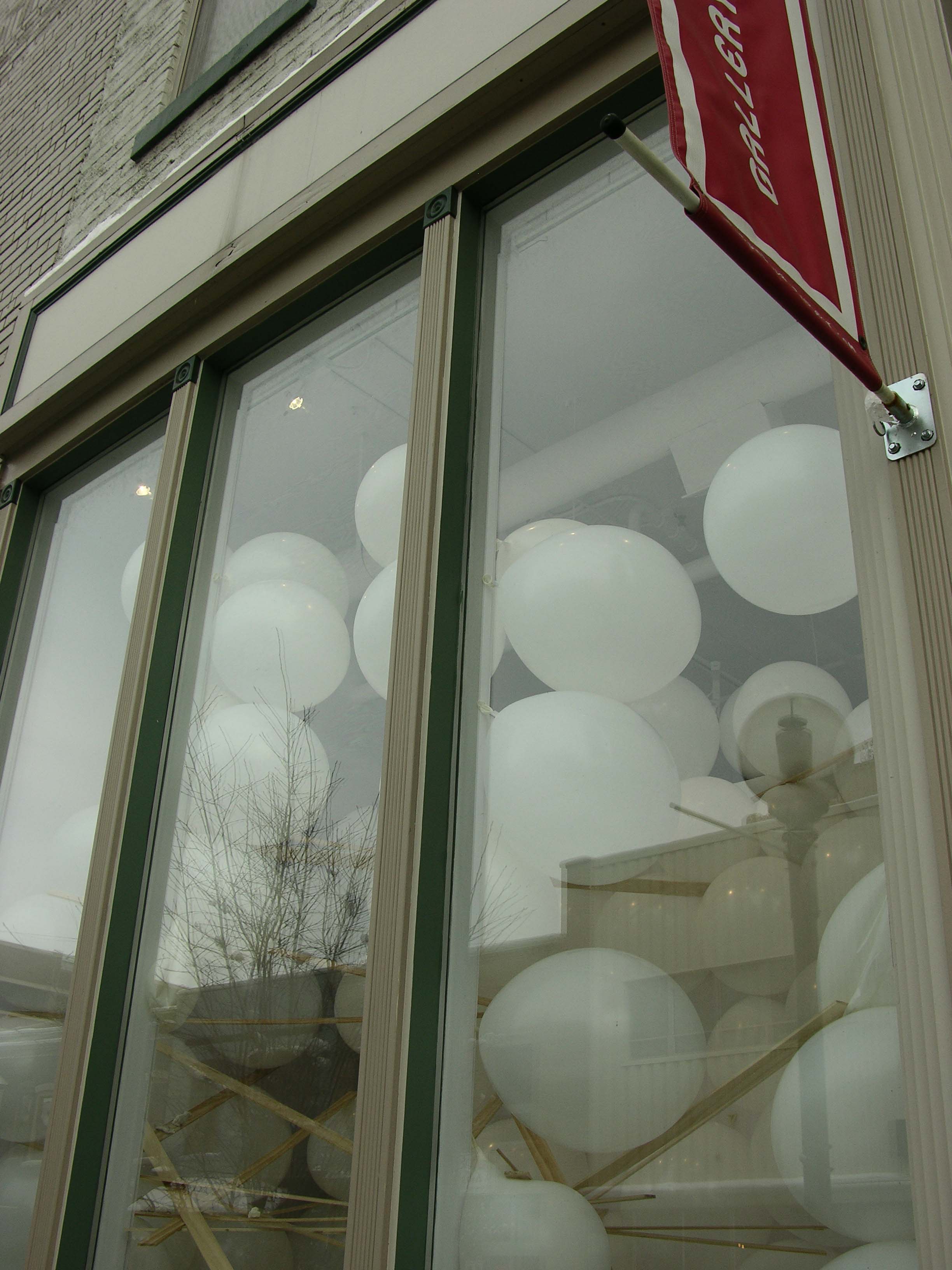
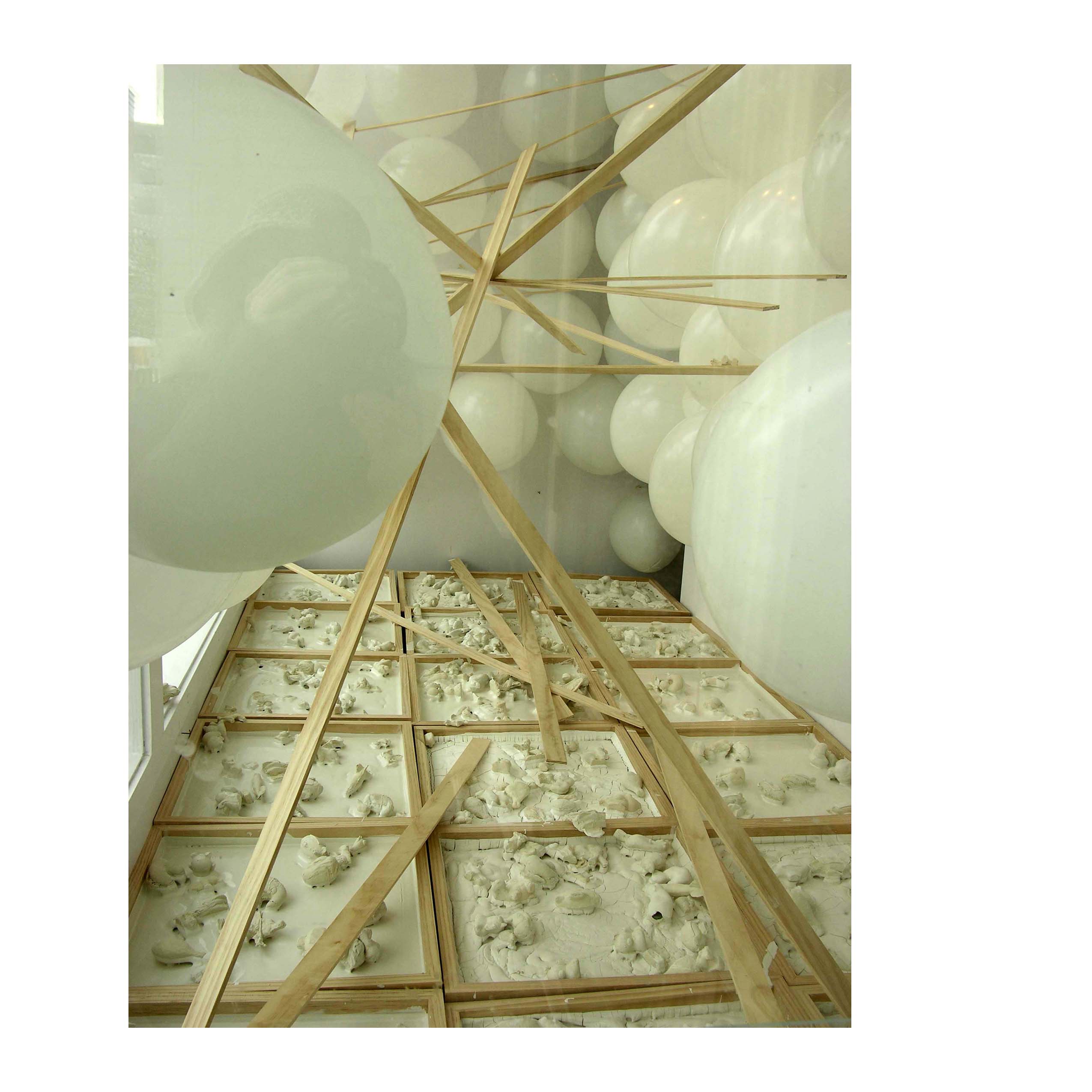
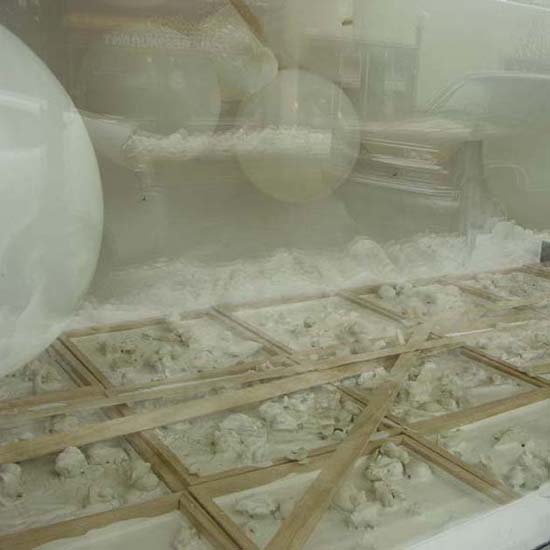
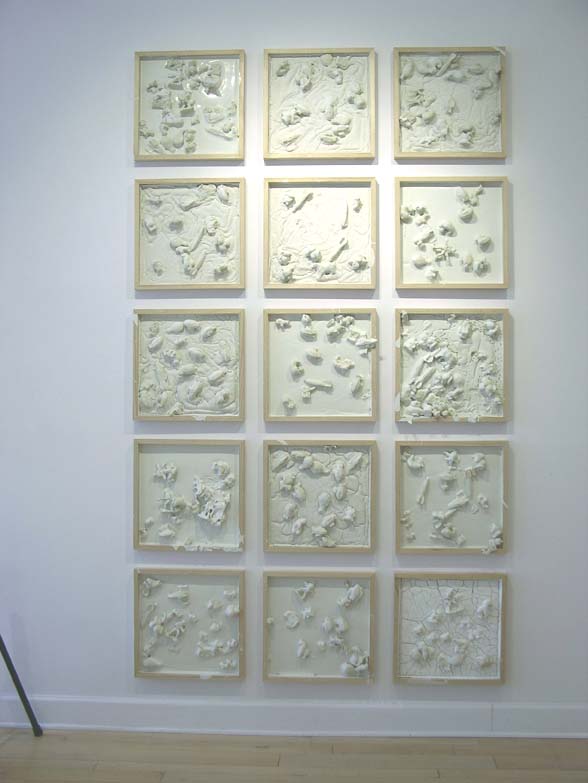
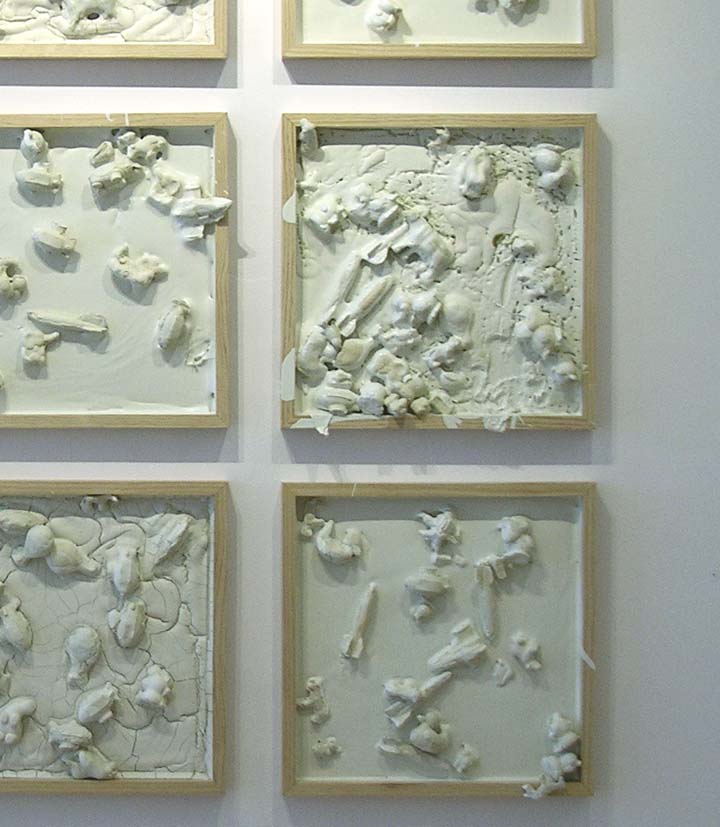
This is a collaborative piece made with Thom Bohnert. The framed pieces are the result of a series of haphazard occurrences set in motion by the deflation of a number of large white balloons. The frames filled with about an inch of liquid white latex paint lay horizontally in rows under a structure of wood lathe wedged between a window and a wall of balloons. As the balloons lost air, the sticks fell, dropping groups of small clay toy-like objects that had been balanced on the wood. Over several weeks, the paint hardened, trapping the clay pieces in random patterns. As the paint continued to dry and crack, the compositions took on more complexity. The framed works, which were later hung on the wall, record the random activity that created them.
The wall pieces are in the collections of the artists and in private collections.
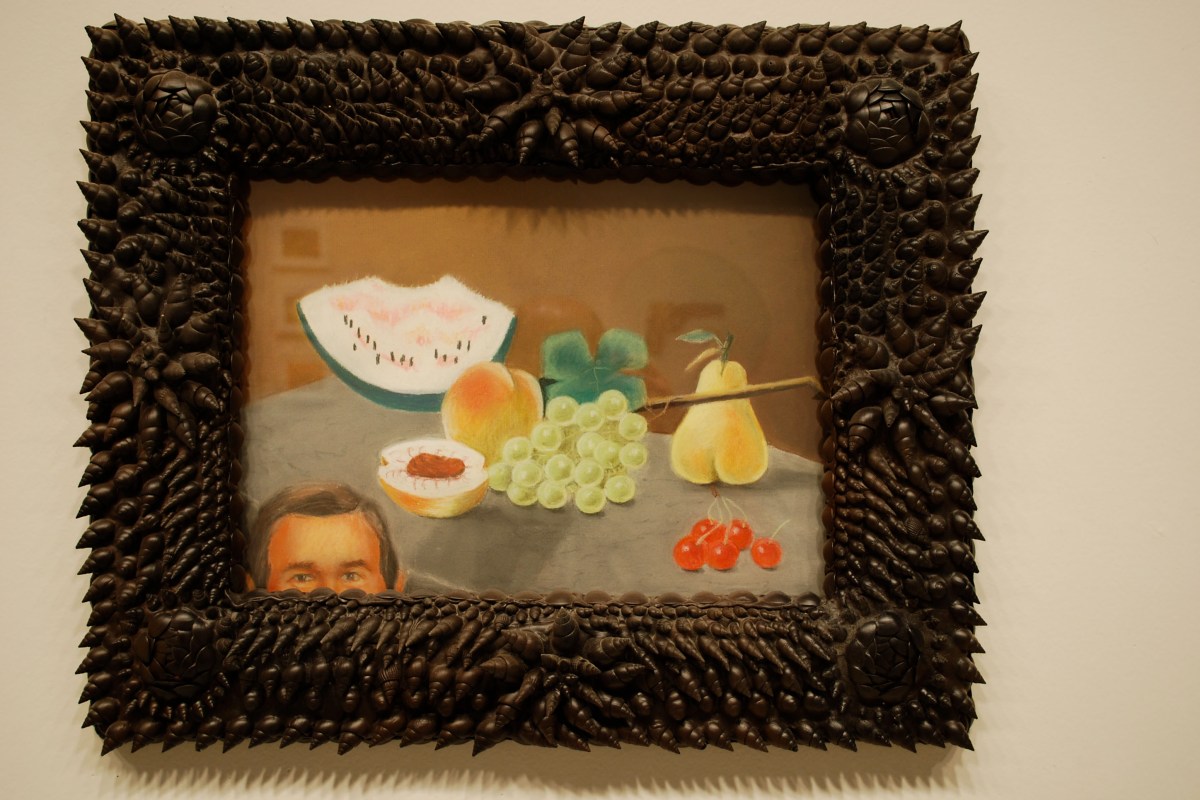
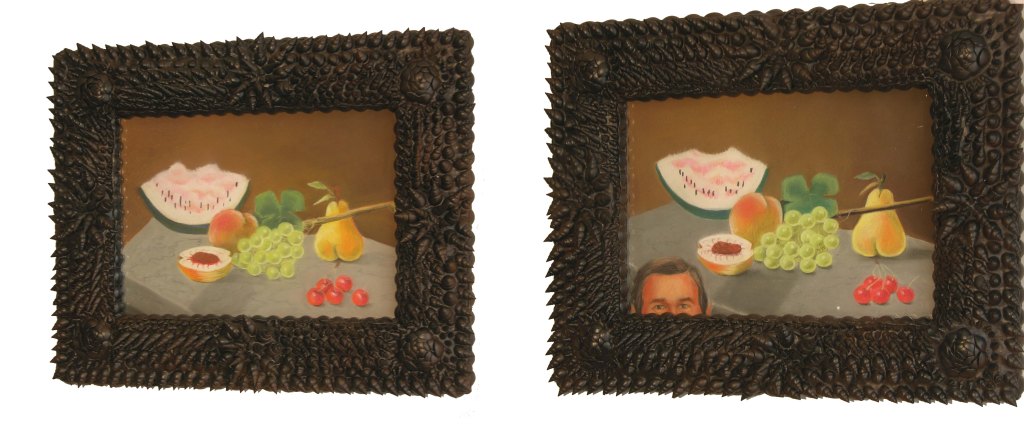
This piece uses the postmodern concept of appropriation that I first employed as a student at the Art Institute of Chicago when I copied a sculpture from 8th century Java and created an installation around it. In this case, I made two copies of a pastel drawing and shell frame from around 1860. The one on the right is the original. I added George Bush’s face peeking up in the middle drawing as a reference to the eroding of some of our freedoms under the Patriot Act.







 Cate Smith Art